
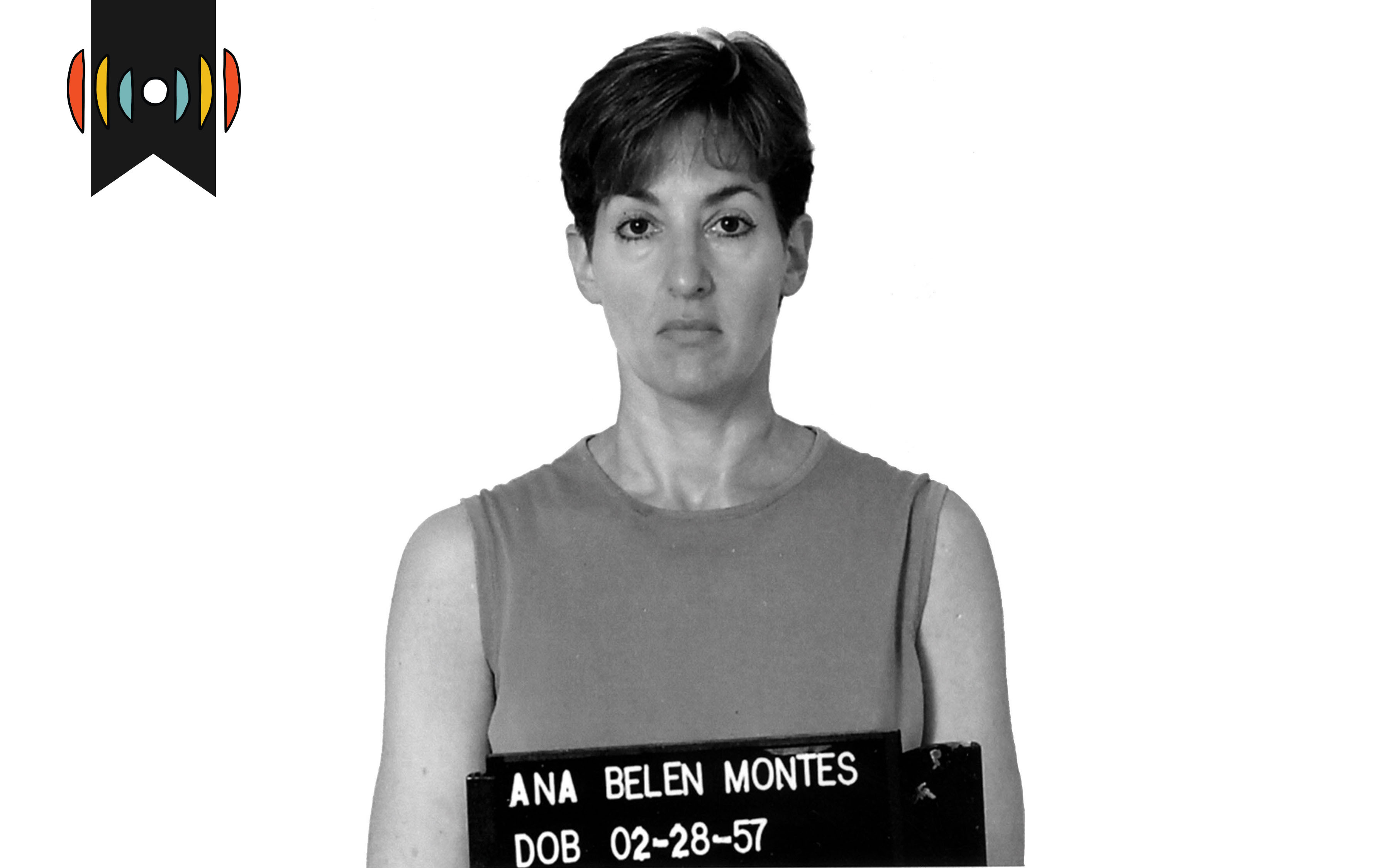
An FBI mugshot of Ana Montes, a spy for Cuba at the DIA Wikimedia Commons / Federal Bureau of Investigation
Editor's note: The following text is a transcript of a podcast story. To listen to the story, click on the arrow beneath the headline above.
JENNY ROUGH, HOST: Good morning! This is The World and Everything in It from listener-supported WORLD Radio. I’m Jenny Rough.
NICK EICHER, HOST: And I’m Nick Eicher. Up next: the World History Book.
25 years ago, the FBI arrested a woman who’s been called one of the most damaging spies the US has ever found.
ROUGH: Ana Montes worked in the Defense Intelligence Agency and fed classified information to Cuba for 17 years before she was caught.
WORLD’s Mary Muncy reports.
MARY MUNCY: Ana Montes was in graduate school when she first met Marta Valazquez. They had a lot in common: both Puerto Rican, both bilingual, and both convinced the US should stay out of Latin American affairs.
LAPP: Marta said, ‘Hey, I've got a friend who wants to meet you. He's a Cuban, and he wants to have dinner with us in New York City.’
Pete Lapp is a retired FBI agent who would eventually investigate Montes. He wrote a book about her called Queen of Cuba.
Valazquez, it turned out, recruited for the Cuban intelligence machine. At that dinner in 1984, the Cubans asked if Montes would translate some newspapers from English to Spanish.
LAPP: Ana pushed back initially a little bit and she said, ‘You know, it's kind of menial just translating.’
The Cuban said, ‘Well maybe you can add some of your own analysis about what the Americans will do about a given topic.’
LAPP: And that definitely intrigued her, and she agreed to do that.
Then, on the train ride home, she had an “epiphany.”
LAPP: The translating project was not enough to help the Cubans, that she really needed to get a job in the intelligence community.
Montes had such “visceral empathy” for the Cubans…she only asked them to pay for her extra expenses.
Before Montes started, she and Valazquez took a “girls’ trip.” … Flying first to Europe with their real passports, and then to Cuba with fake ones.
LAPP: The goal was to teach her how to be a spy.
Montes says she learned how to pass a polygraph. Afterward they flew back to Europe, took a few pictures, and came home.
Montes wanted to start right away. She started working for the U.S. government in September of 1985, with the DIA…the Defense Department’s intelligence arm.
LAPP: Most individuals start loyal and then they're flipped at some point in time. And Ana walked in fully recruited.
First, she worked on El Salvador and Nicaragua, then Cuba in 1992.
Every day at work, she memorized three things.
LAPP: And then she would go home and… write down these notes, kind of, you know, empty her mind a little bit and then type it up, encrypt it.
And give it to her handler. They met for lunch two to three weeks. In broad daylight. In the middle of DC.
Lapp thinks these meetings kept her focused, even though the work was isolating. Montes’ father was in the military; two of her three siblings were in the FBI. She believed her DIA colleagues were part of the “war machine,” and she rarely dated.
LAPP: The guy sitting across the table, Ernesto, or whoever it was at that time, he he knew more about her than her own mother. And that that emotional intimacy really helped sustain her through what she described as torture.
Even so, she was good at both jobs.
She didn’t draw suspicion until 1996, when Cuba shot down two US civilian planes. The DIA wanted her at the Pentagon constantly, but her handler wanted to meet every night. Once, she left a high-level meeting to take a phone call. When she came back, she said she needed to leave at 8:00. A colleague thought it was odd and reported her.
She underwent a polygraph test. But she answered every question, and when the investigator reviewed her file, he saw a dedicated, impressive employee.
LAPP: That reputation really wrapped a security blanket around her in a way because anytime there there may have been suspicion, you know, you had this file of accolades and and exceptional performance evaluations.
Lapp says she covered her tracks almost perfectly. It took someone else to bring her down.
In 2001, two Cuban defectors told the FBI about a mole in the intelligence community codenamed Agent S or Sergio. Investigators found that Sergio had been in the same places at the same time as Montes. They got a warrant, searched her home, and found a laptop… full of incriminating information.
LAPP: If she had thrown that computer into the Potomac River, there's absolutely no way she would have spent one night in prison.
The government held off on arresting her to build a case against her handler, too. But shortly after 9/11 she was set to be re-assigned to war plans. Rather than let that happen, Lapp and another agent went to the DIA to arrest her.
LAPP: So three of us sat down and we kind of did this song and dance.
She was stoic as they handcuffed her. Later in her cell, she broke down. Lapp thinks her actions killed at least one US service member and Montes says she revealed the identities of four U.S. undercover agents. She got 25 years in prison in exchange for interviews about what she did.
She got out on probation in 2023.
LAPP: I think she just wants to live live her life and be be left alone. I don't think she's a danger to the United States.
She now lives in Puerto Rico with her mother. Lapp thinks it’s ironic that Montes lives freely in a country she spent 17 years working to undermine.
Reporting for WORLD, I’m Mary Muncy.
WORLD Radio transcripts are created on a rush deadline. This text may not be in its final form and may be updated or revised in the future. Accuracy and availability may vary. The authoritative record of WORLD Radio programming is the audio record.
Please wait while we load the latest comments...
Comments
Please register, subscribe, or log in to comment on this article.