
Strictly family business
World Tour: Nicaragua’s Daniel Ortega and Rosario Murillo are moving to eliminate elections, persecute the church, and keep power in the family. WORLD’s Emma Eicher reports on the regime’s plans for succession—and the pressure Washington could bring to bear.
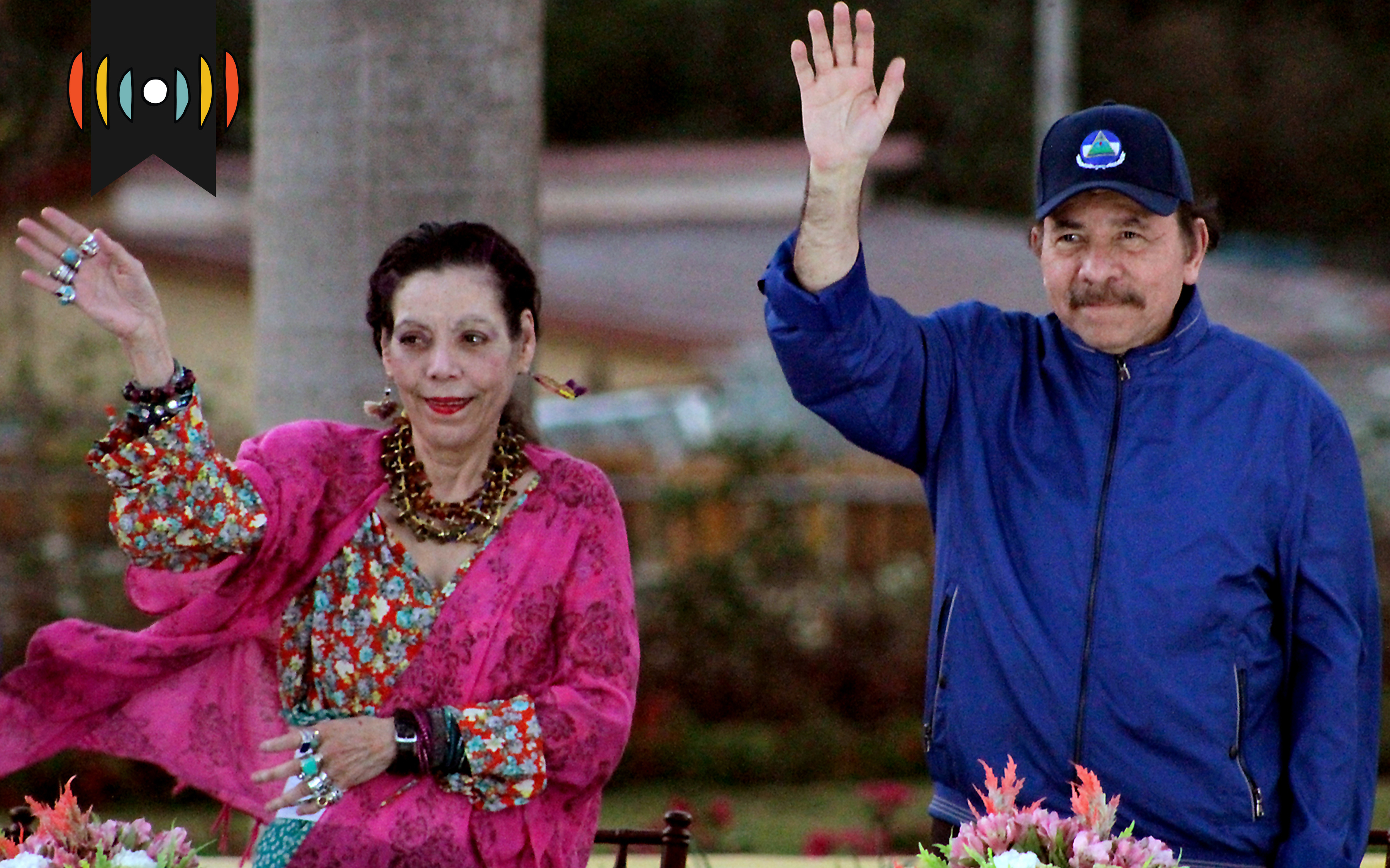
Nicaragua's President Daniel Ortega (R) and his wife, Vice-President Rosario Murillo wave at a crowd in Managua on March 21, 2019. Getty Images / Photo by Maynor Valenzuela / AFP
Editor's note: The following text is a transcript of a podcast story. To listen to the story, click on the arrow beneath the headline above.
MYRNA BROWN, HOST: Coming up next on The World and Everything in It: World Tour. Today, Nicaragua.
NICK EICHER, HOST: Daniel Ortega and his wife are tightening their grip on power. They’ve moved to end elections altogether, and their government has driven religious leaders into prison or exile.
Now the question in Washington is whether condemnation is enough, or whether it’s time for tougher action.
WORLD’s Emma Eicher has this week’s World Tour..
EMMA EICHER: At a Senate hearing last month, witnesses urged the United States to put more pressure on Nicaragua’s rulers.
It was the first hearing of its kind in 38 years.
GIL GUERRA: Earlier this summer, one of the co-dictators of Nicaragua, Daniel Ortega made an announcement at a rally for the Socialist Party that he leads that Nicaragua would simply cease to have elections whatsoever.
Gil Guerra studies Latin America at the Hudson Institute. He testified the U.S. needs to take action as Nicaragua’s future spirals:
GUERRA: Nicaragua in recent years and in the past few decades has been on a steady but persistent slide towards authoritarianism.
In the 1980s, the United States backed rebels fighting Nicaragua’s Sandinista government. Ortega led that government. He lost the presidency in the 1990 election, then returned to office in 2007.
Missionary Daniel Sorbera was in Nicaragua during the 2016 election.
SORBERA: Everyone that we spoke to did not support President Ortega … Almost everyone. That year he won, and it was just astounding landslide, landslide win, and everybody knew it was a rigged election.
Ortega’s wife, Rosario Murillo, became co-president last year.
With Ortega now 80 and facing health problems, Guerra says ending elections could help him cement Murillo as his successor. She is 75 herself, but solidifying her own power would pave the way for their son to eventually take over.
GUERRA: She does not seem to want to actually face the electorate or face an election because she knows that she is not only deeply unpopular with the Nicaraguan public, but also I think that there's a sense that maybe she doesn't have the same kind of loyalties within the regime apparatus.
Religious leaders have called out the regime’s abuses of power. So Murillo has targeted religious groups, especially the Catholic church. In 2020, the government detained or exiled hundreds of priests, nuns and bishops … with Murillo accusing them of “criminal terrorism.”
SAMUEL BEN-UR: What Ortega and Murillo are worried about is the institution of the Catholic Church, how it's the only autonomous body in Nicaragua that could potentially present any sort of threat to their authoritarian grip on the regime.
Samuel Ben-Ur is a research analyst at the Foundation for the Defense of Democracies. He says Murillo has basically been running the country already:
BEN-UR: She controls the national police, she's trying to find an identity for herself while also making a common enemy that could justify her eventually taking power once Ortega dies.
But what would U.S. intervention look like? Guerra says tougher sanctions could help topple the regime.
GUERRA: One of the things that I had in my recommendations was working with Canada and Switzerland to try to have sort of an allied gold ban on Nicaragua, which would deprive the regime of some of its income.
Guerra says that could also make Nicaragua’s gold mines less attractive to investors, including China.
And he points out the United States has other ways to put pressure on Nicaragua:
GUERRA: We have a free trade agreement with them. They're heavily dependent on us also for fuel.
Late last year, the United States Commission on International Religious Freedom released a report detailing ongoing religious repression in the country. They also called on the U.S. to address human rights violations.
Ben-Ur says whether America intervenes or not, he hopes it will at least address Murillo’s religious persecution.
BEN-UR: Will they tie it with a lot of other goals that the U.S. seeks in Nicaragua? Will they tie in religious freedom to that and protecting the Catholic Church?
On September 1st, Nicaragua’s government approved changes to the constitution that could keep Ortega and Murillo in power indefinitely. A final vote is scheduled for January.
Witnesses in the Senate hearing warned that leaves Congress little time to act.
That’s this week’s World Tour. I’m Emma Eicher.
WORLD Radio transcripts are created on a rush deadline. This text may not be in its final form and may be updated or revised in the future. Accuracy and availability may vary. The authoritative record of WORLD Radio programming is the audio record.
Please wait while we load the latest comments...
Comments
Please register, subscribe, or log in to comment on this article.