
Same law, different rules
The Biden administration said tighter power-plant emissions rules would deliver billions in climate and health benefits. The Trump administration says repealing them will save billions in compliance costs. Both claim the Clean Air Act is on their side. WORLD’s Mary Muncy reports.
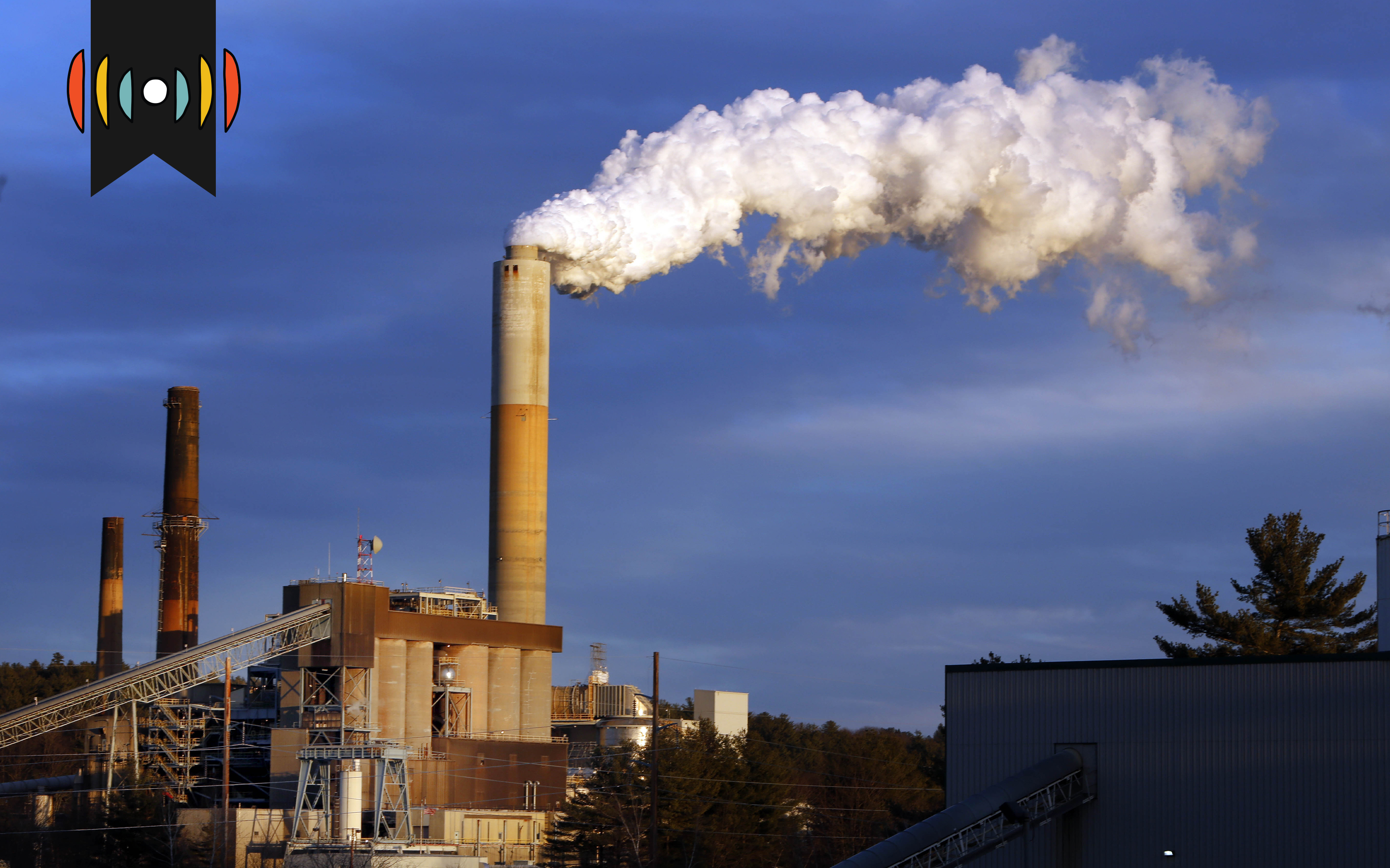
The coal-fired Merrimack Station in Bow, N.H. Associated Press / Photo by Jim Cole, File
Editor's note: The following text is a transcript of a podcast story. To listen to the story, click on the arrow beneath the headline above.
MARY REICHARD, HOST: Coming up next on The World and Everything in It changing rules on emissions.
The Environmental Protection Agency is considering repealing rules limiting emissions from power plants.
MYRNA BROWN, HOST: Advocates say the current rules protect Americans’ air and health, while the administration says ending them would bring down energy costs.
WORLD’s Mary Muncy reports.
MARY MUNCY: In 2024, the Biden administration told gas and coal-fired power plants they would need to start capturing 90% of their carbon dioxide emissions by 2032.
But last month, EPA Administrator Lee Zeldin said the agency would repeal the rule, calling it illegal.
ZELDIN: What we're doing is following the best reading of the Clean Air Act. If you have a problem with it, change the law.
The administration says the Clean Air Act allows the EPA to regulate air pollutants, that’s things like carbon monoxide and lead, things that would immediately harm humans. But the act doesn’t specifically mention greenhouse gases like carbon dioxide. Those may be potentially harmful, but don’t immediately hurt humans.
It’s another chapter in an old debate.
In 2007, the Supreme Court ruled greenhouse gases can be categorized as pollutants. The Obama administration then issued the Endangerment Finding, categorizing six greenhouse gases as pollutants and then regulating them.
The first Trump administration repealed those regulations.
Then in 2024, the Biden administration used the same Obama-era strategy to regulate power plant emissions.
Earlier this year, the Trump administration repealed the Endangerment Finding… and has been slowly repealing laws since. This repeal of power plant emissions standards is the broadest yet.
STEIN: The legal authority here is very unclear.
Kenny Stein is the Vice President of the Institute of Energy Research. Since the Obama administration, several related cases have gone to court.
STEIN: The Supreme Court… has passed decisions, particularly West Virginia v. EPA… where they sort of spelled out what they've called the major questions doctrine.
It says that Congress must mandate any federal actions that have a major impact.
The Trump administration argues the Biden-era regulations fit that description.
STEIN: If you have regulations that say you can only emit a certain amount of carbon dioxide, depending on where you set that threshold, that can basically require the elimination of coal generation, and if you set it low enough, it can even require the elimination of natural gas generation. And that was the problem with the Biden administration rules.
The Biden-era EPA argued power plants could meet the requirements through carbon capture and storage technology, and provided tax breaks for it.
But Zeldin calls 90 percent reduction too high and too costly.
ZELDIN: The overbearing and often unlawful rules that were sought by prior administrations to destroy reliable baseload power made energy prices skyrocket and threatened many communities and states throughout our country.
Zeldin says the repeal will save Americans $310 billion dollars in direct compliance costs.
Back in 2024, the EPA argued those rules would make financial sense too: citing $370 billion of savings in climate and public health benefits.
Stein says both of those numbers can be massaged, but it’s hard to put a real number on health and climate savings.
STEIN: They calculate that based on a theoretical lives lost, and it's not actual people who die. It's the you know the six months or a year that each person would live less because of a certain pollutant or certain environmental effects.
And then that number is translated to a dollar amount.
But others don’t think the Trump administration’s repeals will hold up.
DEANS: The Trump administration broke the law.
Bob Deans is the director of strategic engagement for the Natural Resources Defense Council. His organization is suing the Trump administration to block the repeal. A separate coalition of 20 states filed a similar lawsuit.
DEANS: The Clean Air Act requires the United States Environmental Protection Agency to protect the country against air pollution that endangers health or public welfare.
He blames climate change for everything from higher home insurance costs, to hot summers, to bad air. He believes cutting emissions could save $370 billion dollars and says clean energy is cheaper in the long run.
DEANS: The benefits were $20 in benefits for every $1 in compliance costs. I'd take that investment any day.
Going forward, Stein expects the Trump administration to continue trying to deregulate the energy sector.
STEIN: What Zeldin is talking about is kind of reversing the whole of government approach to climate change
Taking it from economy-wide to industry-specific.
The public comment period on the repeal ends on the 19th, and unless a court blocks it, the rule will go into effect in November.
Reporting for WORLD, I’m Mary Muncy.
WORLD Radio transcripts are created on a rush deadline. This text may not be in its final form and may be updated or revised in the future. Accuracy and availability may vary. The authoritative record of WORLD Radio programming is the audio record.
Please wait while we load the latest comments...
Comments
Please register, subscribe, or log in to comment on this article.