
Safe from scrutiny
California’s Safe at Work Act aims to protect service providers from online threats. Independent journalist Nick Shirley says its broad language could instead expose watchdog reporting to fines and criminal charges. WORLD’s Emma Eicher reports.
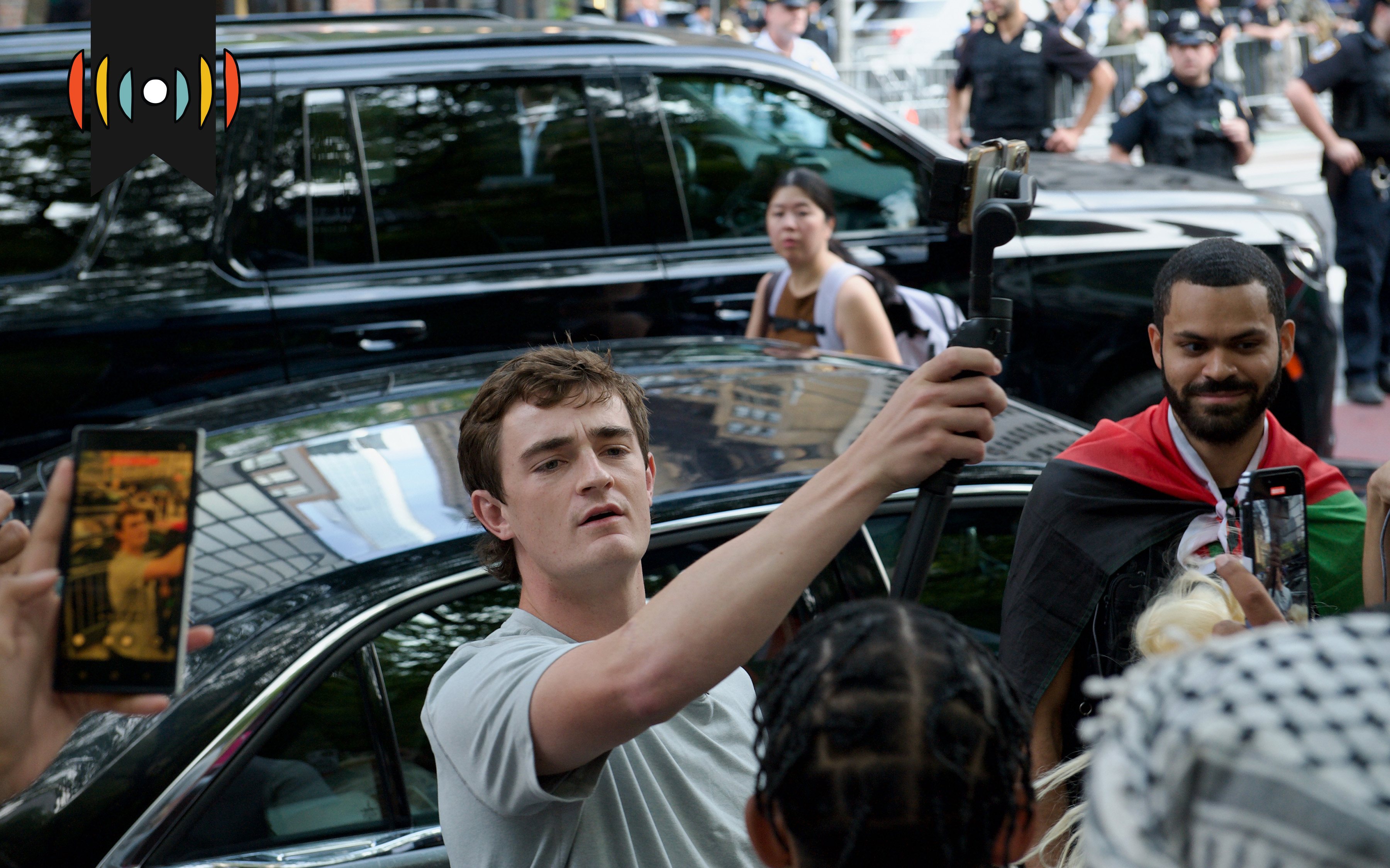
Nick Shirley at a pro-palestinian protest, September 23, 2025 Wikimedia Commons / Creative Commons / Photo by SWinxy
Editor's note: The following text is a transcript of a podcast story. To listen to the story, click on the arrow beneath the headline above.
NICK EICHER, HOST: Up next: a new California law aimed at protecting nonprofit workers from doxxing is already facing a First Amendment challenge.
MARY REICHARD, HOST: It’s known as AB 26-24, the Safe at Work Act. Critics say it’s primarily aimed at an independent journalist whose fraud investigations helped put the issue in the spotlight. Nick Shirley sued on Friday, arguing the law could chill his reporting before he even does it. WORLD’s Emma Eicher has the story:
SOUND: [Protest]
EMMA EICHER: In late August, protesters gathered at the state capitol to voice their opposition to what they call the Stop Nick Shirley Act.
PROTESTER: As Americans we are entitled not only to hold government accountable but to ask questions and investigate how our tax dollars are being spent. It is also our right to report to the public what we find.
Shirley, a self-proclaimed independent journalist, made a name for himself last year by posting videos alleging child daycare centers in Minnesota were receiving millions of dollars without providing services.
SHIRLEY: So this is Quality Learing Center. It meant to say ‘Quality Learning Center.’ They spelt ‘learning’ wrong.
Federal investigators were already probing taxpayer fraud in that same state. Shirley’s videos brought the issue before a larger audience and resulted in a surge of resources. Critics contested some of his claims.
SHIRLEY: Ma’am, what do you think of the fraud that’s taking place here in Minnesota?
California is now under the microscope. This June, the Trump administration suspended federal homelessness funding to the Los Angeles Homeless Services Authority as officials cited an accounting discrepancy involving about $37 million in taxpayer funds.
Here’s the U.S. Attorney for Los Angeles Bill Essayli on Fox & Friends:
ESSAYLI: Look at the fraud in healthcare, look at the fraud in homelessness, high speed rail!
That’s the backdrop for California’s Safe at Work Act, or AB 2624. It comes as the Trump administration continues to scrutinize how federal funds are distributed to service providers.
Democratic State Senator Lena Gonzalez says that could put immigrants at risk of being targeted:
GONZALEZ: This bill comes forward as a direct result response to request from immigrant support service providers including legal aid organizations, humanitarian relief providers, case managers, and advocates who are facing targeted harassment because of the work they do.
AB 2624 restricts online publication of personal information—including addresses and images—if intended to threaten or incite violence. Violators could face financial penalties or criminal charges.
The bill passed in California last month. All 10 Republican state senators voted against it.
SMITH: The real goal of this legislation is to chill those core First Amendment journalistic protected activities.
Zack Smith is a senior legal fellow at the Heritage Foundation.
SMITH: Opponents of this bill said the real impetus behind it from California Governor Gavin Newsom was not so much to protect these individuals from threats, as to protect them from the embarrassing situations that occurred when Nick Shirley and other journalists would show up and expose the fraud, waste, and abuse that was occurring.
Many California Republicans voiced First Amendment concerns. GOP Assemblyman Carl DeMaio on Fox News:
DEMAIO: It is our hope that the Department of Justice will file to intervene, because this is an open and shut infringement on our First Amendment rights.
Smith says opponents have valid constitutional objections:
SMITH: I think those who oppose the bill would have a very strong argument to some degree that the provisions are somewhat underinclusive in some respects, somewhat over inclusive in other respects and because of that, that unclear language used in the bill, they would say that it does, in fact, violate the First Amendment.
On the other hand, Smith says the law could be constitutional because it only restricts individuals who seek to inflict bodily harm or make threats through publishing personal information.
Late last week, Shirley filed suit to challenge the law on First Amendment grounds, saying he fears facing criminal charges for work done before the bill takes effect.
Smith says he shares concerns about how the Act will affect journalism while the legal issues play out:
SMITH: You have journalists who are potentially facing thousands of dollars in fines, you have journalists who are potentially facing imprisonment if they're convicted, and this gives a lot of ammunition for many of the individuals who are engaged in what appears to be fraudulent activity to be able to push back and essentially threaten the individuals who are exposing this fraud, waste, and abuse.
The Safe at Work Act is set to take effect in October, 2027.
Reporting for WORLD, I’m Emma Eicher.
WORLD Radio transcripts are created on a rush deadline. This text may not be in its final form and may be updated or revised in the future. Accuracy and availability may vary. The authoritative record of WORLD Radio programming is the audio record.
Please wait while we load the latest comments...
Comments
Please register, subscribe, or log in to comment on this article.