
Room to try something new
“Families are starting to think that they can try new things and find good solutions that will really make everyone in the family thrive.” Historian and homeschooling mother Dixie Dillon Lane talks with WORLD’s Lindsay Mast about how homeschooling went mainstream.
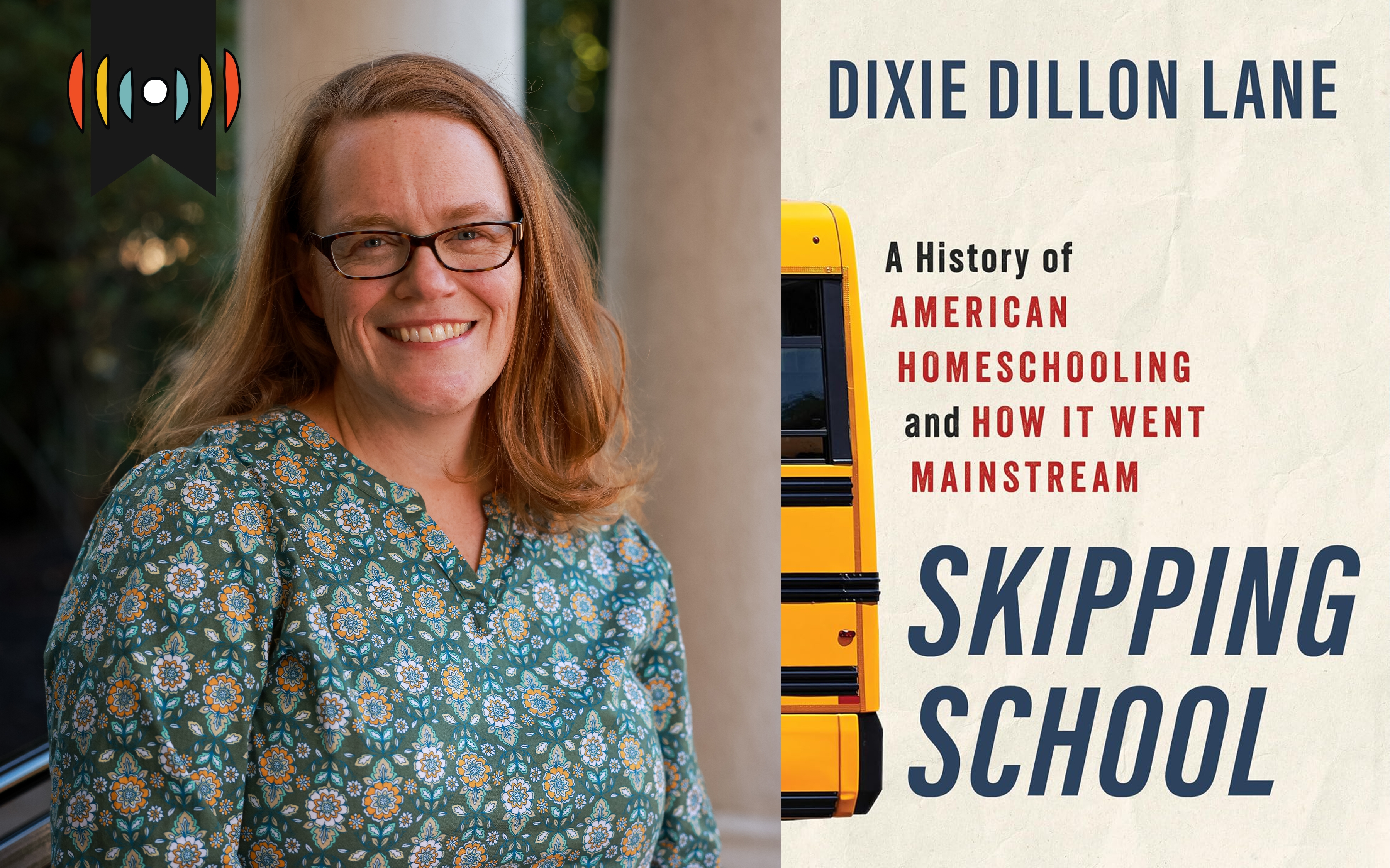
Dixie Dillon Lane Handout photo
Editor's note: The following text is a transcript of a podcast story. To listen to the story, click on the arrow beneath the headline above.
MARY REICHARD, HOST: Today is Tuesday, November 3rd.
This is WORLD Radio and we thank you for listening.
Good morning. I’m Mary Reichard.
NICK EICHER, HOST: And I’m Nick Eicher.
Coming next on The World and Everything in It: homeschooling goes mainstream.
Religious convictions once topped the list of reasons parents chose to educate their children at home. Now, concerns about school safety and academics are taking the lead.
REICHARD: Historian Dixie Dillon Lane has studied that shift. She’s also a homeschooling mother of four and author of the book titled Skipping School: The History of American Homeschooling and How it Went Mainstream. She spoke with WORLD’s Lindsay Mast.
LINDSAY MAST: I think a common stereotype, and I think there are reasons for it, is that religion is a major driving factor for homeschooling. And yet you found that religion is not any longer the top reason families give for homeschooling. So what are the leading reasons now and how do they differ between, say, first generation and second generation homeschoolers, if you want to call it that?
LANE: It's so interesting because homeschooling is so much more diverse than you might imagine, and it really always was more diverse. I think we tend to think of either like conservative Christian homeschooling or liberal secular unschooling as if they're totally different things, but both those things were present at the beginning in the 1950s. But once you hit our current century, we start seeing people who are homeschooling who are not part of fringe subcultures, not that Christians or as secular liberals are fringe, but that they were a bit more radical than the mainstream. And so as we moved into the mainstream, religious reasons started going down for homeschooling, and we started seeing things like school safety become a stronger reason, things like school academics becoming a stronger reason. Now religion is still up there, but it's really declined. And so now we have people who are homeschooling for multiple reasons of which religion may or may not be one.
MAST: I wanna say the book was very well written and easy to read. And I also really respect it. I felt like you grappled with instances of abusive “homeschooling” parents really well. So I do briefly wanna talk about safety and or maybe not briefly, I do want to talk about safety and oversight and and just ask you how do you respond to concerns that some children might fall through the cracks, as they say, as in the 2023 Washington Post series that you allude to in the book, or even the recent instances in Connecticut, which resulted in serious regulations for parents.
LANE: I think one of the most important things that people who embrace homeschooling can do is be open to research on this matter because none of us want children to be abused or neglected. So I think the most important thing to do is to try to find out whether homeschooling really is or is not a high risk factor for these things. And as far as we know, it really is not. So these things do happen, but a lot of the time there's a correlation there. So there's a family that is abusive that is also homeschooling. It may even use homeschooling as part of its abuse or neglect, but the same can be true of other practices. So that's the place to be careful is to be doing everything we can to look out for children while also not restricting whole populations unless we have evidence that that's gonna help. So what we need to do is try to figure out whether or not that's true. And in most cases it's really not. Most homeschooling families are very much like the rest of the country and are really interested in the good of their children, not in harming their children.
MAST: And just to end on a positive note, what do you see out there that makes you feel good and encouraged about the future of homeschooling?
LANE: There's just so much possibility and so much innovation out there. I personally love the way that I can interact with my children through homeschooling and I can observe them and respond, and we can do so many fun, wonderful things. And seeing so many families in different paths of life in America doing that is really encouraging because it means that families are starting to think that they can try new things and find good solutions that will really make everyone in the family thrive and that's a wonderful thing to do.
MAST: Dixie Dillon Lane is a historian and homeschooling mom. Her book is called Skipping School: The History of American Homeschooling and How it Went Mainstream. Dixie, thank you!
LANE: Thank you, Lindsay.
WORLD Radio transcripts are created on a rush deadline. This text may not be in its final form and may be updated or revised in the future. Accuracy and availability may vary. The authoritative record of WORLD Radio programming is the audio record.
Please wait while we load the latest comments...
Comments
Please register, subscribe, or log in to comment on this article.