
Politics in its place
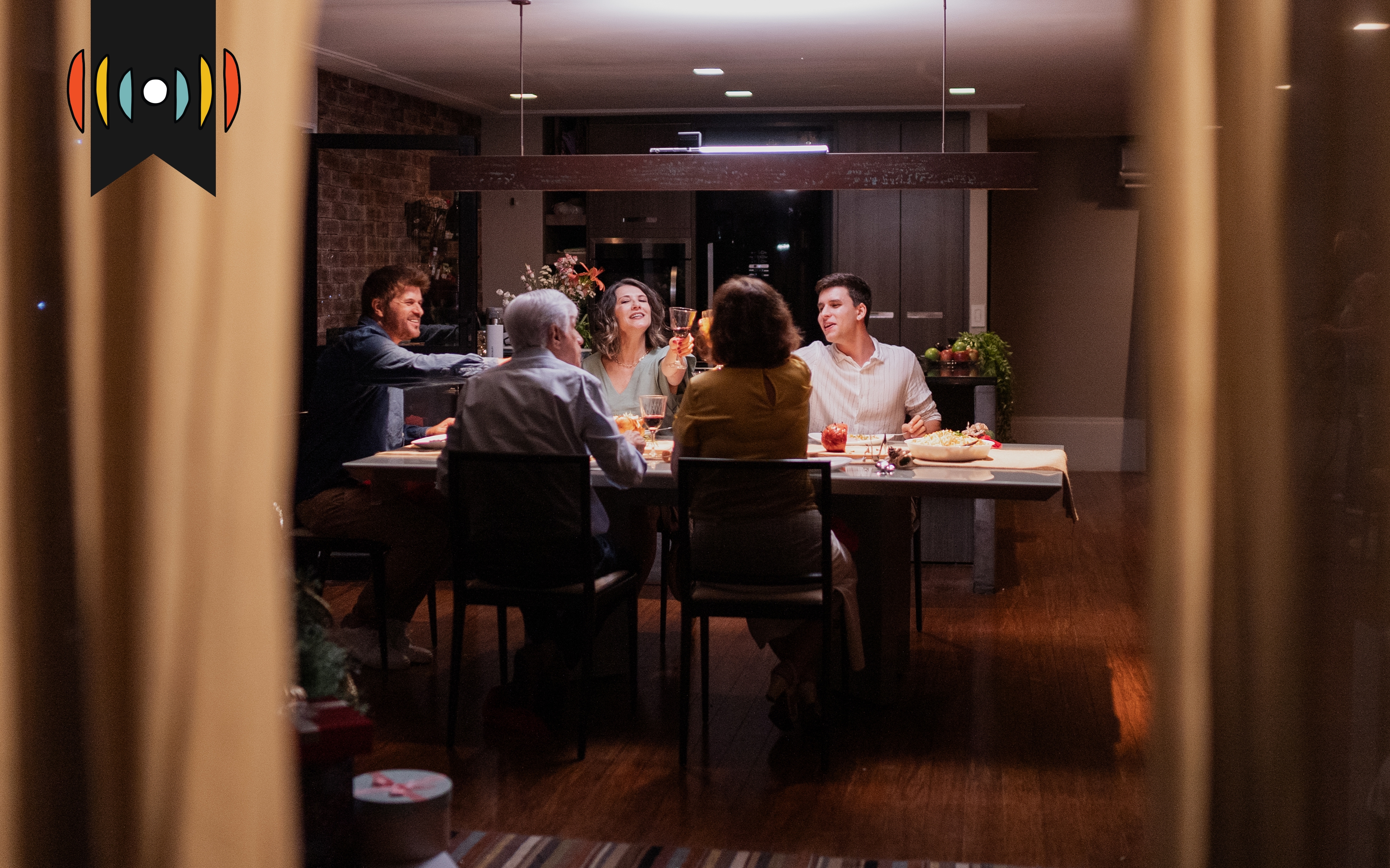
When political disagreements cost friendships and family relationships, how should Christians respond? Former diplomat and pastor Jeff Samelson tells WORLD’s Mary Reichard that Christians must remember their first allegiance to God. If politics makes it “difficult to pray, to go to church without politics intruding,” he warns, “it probably has gotten in the way.”
FG Trade / E+ via Getty Images
Editor's note: The following text is a transcript of a podcast story. To listen to the story, click on the arrow beneath the headline above.
MARY REICHARD, HOST: Coming up next on The World and Everything in It: People over politics.
Americans are voting today in a consequential midterm election. We’ll have coverage for you tomorrow morning and ongoing as needed.
NICK EICHER, HOST: But first, the toll politics can take on personal relationships. Sometimes it’s severe enough to cause what’s called a “political breakup.” A UC Irvine study reports more than a third of Americans report having lost relationships over political differences.
REICHARD: Well, joining us now is Jeff Samelson. He's a pastor and author, but before he went into ministry, he was a U.S. Foreign Service Officer, serving at the U.S. Embassies in Singapore and Bogota, Colombia. His book, titled Walk This Way: Political Engagement for Bible-believing Christians, is an effort to help guide Christians on political engagement. And he joins us now to talk about all of this. Jeff, good morning to you.
JEFF SAMELSON: Good morning. Thanks for having me.
REICHARD: Well, many people avoid talking politics with family and friends just to keep the peace. Do you think that's wise, or should we be willing to disagree?
SAMELSON: We should be willing to disagree. Some people have been in a relationship with, you know, Uncle Jim or Aunt Sally long enough to know that, you know, there is no way they can speak politics with them without having a problem. but we shouldn't in general let the fear that we think might get uncomfortable keep us from being involved. Engaging with politics is part of a privilege that we have as not just as as Americans, but as as Christians and and children of God because this is one of the ways in which we engage with the world to love our neighbor just as God has called us to do.
REICHARD: So let's get down to brass tacks here. When two faithful Christians reach opposite political conclusions, what then? Is it a matter of Christian conscience? I'm thinking of abortion, or is it something else?
SAMELSON: Well, it really depends on the issue in many cases. I, I'd say on an issue like abortion, you know, that's that's something pretty clearly a moral issue. Although then again you're going to have differences in terms of, okay, you know, maybe we're both pro-life, but one of us is more in favor of an incremental approach and one of us is more of an a absolutist, abolitionist approach.
But in these cases, you know, we are called first of all to be Christians. That is our first identity as as children of God. And that means that we all the things that we are as called to be as Christians, that means we're going to be with our political engagements and our pro political conflicts as well. so we're going to be patient, we're going to be loving, we're going to be merciful, we're going to look for understanding, all those kinds of things, which means we don't jump to conclusions and we certainly don't jump into conflict if we can avoid it.
REICHARD: When is a political disagreement just a disagreement? And then when does it become something that a church must address?
SAMELSON: That's a very good question. I, I can think of some cases just within my own church body where there was there were people wondering why it was that this congressman who was from, you know, a different party from the the vast majority of of us, you know, people were asking how could he possibly still be a a member of our our churches? But we need to be careful in these cases. Determine, okay, is this a matter where someone is advocating for something that is clearly contrary to God's will? If that is the case, well then it becomes a problem. That's a point where pastors and and church leadership will you know should step in and say, hey, you know, John, Jill, whoever it may be, you know, that there is an issue here because there's this is not no longer just an issue of politics or of you know partisan partisanship. you are actually advocating for something or pushing something that is contrary to God's will, and and that's a spiritual problem for you. It's not just a problem in terms of what is does to the rest of the church.
REICHARD: You also warn against making politics into an idol. What's the clearest sign that politics has just become too important to a person?
SAMELSON: If somebody is finding that that is the thing that is setting the standard for their day, if they're finding it difficult to pray, to go to church without politics intruding, it probably has has gotten in the way. It's taken the place of God in their life. Jesus had that one incident with the rich young ruler who came to him and you know wanted to know how what he must do to be saved. Jesus had to teach that young man that he had allowed his his wealth to get in the way and become a more important thing to him than than God himself, even though on the surface he was doing all the right things.
REICHARD: I know there's a lot of people feeling anxious about the election results. You also help Christians struggling with political anxiety. What do you advise there?
SAMELSON: In a word, slow it down. If it's a conversation, ask them questions. Try to figure out you know what you don't understand, where they're coming from. Ask yourself questions. Do I actually know everything that I think I know about this? Is is there something perhaps that I'm missing, some angle or some aspect of this that is not part of my current knowledge? You wanna slow it down so that you're not jumping straight from I saw this thing that upset me into, okay, now there is this action I need to take or this there's this emotion that I need to feel and express and perhaps take out on other people.
REICHARD: Final question here, Jeff. How are you praying as we begin this election day?
SAMELSON: I am praying for God to do what is best for his church, for his people, for his mission, and yes, for this nation. He is the one who knows what is best, as much as we might pray, thinking, okay, I know God exactly what it is that you need to accomplish here. He knows better than we do, and He is in charge. He has promised He will work all things out for the good of those who love Him, who have been called according to His purpose. And so therefore we we need to be calm in that, we need to have peace.
REICHARD: Very good. Jeff Samelson is the author of Walk This Way: Political Engagement for Bible-believing Christians. Jeff, timely, thank you so much.
SAMELSON: My pleasure. Thanks.
WORLD Radio transcripts are created on a rush deadline. This text may not be in its final form and may be updated or revised in the future. Accuracy and availability may vary. The authoritative record of WORLD Radio programming is the audio record.
Please wait while we load the latest comments...
Comments
Please register, subscribe, or log in to comment on this article.