
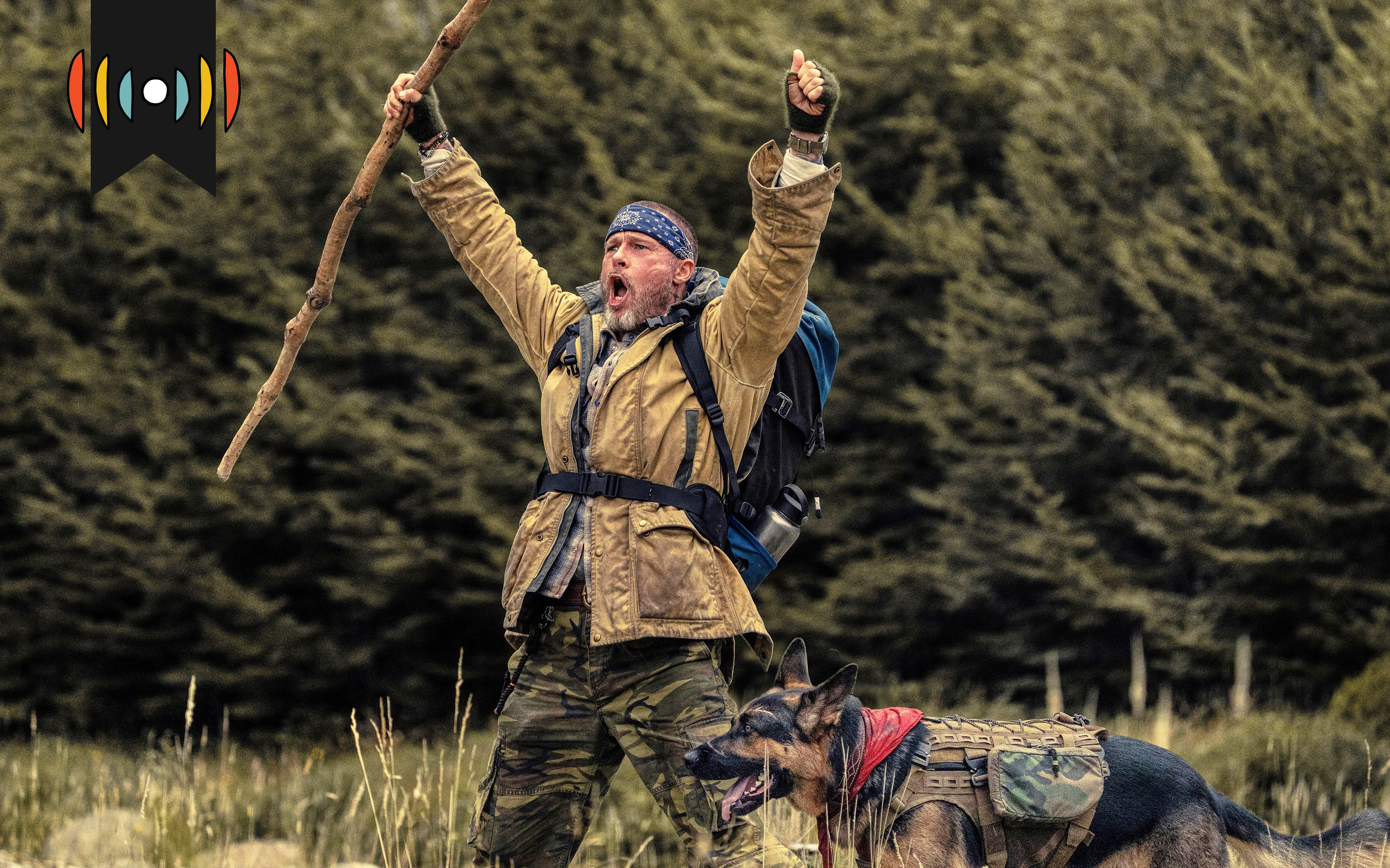
Brad Pitt in a scene from Heart of the Beast. Associated Press / Scott Garfield / Paramount Pictures
Editor's note: The following text is a transcript of a podcast story. To listen to the story, click on the arrow beneath the headline above.
MYRNA BROWN, HOST: Today is Friday, September 25th. Thank you for turning to WORLD Radio to help start your day.
Good morning. I’m Myrna Brown.
NICK EICHER, HOST: And I’m Nick Eicher.
Coming next on The World and Everything in It: Brad Pitt and a combat dog, stranded in the wilderness.
Now, if you know how dog movies tend to go, you may already be a bit nervous—especially if you’re a dog lover.
But be not afraid: WORLD arts and culture editor Collin Garbarino has a review of the new film in theaters this weekend. It’s titled Heart of the Beast.
COLLIN GARBARINO: Dog lovers have complicated feelings when it comes to dog movies. The genre doesn’t matter. If there’s a dog in it, there’s a pretty good chance he’s going to die.
In Brad Pitt’s new movie Heart of the Beast, Pitt plays James, an army veteran stranded in the wilderness with his dog. It’s the kind of set up that’s bound to cause fear and trepidation in the hearts of dog lovers.
SOUND: [Dog whimpering]
But no need for fear. In the opening shot, director David Ayer establishes the dog survives. It’s a nice reassurance but be warned: Just because the dog lives, it’s not all sunshine and rainbows.
The film begins with James on vacation in the wilds of Alaska with his German Shepherd Odin, whom he affectionately calls “Odie.” James is a retired Green Beret, and Odin was his combat dog. This getaway is a form of therapy for the pair. They’ve both experienced the horrors of war. And they’ve got the psychological and physical scars to prove it.
JAMES: It’s OK, boy. Just a bad dream. We’re not there anymore.
Soon, however, their idyllic retreat into nature becomes a struggle for life and death as nature’s beauty gives way to peril.
JAMES: We’re not going to die out here.
Heart of the Beast is both a magnificent celebration of the world’s natural splendor and a taut survival thriller. It was filmed on location in New Zealand, much of it in areas where no film crew had previously ventured. Cinematographer Mauro Fiore, who won an Academy Award for his work on Avatar in 2009, creates stunning visuals that immerse the audience in this wilderness. The movie’s probably worth seeing just for the awe-inspiring scenery.
The narrative is just as compelling as the setting. Stories about man’s best friend have a built-in appeal, but there’s another emotional layer to this movie. Odie isn’t just James’ dog. He’s a comrade in arms. His loyalty and dependability have been tested in the crucible of war. This trek through the wilderness isn’t the first time they’ve had to rescue each other. And as they attempt to escape danger, you feel the spiritual fatigue tied to their world weariness.
JAMES: Fifty-eight miles. No one’s coming for us. We’re just going to have to do this the hard way.
But along with their grit and determination, we also get glimpses of the hope and comfort the two find in each other’s companionship.
The bare-bones nature of this story feels refreshing in an age in which studios believe audiences only care about overly long epics full of computer-generated spectacle. Heart of the Beast contains nothing extraneous in its one-hundred-one-minute runtime. For most of the movie, Pitt and his canine co-star are the only faces we see. Pitt plays James as grizzled, devoted, and determined, and his performance carries the emotional weight of this film. And for the most part, he’s the only person with any lines.
Moreover, James is the kind of hero that will appeal to the kind of middle-America folks Hollywood often ignores. Not only is he a veteran, but he’s an outdoorsman. He enjoys camping, fishing, and hunting. He even wears a Bass Pro Shops t-shirt and reads Cormac McCarthy. It’s nice to see a conservative-coded character portrayed in such a sympathetic manner.
Sensitive viewers, however, need to be aware that this movie is rated PG-13 for violence, peril, and bodily harm. James and Odin’s journey can be painful to watch.
JAMES: We’ve been through worse.
Ayer doesn’t sugarcoat or romanticize the beauty of nature. The elements are brutal, and eventually the hunter becomes the prey. The movie contains blood, bone-crunching injury, and rough-and-ready surgery that might cause you to watch through your fingers. But in the end, the authentic brutality serves to highlight the theological subtext that undergirds the film.
Not only is Ayer himself ex-military, but he’s also a Christian. And you can’t understand Christianity without understanding the world’s inherent goodness and its violence. Ayer’s 2014 World War II movie Fury, which also starred Brad Pitt, was notable for its favorable presentation of faith. I recently got to talk with Ayer, and in our conversation, I asked him about certain allusions to faith in Heart of the Beast. He confirmed they were intentional.
DAVID AYER: The core theme… It’s really spiritual endurance and unconditional love, sacrificial love.
There’s nothing preachy about this film. Rather, the themes are embedded in both its script and visual imagery. It wouldn’t be right to treat James and Odin’s journey as an allegory like Pilgrim’s Progress, but as you watch, you’ll see the pair persevere through hardship like Bunyan’s hero did. And just as the Bible shows that salvation comes through judgment, the film suggests that the way of healing comes through adversity and sacrificing for those you love.
JAMES: I got you.
I’m Collin Garbarino.
WORLD Radio transcripts are created on a rush deadline. This text may not be in its final form and may be updated or revised in the future. Accuracy and availability may vary. The authoritative record of WORLD Radio programming is the audio record.
Please wait while we load the latest comments...
Comments
Please register, subscribe, or log in to comment on this article.