
sturti / E+ via Getty Images
Editor's note: The following text is a transcript of a podcast story. To listen to the story, click on the arrow beneath the headline above.
MARY REICHARD, HOST: Coming up next on The World and Everything in It: answering the call.
Rural emergency crews are stretched thin. In some communities, that can mean longer waits for help. One national study found one in ten rural EMS units took more than a half an hour to show up.
NICK EICHER, HOST: WORLD’s Lauren Smyth paid a visit to one station in Michigan that’s been trying for months to fill open positions. She reports now on why recruiting is so difficult, and why some first responders keep answering the call.
SOUND: [Ambulance departure]
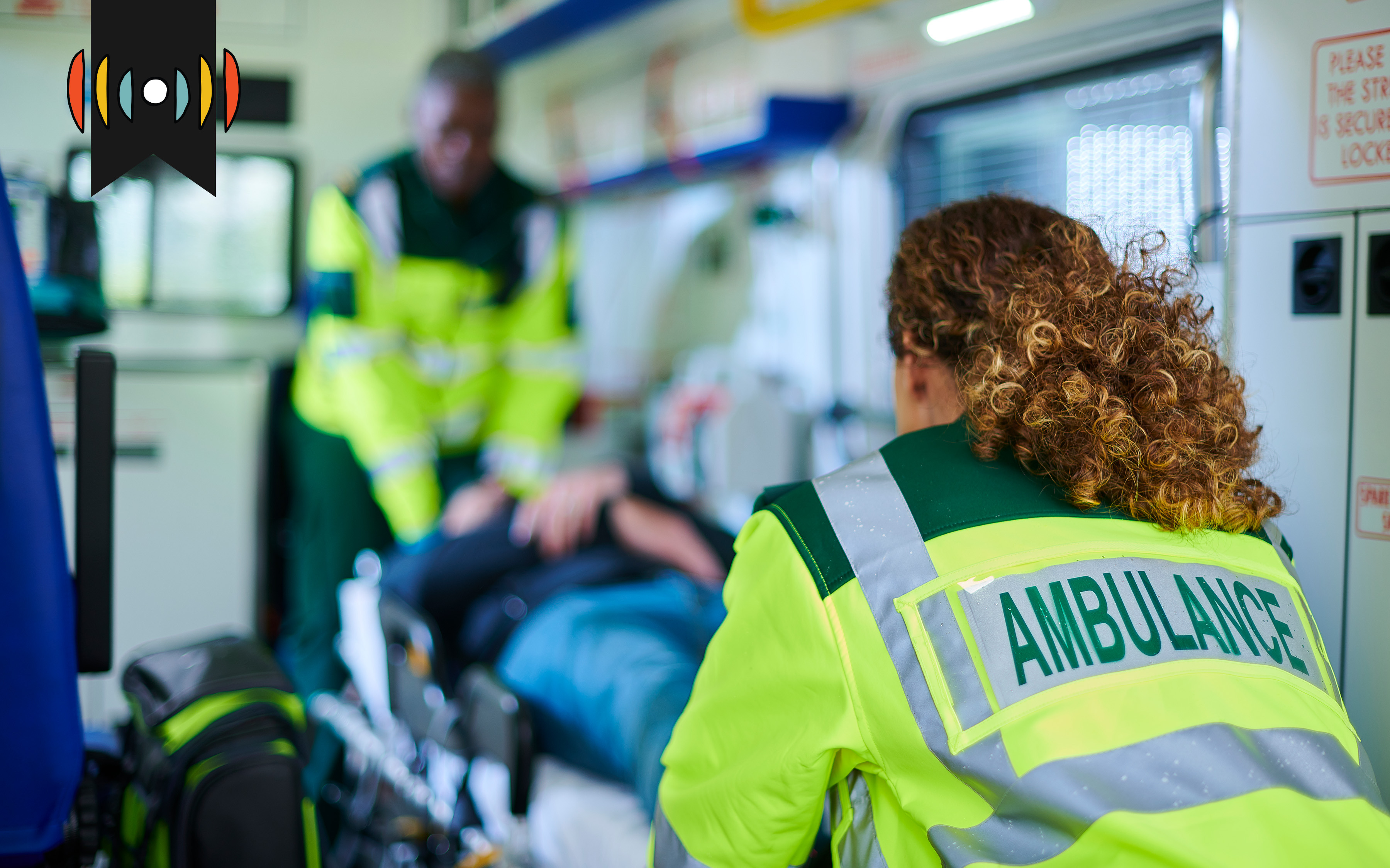
Zachery Gilstorff and his EMT partner are taking the ambulance out on a call.
GILSTORFF: Lately it’s been about four to six a day…. Your chest pain, trouble breathing, seizures, strokes, things like that, diabetic problems.
Gilstorff is the only full-time paramedic in Michigan’s Somerset Fire Department. He’ll be on duty for most of the next 200 hours.
GILSTORFF: Right now we’re down on paramedics…. We’re slotted for three and just haven’t been able to fill it.
Somerset is trying to hire more paramedics. The job postings have been up for six months, and Gilstorff says they’ve had zero applicants.
Stations need paramedics to provide advanced life support for patients experiencing serious emergencies like heart attacks or strokes. Without a paramedic on, Somerset has to call in another station.
GILSTORFF: You’re talking 15, 20 minutes now for an advanced life support unit to get there instead of a few minutes.
The first responder shortage has hit rural stations like Somerset the hardest, but it’s a problem everywhere. Emergency call volumes over the last two decades have tripled. Now, 60% of first responder agencies say they don’t have the staff to meet that demand.
GILSTORFF: When I first started back in 2012, you couldn’t get a firefighting job…. There was hundreds of applicants applying for five spots. Now you’re lucky to get three.
Gilstorff has spent three years and thousands of dollars in training to perform care like cutting into the throat to open an airway, and injecting medication directly into bone. That’s bumped him to $22 per hour—well below Michigan’s average wage.
GILSTORFF: If I had the answer to fix it, I'd be a lot a lot richer, that's for sure.
Emergency medical services, fire, and police often compete for limited tax dollars. Government agencies and insurance companies usually set compensation rates, not the station itself. Additionally, many first responders are unpaid volunteers, making it harder for paid workers to argue for higher wages.
Part-timer Don Atwood has worked as a first responder for almost two decades,
ATWOOD: I don't know of a single one of us that has only one job.
He says most people like him have to take three or even four jobs just to get by.
ATWOOD: Two jobs would be—that’d be nice…. Oftentimes it ends up being another job in EMS because it’s the shorthanded thing, right? There’s a lot of availability. There’s options. There’s openings.
Shifts can last multiple days. Working overtime and adding other jobs could mean spending weeks away from family—and bringing home the emotional burden of hard calls. First Responder Initiative says they face elevated risks of marital problems, cancer, suicide, mental illness, and accidental death.
But some are still choosing the job. Isaac Elliott likes the hands-on work.
ELLIOTT: It's a very interpersonal career, despite what you'd think. You know, you automatically think of a movie with someone doing CPR and the AED or something, but that's not as common as just chatting with a patient.
Elliott just graduated from a first responder training program at Jackson College.
ELLIOTT: We had quite a few students who dropped…. They realized early on that this wasn’t for them, or the schedule wasn’t going to work, or something else came up.
Classes were scheduled during the workday and cost $3,000.
ELLIOTT: We had a little bit of, you know, liquid funds to fund this. But if that hadn't been happening, I would've probably had to just scrape and save for quite a few more months to years.
Elliott is about to become a dad. As a new first responder, he’s been working unpaid. But he believes more training will eventually mean earning enough to support his growing family.
ELLIOTT: You can make a fair amount of money during overtime if you want to work yourself into the ground, but you've got to be willing to do that. But if you get the right certifications, go the right path, that's what you're interested in, you can absolutely make of it a viable career.
SOUND: Ambulance departure
Back at the Somerset station, an ambulance departs. Don Atwood just came off a 12-hour shift, so he’s staying back and heading home.
ATWOOD: For many of us, it's just a calling. It's the only thing that we would want to do, the only thing we'd ever do.
For WORLD, I’m Lauren Smyth in Somerset, Michigan.
WORLD Radio transcripts are created on a rush deadline. This text may not be in its final form and may be updated or revised in the future. Accuracy and availability may vary. The authoritative record of WORLD Radio programming is the audio record.
Please wait while we load the latest comments...
Comments
Please register, subscribe, or log in to comment on this article.