
An inherited certainty
You don't have to believe in God to believe murder is wrong. But where did that conviction come from? Mary Reichard talks with Joel Alperson about the moral convictions we've inherited—and how little we may understand their foundations.
Editor's note: The following text is a transcript of a podcast story. To listen to the story, click on the arrow beneath the headline above.
MARY REICHARD, HOST: Today is Thursday, October 8th. Thank you for turning to WORLD Radio to help start your day.
Good morning. I’m Mary Reichard.
MYRNA BROWN, HOST: And I’m Myrna Brown.
Coming next on The World and Everything in It: the case for Judeo-Christian values.
Today, a question at the heart of the modern world: can moral truth survive without God?
REICHARD: I recently had a conversation with Joel Alperson, assistant to Dennis Prager, a Jewish intellectual and conservative commentator who founded the media organization PragerU.
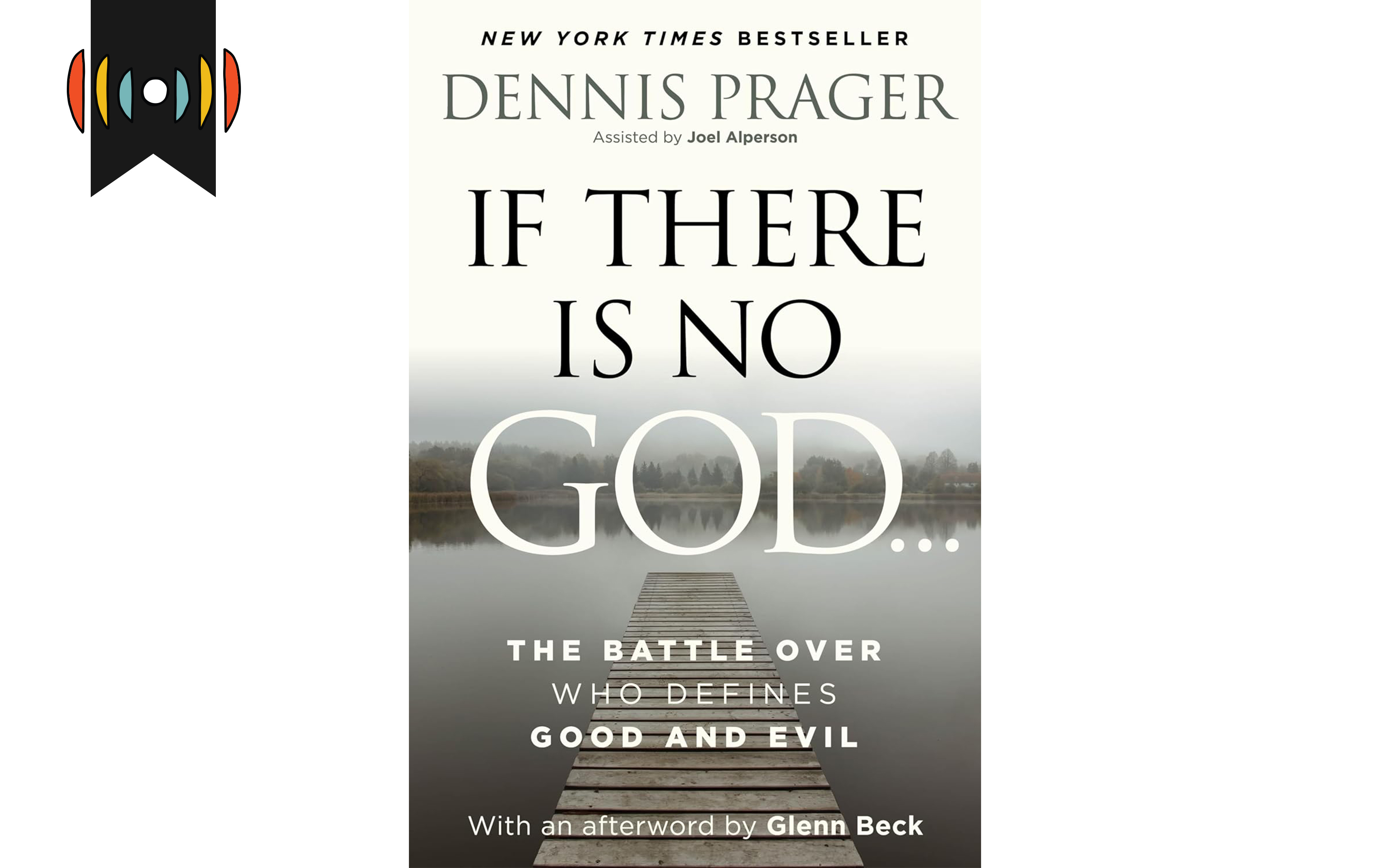
Alperson helped Prager on his latest book titled If There is No God: The Battle Over Who Defines Good and Evil. We used it as a jumping off point to discuss doubt, suffering, and why a secular society often takes its moral foundation for granted.
REICHARD: Joel, I read that you were not satisfied with the answers you got to spiritual questions when you were a boy. And then after working on The Rational Bible series with Dennis Prager and then this latest book, I wonder: did you finally find the answers that your younger self was looking for?
JOEL ALPERSON: Yeah. I mean from a spiritual standpoint, like we're just passing right now through the Jewish High Holidays, which is by far religiously the toughest time of the year for me. I have a terrible time with prayer. You want to talk about friction? Showing up at synagogue and submitting myself to the prayer services that Orthodox Jews submit themselves to or in many cases enjoy is putting it politely a very big challenge for me. So I don't know at my age that I'm ever going to really change and say I love prayer and I just feel the presence of God around me all the time. I don't know that I'll ever be that person. But my connection to God and the Torah is more intellectual. And I think in some ways it comes with every bit as much passion as for somebody who is more spiritually oriented. I just connect to God on a different wavelength.
REICHARD: Yes, I can understand that. I had a German pastor when I first came to Christian faith in a serious way, who was so rational in the way he explained the faith. I could really go with that. And then somebody said to me, you know, Mary, you just have to doubt your doubts. I don't want to doubt my doubts. I want my doubts to be answered.
ALPERSON: Why do I have to doubt my doubts? Having questions is fine. But if I have fundamental doubts, how can I be a light to anybody, even to myself? If foundational issues aren't resolved, they have to be resolved. And the good news is I think that there are fantastic resolutions. Probably the toughest one is unjust suffering. A lot of people will say the Holocaust, six million Jews were murdered by the Nazis. You know, how does a just God allow for that? Well, first of all, people don't blame man for that, they blame God for that, which I think is tremendously unfair. I think the harder challenge by far is a tsunami, is cancer, is a tornado, the kind of things that presumably we don't control and that God allows for in the world that He created. How is it fair to a newborn infant that's born with half of a heart or half of a brain, who suffers for a certain amount of time and then dies. How does a just God allow for that? That I would say is the single toughest challenge that I know of. And I don't think that there are a lot of great answers to that, but done well, and this is an argument that Dennis makes, done well, if you don't do Judeo-Christian values, what is going to even come close to matching it for creating good societies? So I'm gonna throw all of that away because of unjust suffering. I could see how somebody could say that, and I couldn't laugh at them for saying it. But so much more good is being done in our world because of these values that I simply can't sacrifice them by saying, "There's unjust suffering that I can't answer for, therefore I'm throwing it all away."
REICHARD: Joel, I wonder how you would answer this. An atheist says to you, Look, I don't believe in God, but I already know murder and rape and cruelty, I'm not going to string puppies up by their necks. I know that's wrong. What would you say that person is missing?
ALPERSON: They know it's wrong. How did they know that it's wrong? First, how did they learn that it's wrong? Chances are they learned that it was wrong because their parents or grandparents or great grandparents actually believed in these Judeo Christian values. And then they taught it to their parents who taught it to their kids, and that's how he found out.
Second of all, know? I don't even know. K-N-O-W, know that it's wrong. I believe that it's wrong. This “know” thing is problematic when you can say with absolute certainty, I know that it's wrong. I have faith that it's wrong because I have faith in God and I have faith that God said it. Once you get into the realm of know and be absolute certainty you know that automatically becomes a trap.
There's no know when it comes to religion. There's faith when it comes to religion, there's evidence when it comes to religion. So this notion of “already know,” but how did you come across that? You had an inspiration, the universe imbued you with great moral clarity, and now you're gonna give us the gift of sharing your moral clarity with us? Sorry, there's no humility in that whatsoever. People aren't faced with the consequences of their statements and they take what Judeo-Christian society has given them as if they arrived at it on their own. They didn't arrive at it on their own. They got it because they lived in a Judeo-Christian society. But they don't acknowledge that. They think that they are so morally clear and so upright and just that it was really a product of their existence.
REICHARD: This was just a small portion of my interview with Joel Alperson. We also talked about the rational basis for biblical morality and how society loses its value for human life when it moves away from God. You can hear the rest of our discussion on Saturday.
And then next week, don’t miss my discussion Dennis Prager. We speak frankly about how he’s coping with quadriplegia with a mindset of gratitude and why memory is essential for both individual and national survival.
WORLD Radio transcripts are created on a rush deadline. This text may not be in its final form and may be updated or revised in the future. Accuracy and availability may vary. The authoritative record of WORLD Radio programming is the audio record.
Please wait while we load the latest comments...
Comments
Please register, subscribe, or log in to comment on this article.