
A selective reckoning
A new film exposes Facebook’s political manipulation while giving less attention to the platform’s alleged harms to children. WORLD’s Harrison Watters reports on the whistleblower story Hollywood tells—and the scandals still playing out in court.
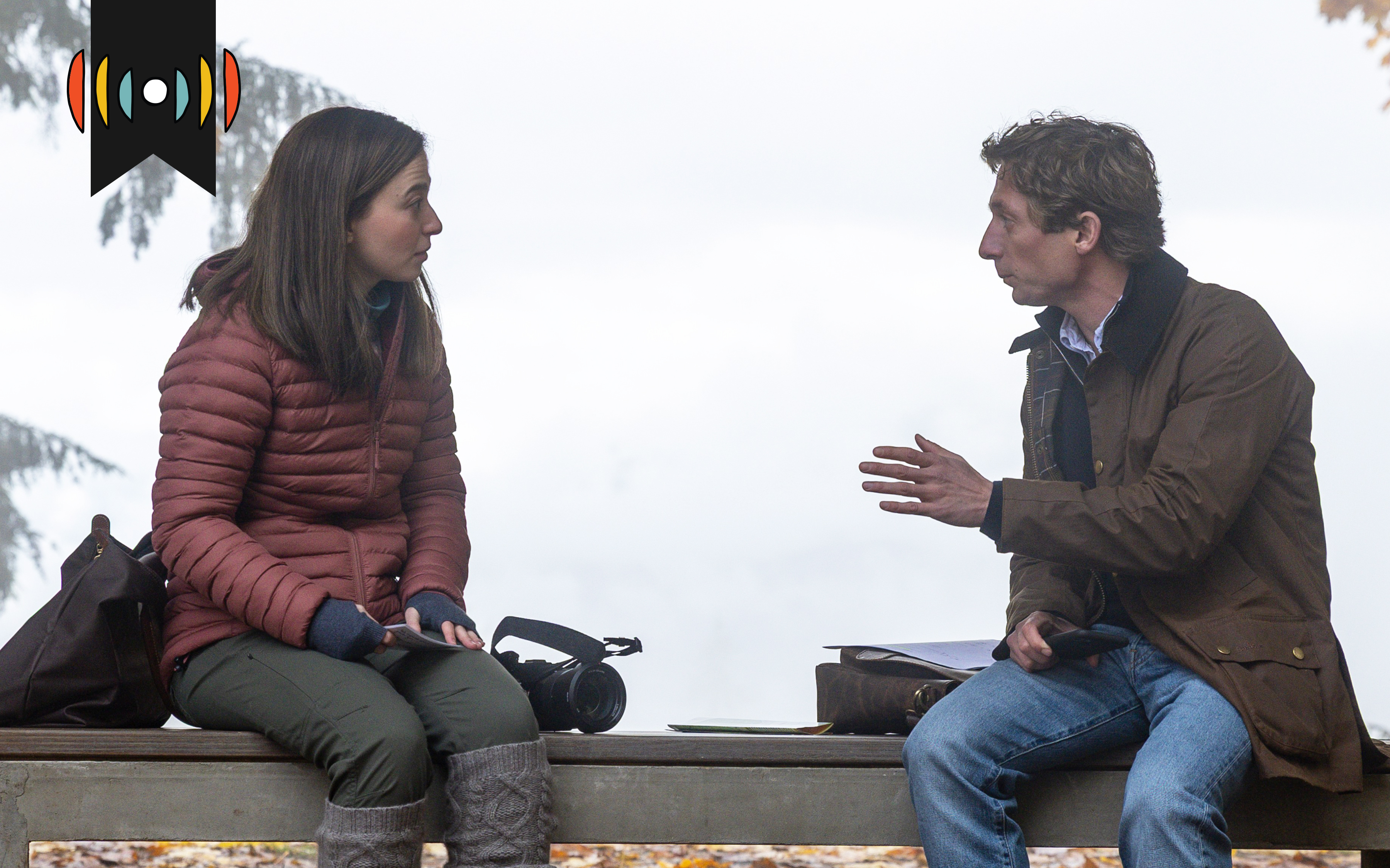
Mikey Madison, left, and Jeremy Allen White in a scene from The Social Reckoning Associated Press / Leah Gallo / Sony Pictures
Editor's note: The following text is a transcript of a podcast story. To listen to the story, click on the arrow beneath the headline above.
MYRNA BROWN, HOST: Up next, a new movie takes on Facebook. The Social Reckoning opened in theaters last week.
It’s billed as a companion piece to the 2010 Mark Zuckerberg origin story The Social Network.
MARY REICHARD, HOST: It follows a Facebook employee who helps a reporter expose how the company puts profits ahead of users’ safety. But some critics say the film spends too much time on politics, and too little on the harm to children.
WORLD’s Harrison Watters reports.`
HARRISON WATTERS: A movie about manipulative algorithms is a heavy lift, even for the characters involved.
FRANCES HAUGIN: I ran classifiers on political groups where 30% of content hits multiple risk factors.
JEFF HORWITZ: Hang on, I don't understand what you're saying.
HAUGIN: Aren't you a tech reporter?
HORWITZ: Ish.
HAUGIN: Ish?!
Mikey Madison plays Facebook employee Frances Haugen. She wants reporter Jeff Horwitz, played by Jeremy Allen White, to understand how Facebook pushes users toward radical groups.
HAUGIN: Facebook wants you to stay on the site for as long as possible. And two years ago, the algorithm was changed.
Haugen is not ready to be a whistleblower, but as she and Horwitz dig deeper, they find evidence that Facebook’s leaders put profits ahead of users’ safety. The film’s focus on politics, though, leaves another part of that story in the background: harm to children.
Tech researcher Daniel Cochrane is a senior fellow at the Institute for Family Studies.
COCHRANE: They really play up the politics and make it look like it was all about pushing people too far right corners of the internet when in fact it was really just about keeping people engaged with with click and rage bait, regardless of its political content.
The film’s climax comes when Mark Zuckerberg, played by Jeremy Strong, takes down one of President Trump’s posts during the January 6th Capitol riot. Before that, Zuckerberg had fought against censorship on the platform. Cochrane questions that portrayal.
COCHRANE: Facebook was colluding with the FBI to censor the now infamous Hunter Biden laptop story. So, so I think that whole portrayal of Mark Zuckerberg as just this like libertarian free speech absolutist actually is not accurate at all.
He points to Facebook’s earlier restrictions on speech during the pandemic and the 2020 election.
With the focus on politics, the film spends less time on whistleblower warnings about sexually explicit material, and algorithms exacerbating teenage body image disorders.
HALEY MCNAMERA: We're in the middle of the story right now.
Haley McNamara is Executive Director of the National Center on Sexual Exploitation. At a Washington screening last week, she told WORLD that Meta, which owns Facebook and Instagram … still has a lot to answer for.
MCNAMERA: There are individuals who are making the choices about what's promoted and what's allowed on these platforms. And when it comes to our issues of sexual exploitation and abuse, it should be zero tolerance.
Her group this year put Mark Zuckerberg on its “dirty dozen” list, accusing him of enabling sexual exploitation. It says he ignored employee warnings that predators were using Meta’s platforms to groom and traffic kids.
HAUGEN: How hard is it to get powerful people to change something they're doing?
HORWITZ: You have to cause pain. You have to make it hurt.
Courts are taking Meta to task for violating state consumer safety laws. In August, Meta agreed to pay more than $17 billion to settle states’ claims that Facebook and Instagram harmed children. The company also agreed to make changes aimed at protecting young users.
COCHRANE: And part of that settlement is they're now going to have to do basic age assurance, and they're going to have to ensure that certain safeguards are are in place for for minors.
Age assurance means checking how old users are.
In a separate case, more than 1,300 school districts have sued Meta and other social media companies. They say the apps harm children’s mental health, leaving schools to pay for more counseling and other help. The next school-district trials are scheduled for February.
Reporting for WORLD, I’m Harrison Watters in Washington.
WORLD Radio transcripts are created on a rush deadline. This text may not be in its final form and may be updated or revised in the future. Accuracy and availability may vary. The authoritative record of WORLD Radio programming is the audio record.
Please wait while we load the latest comments...
Comments
Please register, subscribe, or log in to comment on this article.