
When “Muslim” becomes a costume
Mayor Mamdani’s support for transgenderism shows the ugly, opportunistic side of the progressive coalition
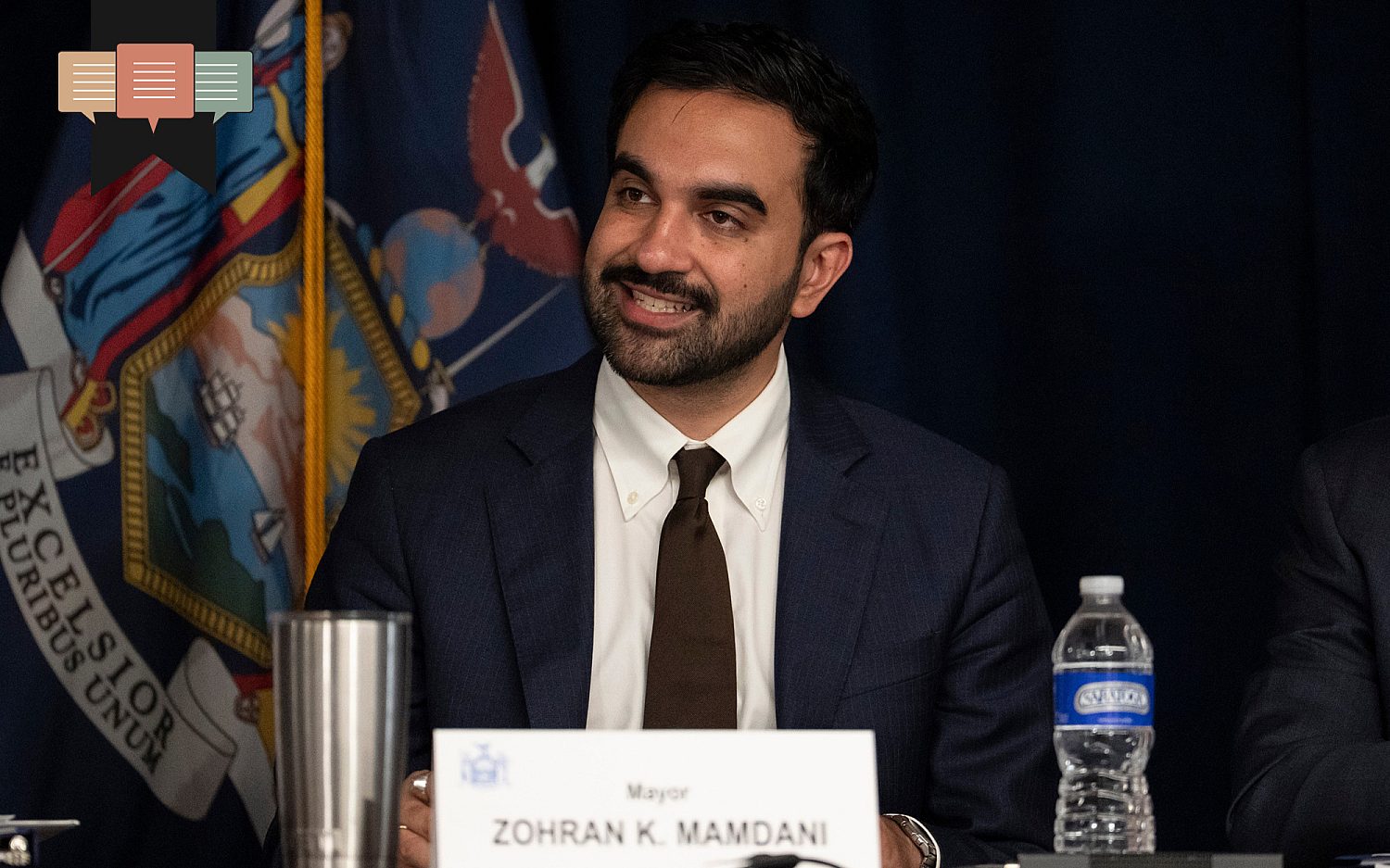
New York Mayor Zohran Mamdani Associated Press / Photo by Yuki Iwamura
Full access isn’t far.
We can’t release more of our sound journalism without a subscription, but we can make it easy for you to come aboard.
Get started for as low as $3.99 per month.
Current WORLD subscribers can log in to access content. Just go to "SIGN IN" at the top right.
LET'S GOAlready a member? Sign in.
New York City got a new headline recently: Mayor Mamdani rolled out a $15 million initiative to expand access to medical interventions for transgender residents. The press release reads like a checklist of progressive virtue—access, equity, dignity, inclusion.
As a matter of secular municipal policy, that’s exactly what you’d expect from a progressive mayor governing a progressive city. But there’s a wrinkle here that nobody in the mainstream coverage seems eager to touch: Mamdani identifies, publicly and repeatedly, as Muslim. So, the question isn’t really about municipal budgets. It’s this: Is Mamdani actually Muslim in any doctrinal sense, or is he wearing Islam the way a politician wears a lapel pin, useful for the cameras and irrelevant to the policy?
Let’s start with what Islam actually says, because on this particular issue, there isn’t much fog to clear. All five schools of Islamic jurisprudence—four Sunni and one Shiite—have historically and unambiguously classified same-sex acts as haram (religiously forbidden), with classical jurists prescribing severe religious punishments, including death—sometimes by throwing the offenders from a high building, or by stoning them to death. This isn’t some obscure minority opinion buried in a footnote of “sacred” Muslim texts; it is precisely the unquestionable and unambiguous mainstream, centuries-deep juristic consensus. If some liberal or progressive Muslims want to claim that Islam actually permits or affirms gender transition and same-sex relationships, the burden of proof sits entirely on them—not on those of us simply emphasizing what the primary Muslim texts and the classical scholarly tradition have said for 1,400 years.
So why does Mamdani keep invoking Islam while governing in open defiance of it?
Because for him—and for a growing class of Western Muslim politicians—Islam isn’t a source of binding moral authority. It’s a political asset—a triumphant social pathway. It’s an inherited cultural marker, deployed strategically for coalition-building, particularly useful in post-Oct. 7 solidarity politics where Muslim identity signals victimhood, vulnerability, authenticity, and belonging to a so-called aggrieved bloc. It’s a winning card in a messed-up system. Islam here is not, in any meaningful sense, a set of norms Mamdani treats as governing how he actually leads. And here’s the part that should unsettle us most: This tension isn’t hidden or subtle. It’s simply never addressed. Nobody asks him to reconcile it, so he never has to.
Which brings us to the harder question: Which Islam, exactly, is Mamdani supposedly practicing?
Progressive and liberal Muslims have tried for years to carve out theological space for LGBTQ affirmation within Islamic frameworks. It never quite works, because the relevant texts—deemed “sacred” by billons of Muslims—are not ambiguous the way liberal reformers need them to be. The modern “Islam” they strive to invent is a clear fanciful hoax.
Reinterpretation efforts on this particular issue consistently fail to survive contact with the actual sources—not because critics are being unfair, but because the material itself demonizes and stigmatizes LGBTQ actions. Intellectual honesty would require the so-called progressive Muslims to admit that their “modern” exegesis is a mere apologetic project layered on top of the explicitly clear tradition, not a recovery of some hidden authentic method the classical scholars all somehow missed.
That’s a heavy admission. Most progressives—Muslim or non-Muslim—avoid making it.
What we’re watching with Mamdani is not an isolated case—it’s a pattern. Islam gets deployed rhetorically: as identity, as race, as solidarity, as a shield against accusations of Islamophobia. But the moment that same Islam’s actual normative content collides with progressive orthodoxy, it gets quietly shelved.
This is increasingly common among Western Muslim politicians, many of whom have learned to play both sides of the fence—invoking faith when it earns sympathy and votes, discarding it the instant it becomes inconvenient or unneeded. Call it double discourse. It’s a survival strategy for political advancement in a coalition that demands progressive purity on gender and sexuality while still wanting to claim the moral capital of religious minority status.
Is this hypocrisy? Technically, no—and that distinction actually matters. Hypocrisy requires genuinely holding a belief and then betraying it. What Mamdani is doing looks more like selective identity use: picking up “Muslim” when it’s politically useful and setting aside everything Islam actually teaches when it isn’t. That’s arguably a more condemning charge than hypocrisy, because it exposes something uglier and colder—deploying religion as branding, not conviction.
But progressives would shout and push back, “Islam has diverse interpretations.” They would accuse Mamdani’s critics of “Islamophobic essentialism.” These lines get deployed reflexively, as if repeating them settles anything. It doesn’t.
Islam as written, and as lived and enforced by religious authorities across the centuries, does not leave room for reinterpretation on this particular question. Diversity of interpretation may exist on a few issues in Islamic law, but this isn’t one of them.
Mamdani’s $15 million announcement, then, is bigger than a policy story. It’s a case study in how identity politics on the left actually functions. Intersectionality and victimhood status get borrowed from whichever minority identity is most useful in the moment, Islam included, then discarded the instant it stops serving the agenda.
We should name this clearly and refuse to let it pass unexamined. We are not deceived, and we will not be silent about it.


These daily articles have become part of my steady diet. —Barbara
Sign up to receive the WORLD Opinions email newsletter each weekday for sound commentary from trusted voices.Read the Latest from WORLD Opinions
Ericka Andersen | Writer turns linguistic and ideological cartwheels to make the case that a woman can be “a little bit pregnant”

David Closson | Safeguards fall away as assisted suicide expands in Australia and Canada
Eric Patterson | Marx-inspired candidates say some radical things about faith, but they don’t say much about protecting fundamental liberties
Ray Hacke | A male cross country runner, his female teammates, and the need for truth and justice on Nov. 3

Please wait while we load the latest comments...
Comments