
The power of memory
Hollywood taps into our deep longing to be remembered
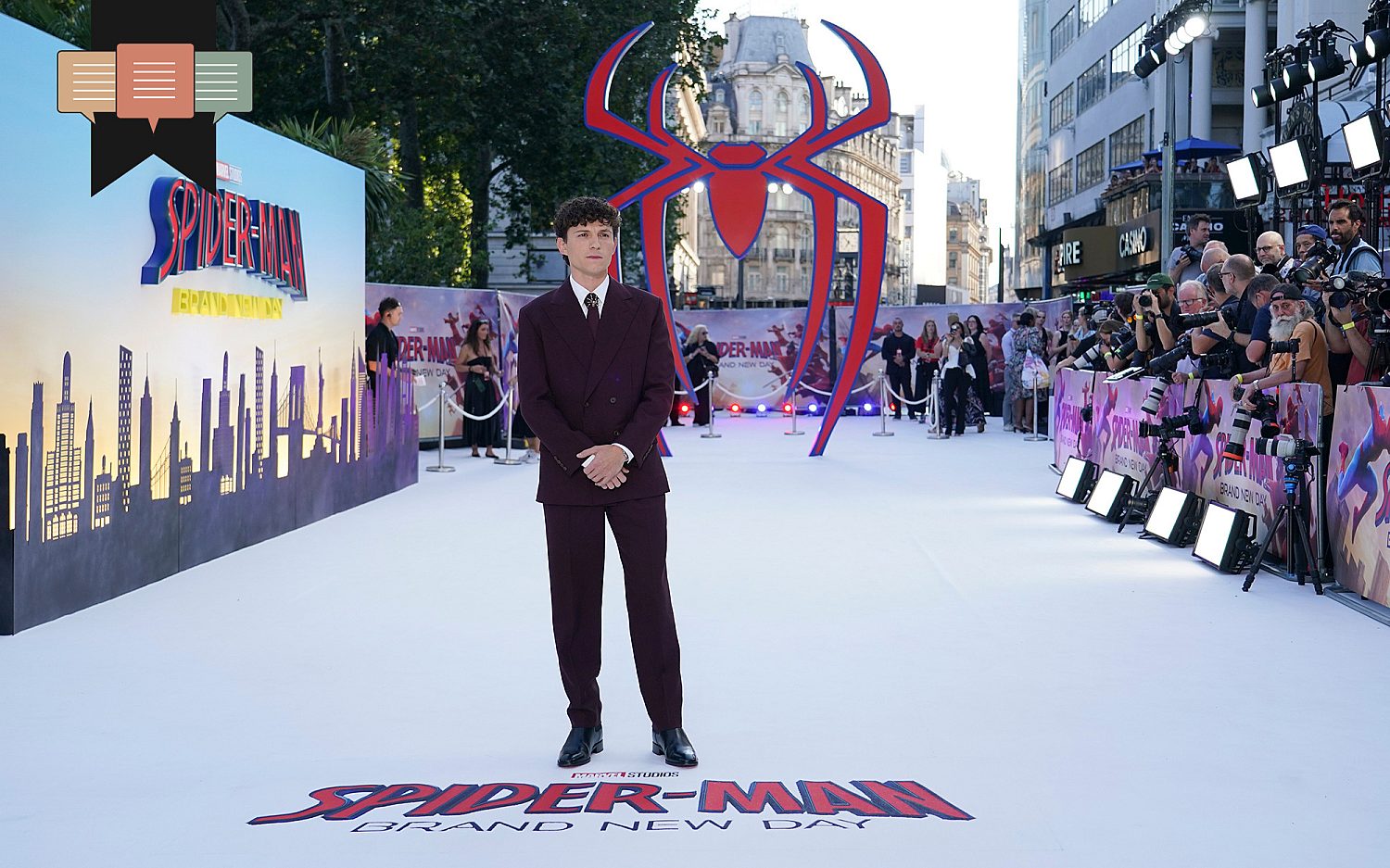
Tom Holland, who plays Peter Parker in Spider-Man: Brand New Day, attends the movie's premiere in London on July 29. Associated Press / Photo by Alberto Pezzali / Invision
Full access isn’t far.
We can’t release more of our sound journalism without a subscription, but we can make it easy for you to come aboard.
Get started for as low as $3.99 per month.
Current WORLD subscribers can log in to access content. Just go to "SIGN IN" at the top right.
LET'S GOAlready a member? Sign in.
As the summer comes to a close, I have been thinking again about the season’s biggest box-office hit: Marvel Studios’ Spider-Man: Brand New Day, which achieved unprecedented heights with a $2.4 billion global run. Superhero movies aren’t exactly known for their artistic achievement or psychological depth, but this film upended some of those expectations for me. I walked away believing this was the best Spider-Man movie yet, and I stand by that judgment nearly two months later. My aim here isn’t to write a traditional review of the film but to offer some reflections on one of its main themes: the power of memory to shape human identity.
This movie picks up where the last one left off: In order to save the world from a tear in the multiverse, Doctor Strange cast a spell that caused everyone in the world to forget Peter Parker, the alter ego of Spider-Man. This memory wipe included his best friend, Ned, and the love of his life, MJ. Brand New Day explores the depth of despair that results when the collective memories an individual has shared with others cannot be reciprocated. It also examines the vortex of depression that Peter feels as he becomes increasingly isolated, detached from the meaning-making relationships that gave his life purpose. Again, these are pretty heady themes for the genre: identity, memory, and love.
Other recent Hollywood offerings have also explored the power of memory. The hit series Severance tells the story of corporate employees who have their memories surgically split between their work lives and personal lives—their “innie” and their “outie.” The show raises questions about the mind-body problem, agency and responsibility, work-life dichotomies, corporate control, and, again, the power of relationships to overcome our psychological disintegration. The dystopian series Silo also features a running storyline about memory loss, with the villains threatening to poison the water with a drug that would slowly eliminate the memory of the silo’s residents.
These cultural artifacts are tapping into a fear that we all share to one degree or another: losing grip on our identity and our relationships as our memories fade. Families who have experienced the pain of dementia know this fear all too well. Indeed, anyone who has experienced the death of a loved one has the nagging worry that their memories will fade. And as memories fade, the person that we have lost slips further from view. The particularities of their face, voice, character, actions, and words tend to merge into increasingly vague impressions.
Furthermore, we worry that others will forget us. We fear that our friends, spouses, and children will forget the depths of our love or that our failures will become the only abiding memory. I sometimes poll my students and others with this question: “How many of you can give the first and last names of all eight of your great-grandparents?” A few can do this. Most cannot. What this shows us is that, within just a few generations, our own families won’t remember our name.
All of the great philosophers reflected upon the power of memory for shaping our thoughts and identities: Plato, Augustine, Jung, and many others. “This power of memory is great, very great,” Augustine wrote. “It is a vast and infinite profundity. Who has plumbed its bottom?” He describes memory as a “cavern” with “mysterious, secret, and indescribable nooks and crannies.” Still, memory is at the core of our being, which is why it figured so prominently in Augustine’s understanding of the image of the Triune God in the human person.
If memory has such a dominant power in forging our identities and if it proves to be such an unreliable faculty for doing so, where does that leave us? I have been greatly encouraged by the reflections of Joseph Ratzinger on the ultimate—indeed, eschatological—memory of God. The late pope wrote, “We live [after death] because we are inscribed into God’s memory. In God’s memory we are not a shadow, a mere ‘recollection.’ Remaining in God’s memory means we are alive, in a full sense of life. We are fully a ‘we.’” Our true and most abiding identity isn’t dependent upon any finite memory, whether ours or anyone else’s, but on God’s.
Surely, this was the comfort the thief on the cross was longing for when he requested of the Lord, “Jesus, remember me when you come into your kingdom” (Luke 23:42). King David gives voice to the same longing when he wrote, “Remember your mercy, O LORD, and your steadfast love, for they have been from of old. Remember not the sins of my youth or my transgressions; according to your steadfast love remember me, for the sake of your goodness, O LORD!” (Psalm 25:6-7, emphasis added).
Spider-Man: Brand New Day leaves the crisis of memory as an open question for Ned and MJ. But for those who trust in a memory more powerful than death itself, our yearning to be remembered isn’t left waiting in suspense. Our identity and, indeed, our eternal life consist in being remembered by God—who remembers His own, forever.


These daily articles have become part of my steady diet. —Barbara
Sign up to receive the WORLD Opinions email newsletter each weekday for sound commentary from trusted voices.Read the Latest from WORLD Opinions
Thaddeus Williams | America’s “existential crisis of meaning” is similar to the Babylonian king’s crisis, and the solution is the same, too

A.S. Ibrahim | In pointing to the attitudes of Muslim immigrants, Trump says what Europe’s leaders still won’t

Colin J. Smothers | The liberal religion of Senate candidate Adam Hamilton

Denny Burk | A recent article on Elisabeth Elliot is way over that line

Please wait while we load the latest comments...
Comments
Please register, subscribe, or log in to comment on this article.