
The nightclub church
The Church of England gives another indication of its loss of confidence in Christ
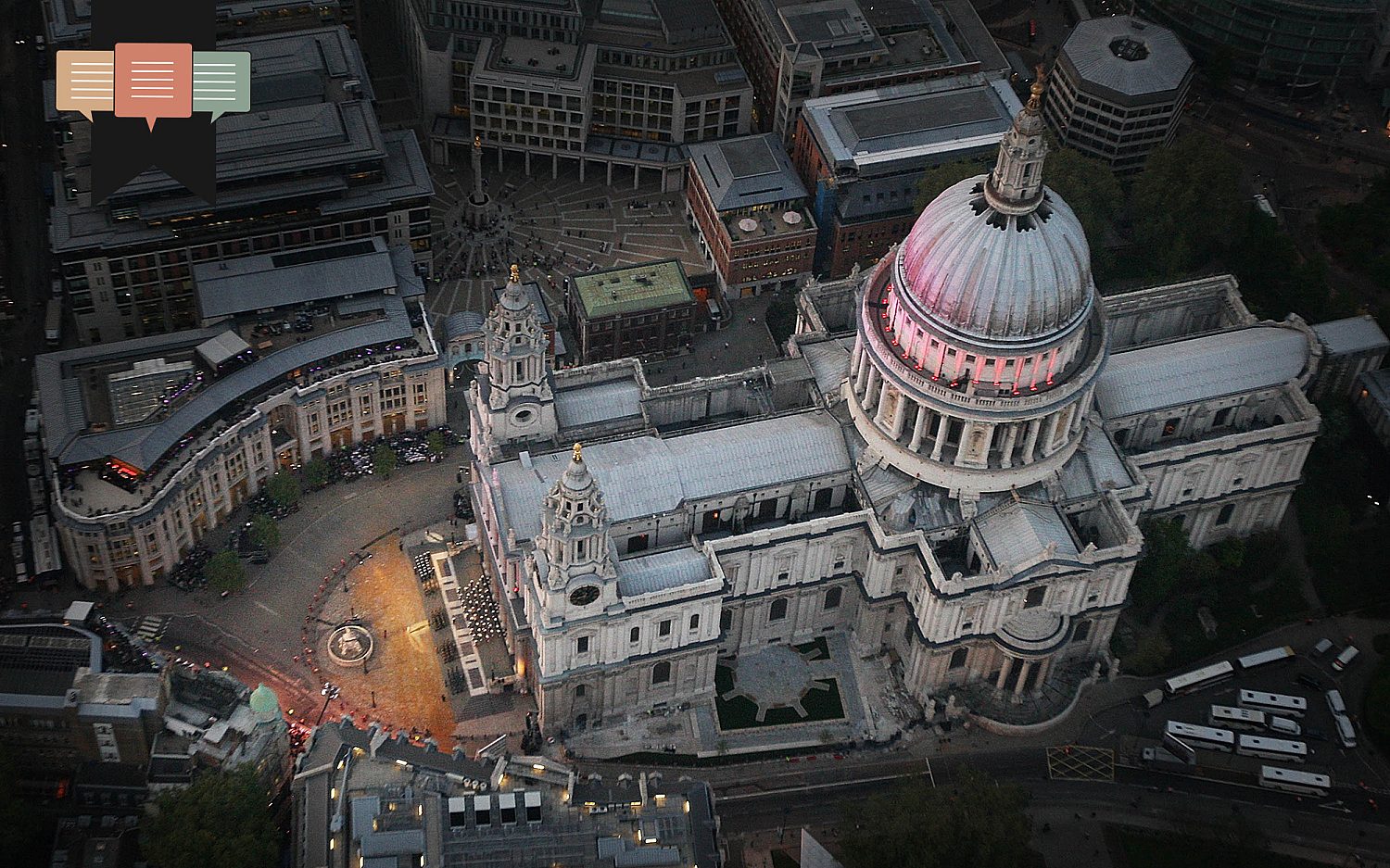
St. Paul’s Cathedral in London, England Associated Press / Photo by Peter Macdiarmid, pool
Full access isn’t far.
We can’t release more of our sound journalism without a subscription, but we can make it easy for you to come aboard.
Get started for as low as $3.99 per month.
Current WORLD subscribers can log in to access content. Just go to "SIGN IN" at the top right.
LET'S GOAlready a member? Sign in.
St. Paul’s Cathedral, whose dome was once the defining image of the London skyline, has recently struck a deal with a nightclub group known as fabric. The deal will allow the latter to hold concerts and parties in its building. And so the place designed by Sir Christopher Wren for the worship of God will now be the venue for the worship of fun.
The move sadly does not set a precedent. “Raves in the nave” have been a feature of Church of England outreach for quite some time. And church properties changing their function is not a Church of England monopoly. In Scotland in the 1980s and 1990s, many church buildings were sold, often for conversion into residential properties—though I remember in the city of Aberdeen, the long-defunct Free Church College building became a bar called the “College Bar,” and another city-center church became a nightclub, ironically (though perhaps appropriately) called “The Ministry of Sin.” Many Christians at the time saw this as witnessing the dramatic decline in church attendance in the latter part of the 20th century, though the closures might plausibly have been caused in part by the over-confident church expansion projects of the Victorian era. These churches may never have been viable in the long term.
In retrospect, Aberdeen’s “Ministry of Sin” has an integrity to it, in comparison to the move by St. Paul’s. At least the Aberdeen property legally changed hands, and the Church of Scotland effectively distanced itself from the building’s subsequent use by the stroke of a pen on a contract. St. Paul’s remains a church, only now sharing its space with a nightclub.
In one sense, no space is really holier than any other. One can worship God in an ugly prison cell in China just as one worships in a beautiful Wren building in London. When I was a pastor, my church building was a converted bowling alley, leased from the Sons of Italy. Not an architectural homage to Wren, for sure. God is everywhere, and His saving presence depends not upon the perfection of the cupola but on the Word and Sacraments.
But buildings do matter, and when space is dedicated to a sacred purpose, the uses to which it is put do not merely symbolize priorities but also have constructive—or destructive—spiritual significance. It is one of the reasons why Jesus Himself cleared the moneylenders and profiteers from the Temple. Their presence constituted blasphemy, however much the religious leaders might have tried to rationalize it or distance themselves from it. In making this move while retaining ownership of St. Paul’s, the Church of England legitimizes fabric and all that the rave culture represents.
Fabric has a checkered history, being closed for a while after the drug-related deaths of two teenagers, deaths that should have come as no surprise, given the longstanding concerns of the local council and police about the venue. Fabric now boasts on its website that this new arrangement with St. Paul’s will enable it to build on past “landmark” performances, such as those by Patti Smith (she was big … in the 1970s) and “RY X” (no, me neither). So this outfit, with its history of drugs, deaths, septuagenarian pop stars, and C-listers is the answer to the Church of England’s outreach problem? No. Rather, it epitomizes the problem: a lack of understanding of what the church is for and a lack of confidence in her means of achieving that mission and ministry.
The Church of England recently issued a report highlighting the shortage of vicars. Perhaps these two stories are related. One can probably make more money as a DJ than one can as a parish priest. And one can certainly have more fun. So why bother being a vicar when there are other more attractive career options out there?
When the church decides to be something other than she is—a nightclub venue, for example—she faces fierce competition and is doomed to lose. The secular world does these things so much better than the church. The problem the Church of England faces with both personnel and space all comes down to the same thing: a lack of confidence in, perhaps even in some cases belief in, the gospel of Jesus Christ’s death and resurrection.
No mixer deck is going to restore that.


These daily articles have become part of my steady diet. —Barbara
Sign up to receive the WORLD Opinions email newsletter each weekday for sound commentary from trusted voices.Read the Latest from WORLD Opinions
Thaddeus Williams | America’s “existential crisis of meaning” is similar to the Babylonian king’s crisis, and the solution is the same, too

A.S. Ibrahim | In pointing to the attitudes of Muslim immigrants, Trump says what Europe’s leaders still won’t

Colin J. Smothers | The liberal religion of Senate candidate Adam Hamilton

Denny Burk | A recent article on Elisabeth Elliot is way over that line

Please wait while we load the latest comments...
Comments
Please register, subscribe, or log in to comment on this article.