
The coach I never had
As a player and a coach, Mike Ditka was a tough bruiser who personified Chicago
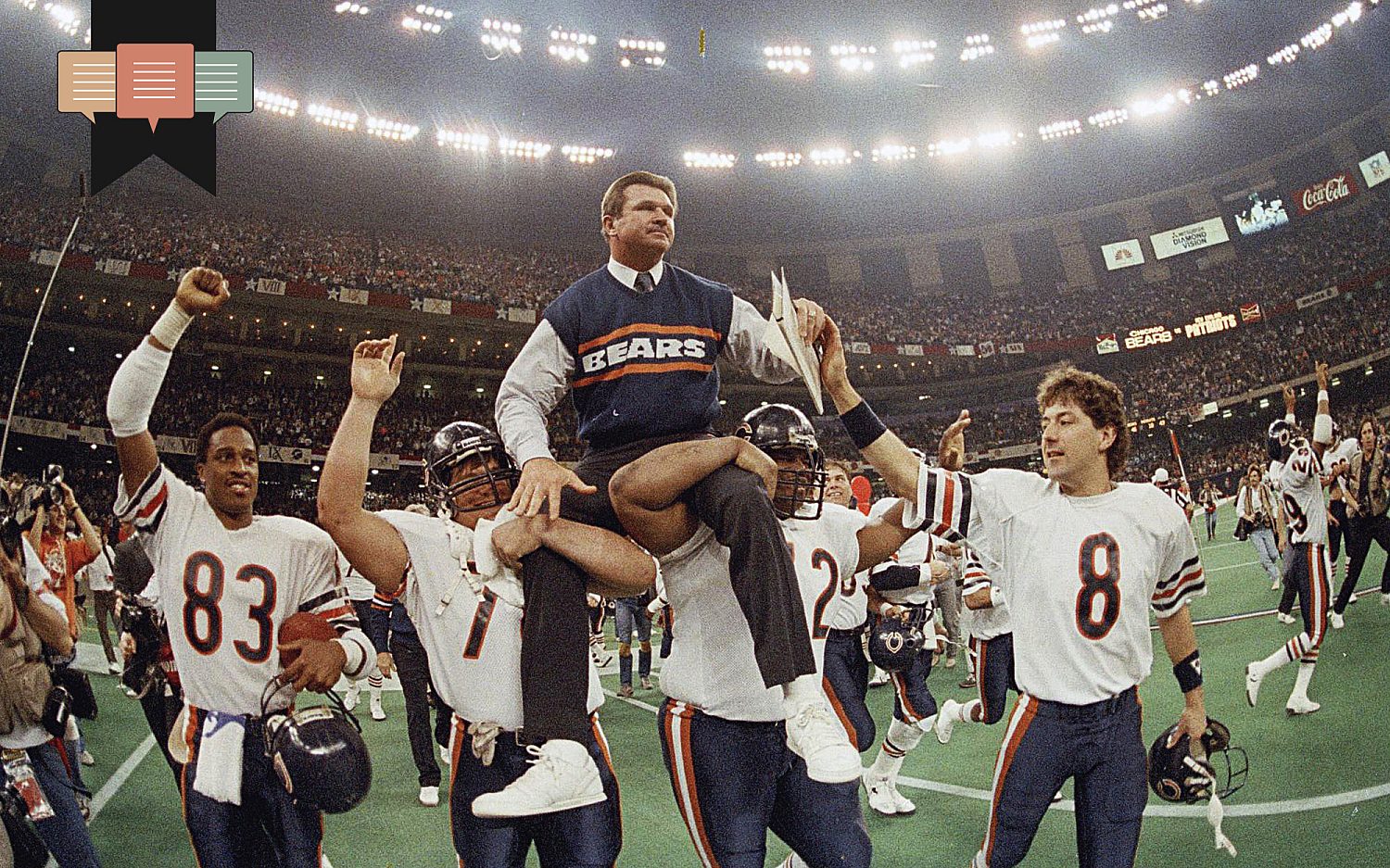
Players carry Chicago Bears coach Mike Ditka off the field after the Bears won Super Bowl XX in New Orleans, on Jan. 26, 1986. Associated Press / Photo by Phil Sandlin, file
Full access isn’t far.
We can’t release more of our sound journalism without a subscription, but we can make it easy for you to come aboard.
Get started for as low as $3.99 per month.
Current WORLD subscribers can log in to access content. Just go to "SIGN IN" at the top right.
LET'S GOAlready a member? Sign in.
My parents are from Chicagoland—Plainfield and Joliet, respectively. And I used to measure everything in my life on whether it happened before or after the Chicago Bears won the Super Bowl in January of 1986. As such, my dad taught me the core truths—that Walter Payton, Dick Butkus, and Mike Ditka played football the way it was supposed to be played. And that Ditka, though he was from Aliquippa, Pa., was Chicago in every way that mattered. He was broad shouldered and tough and a bruiser and he didn’t suffer fools. Or softness.
In many ways, Ditka, who died last week at age 86, was my first football coach. I wanted him to be proud of me even though he didn’t know I existed, and I never met him.
When I was a kid, he co-owned a hotdog place called Ditka Dogs in Joliet or Schaumburg or Aurora or some other suburb, probably next to a Jewel-Osco. I used to love going there with my family and always hoped I would run into the Coach and that he would ask me to suit up for the Bears that weekend. Our weeks revolved around going home from church and eating pizza on the floor while we watched Payton, Jim McMahon, Dan Hampton, Steve McMichael, and their teammates play the game the way it was supposed to be played. In doing so we were also watching Ditka wearing a sweater, chomping gum, yelling, and probably throwing something.
You know all of the pertinent information by now. Ditka, who played collegiately at Pitt, revolutionized the tight end position as a Chicago Bear and later as a Dallas Cowboy. He was the first tight end to detach himself from the hip of the offensive tackle. He invented the two-way-go. He walked so that Gronk and Kittle could run and was inducted into the Pro Football Hall of Fame—the first tight end to receive that honor.
After his playing career was over, he wrote an impassioned letter to George Halas, asking for a chance to coach the Chicago Bears. The rest is NFL history. He built an iconic offensive line, the scariest defense in the league, and rode Walter Payton to a historic season in 1985. I was in fourth grade. My classmates and I won a county lip-sync battle, performing the Super Bowl Shuffle. “They call me Sweetness, ‘cause I like to dance. …”
I was young and life was full of possibilities. I mean, I was probably going to grow up and play for Ditka. I would live in Chicago and get the Tribune delivered every morning, like my gramps did. I would play for the Bears and bleed and be a hero and get Coach Ditka to say “good job” and then my life would mean something.
None of that happened.
Ditka went on to coach the New Orleans Saints in the late 1990s, when I was just out of college and playing semipro. I remember him removing the call sheet from beleaguered offensive coordinator Danny Abramowicz in the middle of a Saints game. I remember him indicating to a reporter that the reporter’s IQ was zero. But even in his meanness, there was playfulness—a reminder that we’re playing a game for money and it’s all a little crazy. I wished the phone would ring in my apartment back then, and it would be Ditka growling into the phone, asking me to come south and block for Ricky Williams. That never happened, either.
Today, at age 50, I will go to the gym on campus and hang-clean, alone, and pass-set, alone, on a little strip of AstroTurf in an upstairs gym in an effort to stay dangerous, and stay ready, because you never know. I feel like Coach Ditka would approve of this. But this time, if the phone rings, it won’t be him, and that makes me sad.
I tell my film students that all great stories carry equal parts Man’s Total and Inherited Depravity, and Imago Dei. I think Ditka’s story symbolized this perfectly. His life was a case study in hard work and toughness. He could dole out joy and compliments, but also vicious criticism in equal parts. I’m told he dabbled in Christianity after 1985, and I hope he knew our Lord. I can’t imagine Mike Ditka dabbling in anything. I imagine he was either all in, or all out.
Either way, rest in peace Coach Ditka. You were the coach I never had.


These daily articles have become part of my steady diet. —Barbara
Sign up to receive the WORLD Opinions email newsletter each weekday for sound commentary from trusted voices.Read the Latest from WORLD Opinions
Thaddeus Williams | America’s “existential crisis of meaning” is similar to the Babylonian king’s crisis, and the solution is the same, too

A.S. Ibrahim | In pointing to the attitudes of Muslim immigrants, Trump says what Europe’s leaders still won’t

Colin J. Smothers | The liberal religion of Senate candidate Adam Hamilton

Denny Burk | A recent article on Elisabeth Elliot is way over that line

Please wait while we load the latest comments...
Comments
Please register, subscribe, or log in to comment on this article.