
The attorney general and the Comstock Act
Will Todd Blanche enforce the long-established federal ban on the mailing of abortion-inducing drugs?
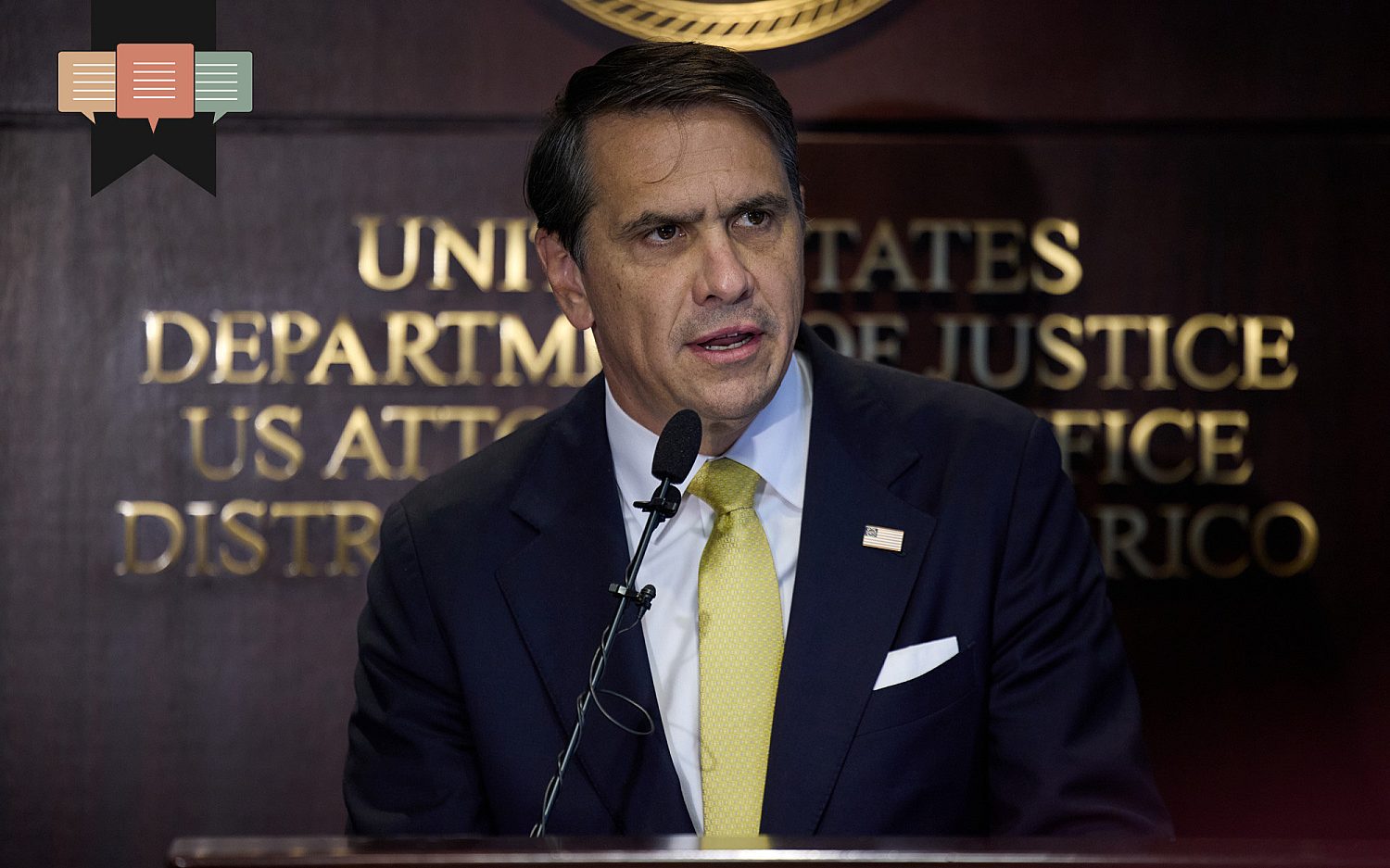
U.S. Attorney General Todd Blanche speaks at a press conference on Aug. 27. Associated Press / Photo by Stephanie Rojas
Full access isn’t far.
We can’t release more of our sound journalism without a subscription, but we can make it easy for you to come aboard.
Get started for as low as $3.99 per month.
Current WORLD subscribers can log in to access content. Just go to "SIGN IN" at the top right.
LET'S GOAlready a member? Sign in.
Since the overturning of Roe v. Wade in June of 2022, the number of abortions has actually increased. According to the Guttmacher Institute, abortions have increased by approximately 21% nationwide, with abortion drugs now accounting for about 65% of all abortions. Unfortunately, pro-life state laws have had minimal effect because the federal government has refused to enforce a federal law that prohibits the mailing of abortion drugs. However, newly confirmed Attorney General Todd Blanche has indicated that the U.S. Department of Justice (DOJ) is now reviewing its policies related to abortion.
If the DOJ were to reverse the Biden-era memo currently governing its approach to abortion, that decision would rival the overturning of Roe in significance. Even before the overturning of Roe in Dobbs v. Jackson Women’s Health Organization, the percentage of abortions carried out via abortion drugs was rising. According to data from the U.S. Centers for Disease Control and Prevention (CDC), abortion drugs accounted for 58% of abortions in 2022, an increase from 11% in 2006. The increasing reliance on abortion drugs versus surgical abortion signaled a new phase in the battle over abortion policy.
Following Roe’s demise, states sought to enforce their previously unenforceable pro-life laws, and many states passed new laws to protect unborn children. However, even as pro-life states enacted and enforced these protections, there were questions about the enforceability of the Comstock Act, a long-standing federal statute that prohibits the mailing of any “article, instrument, substance, drug, medicine, or thing” that is used to produce an abortion.
The only drug regimen currently approved by the U.S. Food and Drug Administration (FDA) for inducing an abortion consists of two pills: mifepristone (commonly known as the “abortion pill”) and misoprostol. On the day the Supreme Court overturned Roe, President Joe Biden declared, “My administration will … protect a woman’s access to medications that are approved by the Food and Drug Administration… [including] mifepristone.” Two weeks later, the president announced a series of actions to safeguard abortion and specifically mentioned abortion drugs.
Over the ensuing months, the Biden administration leveraged every facet of the federal government to protect abortion. When the U.S. Postal Service asked whether the Comstock Act prohibited the mailing of mifepristone, the DOJ’s Office of Legal Counsel (OLC) responded with a memo claiming that the law “does not prohibit the mailing of certain drugs that can be used to perform abortions where the sender lacks the intent that the recipient of the drugs will use them unlawfully.”
In other words, the OLC argued that the Comstock Act could only be enforced when it could be proven that the sender knew that the drugs would be used unlawfully. Since it is nearly impossible to prove such intent, the effect of the December 2022 memo was the Biden administration choosing to enforce the Comstock Act as narrowly as possible.
This narrow interpretation of Comstock had the practical effect of allowing abortion drugs to continue crossing state lines, in violation of pro-life state laws. The situation worsened in January 2023 when the Biden administration finalized a policy that eliminated the in-person dispensing requirement for mifepristone.
Following President Donald Trump’s return to office in 2025, officials nominated to lead the nation’s health agencies pledged to revisit federal policy concerning mifepristone. In May 2025, U.S. Department of Health and Human Services Secretary Robert F. Kennedy Jr. informed a Senate committee that he had asked the FDA to conduct a “complete review” of mifepristone regulations. In February 2026, Republican senators publicly questioned the FDA’s commitment to the review, citing the apparent lack of progress.
The issue returned to the courts this spring when Louisiana challenged the FDA’s removal of the in-person dispensing requirement for mifepristone. Although the Fifth Circuit temporarily suspended the FDA’s 2023 rules, the Supreme Court stayed that decision while litigation continues. Notably, in dissent, Justice Clarence Thomas addressed the Comstock Act directly, declaring, “It is a criminal offense to ship mifepristone for use in abortions” and describing the manufacturers’ activities as a “criminal enterprise.”
It was against this backdrop that Todd Blanche faced questions about the Comstock Act during his confirmation hearing to lead the DOJ. Sen. Ted Cruz specifically pressed Blanche about the Biden-era OLC opinion. Blanche committed to reviewing whether the opinion faithfully reflects the statutory text and to evaluating every lawful action available to enforce the Comstock Act and other federal pro-life laws.
Blanche now has an opportunity to follow through on his commitment. With abortion drugs accounting for nearly two-thirds of abortions in America and mail-order abortion increasingly enabling abortion providers to circumvent pro-life state laws, enforcement of the Comstock Act could dramatically alter the post-Roe landscape.
For pro-lifers, reversing the Biden administration’s interpretation and enforcing federal law against the mailing of abortion drugs would represent a generational victory in the effort to protect unborn children. Let’s pray it happens sooner rather than later.


These daily articles have become part of my steady diet. —Barbara
Sign up to receive the WORLD Opinions email newsletter each weekday for sound commentary from trusted voices.Read the Latest from WORLD Opinions
Thaddeus Williams | America’s “existential crisis of meaning” is similar to the Babylonian king’s crisis, and the solution is the same, too

A.S. Ibrahim | In pointing to the attitudes of Muslim immigrants, Trump says what Europe’s leaders still won’t

Colin J. Smothers | The liberal religion of Senate candidate Adam Hamilton

Denny Burk | A recent article on Elisabeth Elliot is way over that line

Please wait while we load the latest comments...
Comments
Please register, subscribe, or log in to comment on this article.