
The 9/11 generation
We saw our sense of safety shattered, and then we saw the best of America
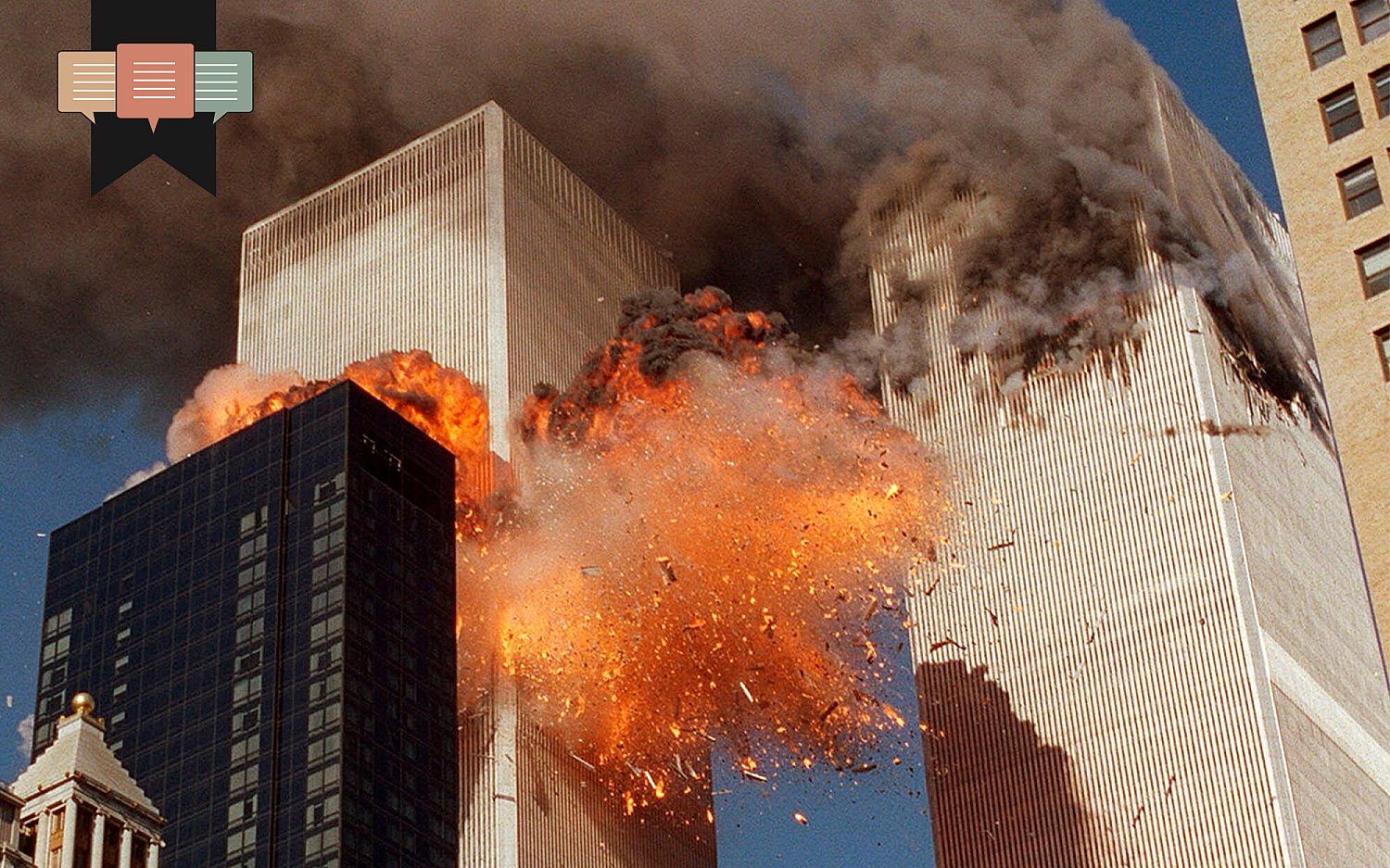
Smoke billows from one of the towers of the World Trade Center as flames and debris explode from the second tower on Sept. 11, 2001. Associated Press / Photo by Chao Soi Cheong, file
Full access isn’t far.
We can’t release more of our sound journalism without a subscription, but we can make it easy for you to come aboard.
Get started for as low as $3.99 per month.
Current WORLD subscribers can log in to access content. Just go to "SIGN IN" at the top right.
LET'S GOAlready a member? Sign in.
I know exactly where I was when it happened, as do most Americans who were alive when, to quote country singer Alan Jackson, “the world stopped turning.” Recently graduated from college, I was working full time in the media ministry of my home church, Quentin Road Baptist, in the Chicago suburbs. Like I did every weekday, I pulled into a parking space near the office as I listened to the WGN radio.
That morning the host, Spike O’Dell, was bantering back and forth with the news and sports guys. As I put my Chevy Cavalier in park, the news director broke in, “Spike, it looks like we have an incident in New York. Apparently some kind of plane struck the World Trade Center.” At this point, I was thinking, along with most Americans, that this was the flight of a single-engine aircraft gone awry. But as I went to turn off the engine, I heard the news director break in again, “Ok, it looks like another aircraft has hit the other tower. And apparently—there are conflicting reports—it’s a passenger airplane.”
I turned the car off, looked at my sister who was travelling with me, and said to her: “This is terrorism.” Right then I did not know much. But I knew the world had changed.
Peggy Noonan, the former Reagan speechwriter and longtime columnist for The Wall Street Journal wrote, in her own forceful style, “This, for me, is the unforgettable image of the day: the fine gray ash that covered everything downtown, all the people and buildings and cars; the ash that flew into the air in the explosions and the burning and that settled over half the city.”
If, like me, you were sentient on 9/11—and by that I mean conscious and thinking—this event changed everything. I was in my early twenties, just figuring out what it meant to be an adult, to have opinions, to care and mourn and think as my own person. 9/11 shattered a myth I had held that to be an American meant a certain kind of safety and detachment from the world.
Sure, terrorists bombed Pan Am Flight 103, but that was in the air, over foreign airspace. Sure, my grandfather’s generation endured Pearl Harbor, but that was Hawaii, vulnerable out there in the Pacific. Enemies of the United States don’t attack us on the mainland, in the heart of our center of commerce, and they don’t aim for the Capitol and the White House. They don’t strike the Pentagon.
But then they did.
A lot of things came after 9/11. First, perhaps the most patriotic season I can remember in my near half century on this planet. Churches hosted patriotic services and blood drives. Carloads of people drove to New York to help with recovery. Young men—including my brother—signed up for military service. Businesses across the nation put on their signs, “God Bless America.”
We saw the best of America. First responders marched into those buildings and died trying to save their fellow Americans. Heroes emerged—ordinary people who climbed stairs, put people on their shoulders, administered CPR. And our national leadership stepped up in powerful ways. President George W. Bush stood on the rubble and rallied America to resolve. He stood in the National Cathedral and offered words of hope to the grieving. And an aging Billy Graham, pressed into his nation’s service at a time of despair, preached a beautiful gospel.
When I look back on that time, it seems like an altogether different era than our own. The unity and solidarity we saw—members of Congress weeping and singing “God Bless America” on the Capitol steps—is gone. We suffered something together without the immediate algorithmically driven polarization of social media.
Noonan, again, wrote:
I was thinking the other day: In 1964, Time Magazine famously headlined "God Is Dead." I hope now, at the very highest reaches of that great magazine, they do a cover that says "God Is Back."
Sadly, this sentiment did not last. A generation barely alive on or born after 9/11 bore the brunt of subsequent policy decisions and thus have the right and duty to criticize. But I do hope they can understand the social trauma that affected those of us who watched, in horror, as those buildings fell. I hope they can sympathize with the fear of the next attack and the deep-seated patriotic resolve to never let it happen again.
Twenty-five years later, we look back and grieve the 3,000 lives taken from us in a murderous act fueled by a wicked ideology. We should be no less vigilant about the presence of evil in the world and no less hopeful about a sovereign God who is gathering history to Himself. And let us pray that it doesn’t take another national tragedy to once again turn this great nation back toward Him.


These daily articles have become part of my steady diet. —Barbara
Sign up to receive the WORLD Opinions email newsletter each weekday for sound commentary from trusted voices.Read the Latest from WORLD Opinions
Thaddeus Williams | America’s “existential crisis of meaning” is similar to the Babylonian king’s crisis, and the solution is the same, too

A.S. Ibrahim | In pointing to the attitudes of Muslim immigrants, Trump says what Europe’s leaders still won’t

Colin J. Smothers | The liberal religion of Senate candidate Adam Hamilton

Denny Burk | A recent article on Elisabeth Elliot is way over that line

Please wait while we load the latest comments...
Comments
Please register, subscribe, or log in to comment on this article.