
Telling the truth about 9/11
After 25 years, the stark realities loom even more ominously
Firefighters and first responders search amid the rubble of the collapsed World Trade Center buildings on Sept. 13, 2001. Associated Press / Photo by Beth A. Keiser, file
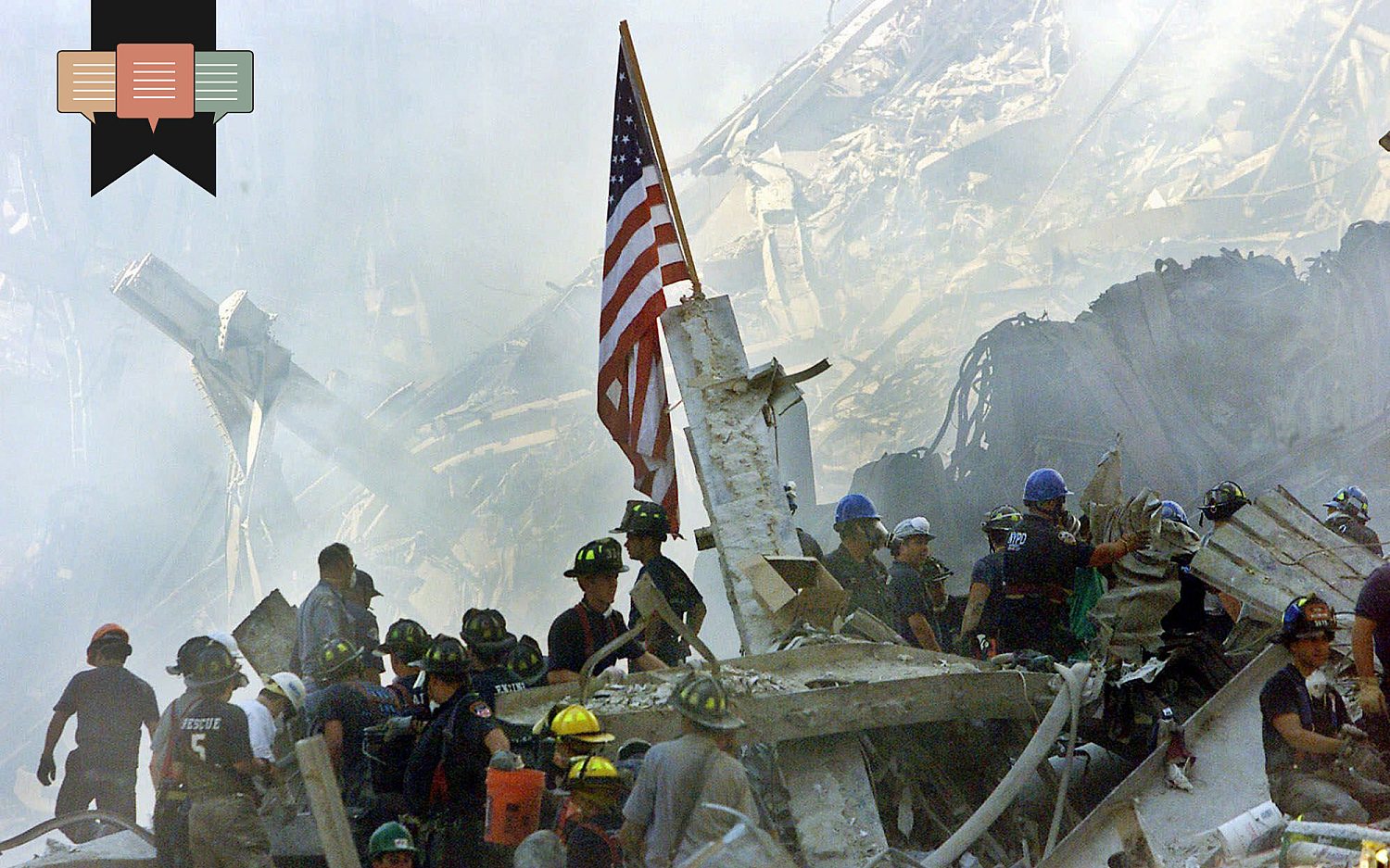
The morning of Sept. 11, 2001, was stunningly beautiful. Clear skies and good weather marked most of the eastern United States. It was a promising day as it started, and yet it would end as a day of horror that would be indelibly etched into the American psyche. Those beautiful skies carried mass murder and terror. Through those skies flew airliners turned into massive bombs, carrying human passengers who were exploded into dust.
I spoke this week to a massive audience of college students, and I realized that these young people were not yet born when America experienced the terror of 9/11. To them, 9/11 is an important date in history, like Dec. 7, 1941 or July 4, 1776. They do know that 9/11 changed the course of history, but the date remains remote, accessible in time through what Abraham Lincoln called the “mystic chords of memory.”
For those who are older, the day can never be forgotten: the sight of the airliners flown into the twin towers of the World Trade Center, smoke rising from the Pentagon, and then the towers burning and twisting and falling—all of it shown on television screens over and over again. Americans were shocked and quickly declared that the world would never look the same again.
Were they right? Did 9/11 change the course of history, or was it merely a temporary obsession, filled with unspeakable horror?
In truth, the murderous reality of 9/11 did reveal important lessons—even vital lines of truth—that must not be forgotten. We dare not forget what we learned that day.
First, we were awakened to the reality that evil exists in the world, that is it real, and that it starts in the human heart. For decades, postmodern academics had dismissed the reality of moral evil, arguing that the idea was merely socially constructed. People in power used the word evil to categorize behavior they did not like. That was the social constructivist argument, and it had been gaining ground in academic circles for a long time. The moral realities of 9/11 revealed the horrible but necessary truth that moral evil is real, deadly, and infectious. The Islamic terrorists who developed the terror plan and carried it out so murderously attended flight schools and learned just enough to control an airliner and put it on a collision course with a skyscraper. The plan was to kill as many Americans as possible in a way that was as visible as possible with the greatest global effect that was possible. It was coldly calculated and carried out.
Second, we learned that religious ideologies associated with Islam justify Holy War in the name of their religion. We were reminded that Muhammad was himself a warrior, and that the Quran divides the entire world into the World of Islam, under submission to Islam, and the World of War, where the battle for Islamic dominance is still to be fought by the warriors of Islam. President George W. Bush led well as he rallied the nation in the shock of the 9/11 aftermath and addressed the deadly threats. But he did not lead well when he refused to face the reality that Islam clearly calls for a war for Islamic dominance. From the start, the 9/11 attacks were deeply theological, but the dominant political class in the United States largely refused to see the theological challenges clearly.
Third, we learned that Americans could still come together in a sense of national unity. In the immediate aftermath of 9/11, a clear commitment to national unity appeared, along with a common sense of what it means to be an American. Since the attacks, that sense of national identity, purpose, and unity appears to have weakened—perhaps to an extent even greater than just before the attacks happened. A look back at the language used and the arguments made at the time underlines the distance between the patriotism visible on 9/11 and the lack of patriotism visible in so many quarters of America now. The political left largely denies patriotism as a virtue and the political right sometimes appears to turn patriotism into empty slogans. Without a proper and honest patriotism, a nation cannot long survive.
Lastly, we learned yet again that American churches will fill with people in the aftermath of national disaster of this scale. It happened in December of 1941, and it happened again in September of 2001. But, sadly enough, the process of secularization and the loss of substantial Christian commitment continued after 9/11. It is not clear that 9/11 left any lasting spiritual impact on the American people.
A 25th anniversary demands attention, and the anniversary of 9/11 demands serious moral reflection. Sadly, the anniversary also underlines massive questions about America’s role in the world, about the war on terror, and about the stark moral realities of our times. We must pray that it does not take another 9/11 to get this nation’s attention. And Christians know to pray. May God bless, guide, and protect the United States of America.


These daily articles have become part of my steady diet. —Barbara
Sign up to receive the WORLD Opinions email newsletter each weekday for sound commentary from trusted voices.Read the Latest from WORLD Opinions
Thaddeus Williams | America’s “existential crisis of meaning” is similar to the Babylonian king’s crisis, and the solution is the same, too

A.S. Ibrahim | In pointing to the attitudes of Muslim immigrants, Trump says what Europe’s leaders still won’t

Colin J. Smothers | The liberal religion of Senate candidate Adam Hamilton

Denny Burk | A recent article on Elisabeth Elliot is way over that line

Please wait while we load the latest comments...
Comments
Please register, subscribe, or log in to comment on this article.