
Peace amid great suffering
At Ground Zero, Scripture met grief—and gave us hope we still need today
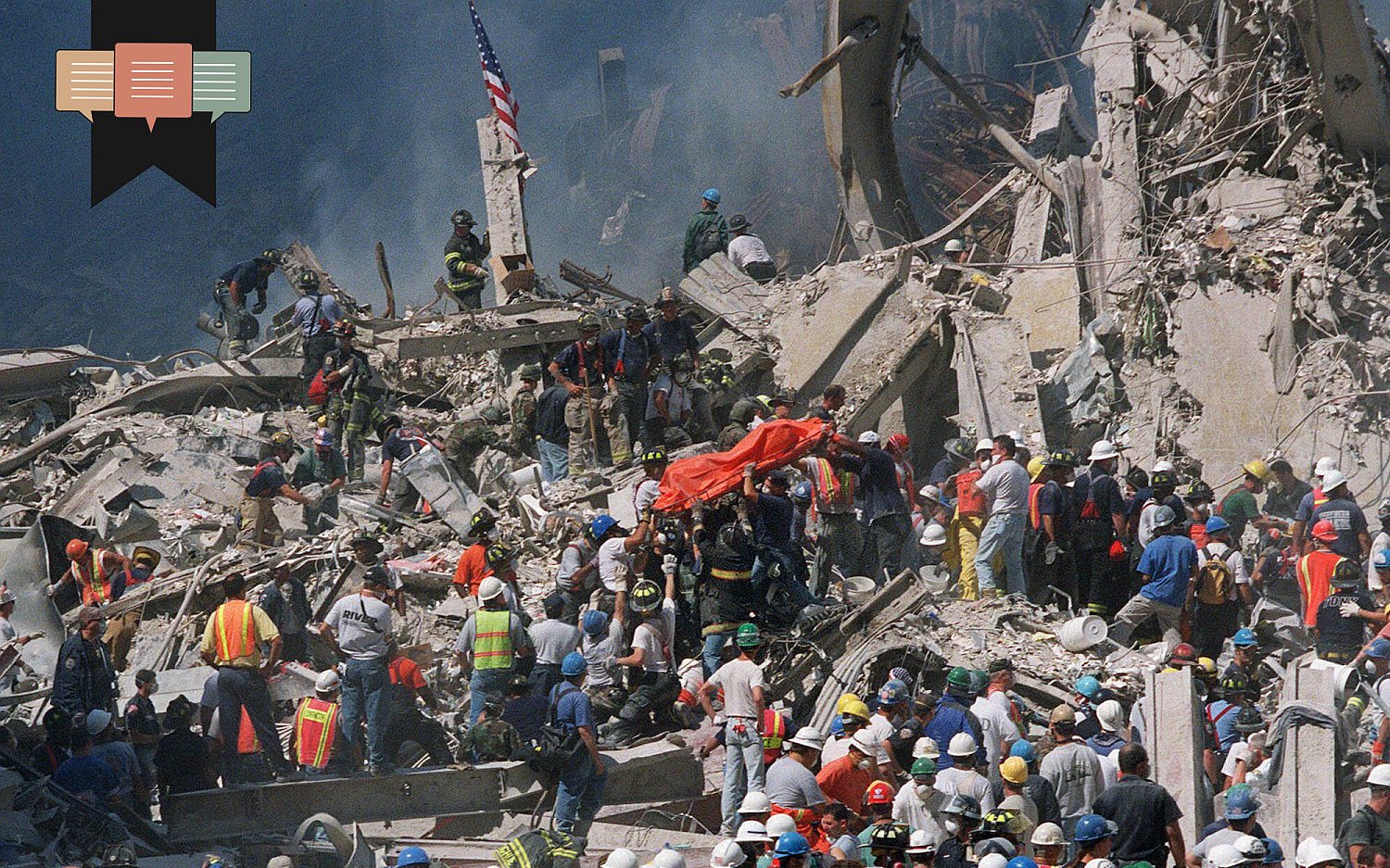
Emergency personnel work in the rubble of the World Trade Center on Sept. 13, 2001. Associated Press / Photo by Bill Farrington
Full access isn’t far.
We can’t release more of our sound journalism without a subscription, but we can make it easy for you to come aboard.
Get started for as low as $3.99 per month.
Current WORLD subscribers can log in to access content. Just go to "SIGN IN" at the top right.
LET'S GOAlready a member? Sign in.
Twenty-five years ago, the American Bible Society (ABS) was headquartered in New York City, with offices at 61st and Broadway. As we now know, what began as a normal day at the office for thousands of New Yorkers and neighbors in other parts of the country ended in profound grief.
One ABS employee’s sister worked at the Pentagon, another’s wife worked across from the World Trade Center buildings, and the father of another worked inside.
On that day, our country became newly aware of the trauma and uncertainty that touched our communities. We felt it in our own city. But we also became aware, in a fresh way, of the power of God’s Word.
God gave us hope through Scripture then. He gives us hope now.
Chaplain Gerald Sillcocks, who led Firefighters for Christ at the time, was on the ground hours after the towers had collapsed handing out ABS Scripture resources while his crew, Engine Company 80, combed the rubble for bodies—including the bodies of their own colleagues.
Sillcocks recalled almost recommending his team withdraw because of the active fires and urgent physical risks of traversing the ruins. But before he made that call, he remembered a passage from Psalm 46 that he had read with his wife two nights before: “Be still, and know that I am God.”
Chaplain Sillcocks and his team stayed the night. They brought out three bodies for burial and mourning. God brought peace to them amid smoke, rubble, terrible grief, and smoldering fire. But in the days following the attacks, our proximity to the tragedy allowed our employees to provide millions of Scripture resources and support to grieving New Yorkers from all walks of life.
In the midst of unimaginable suffering, we saw firsthand that Scripture does not offer simplistic answers to tragedy. It meets us in our grief with the hope and peace of God’s presence.
At a minimum, Scripture tells us to “weep with those who weep” (Romans 12:15). When tragedy happens, we have the opportunity to pray, to share encouraging words from Scripture, and to contribute tangibly where we are able. This is true no matter where we live, or where tragedy strikes.
But when tragedy happens in our local context, it becomes the great equalizer.
It creates a moment of openness for us to bring our fears to the Lord and receive peace; it allows us to “be ready at all times to answer anyone who asks you to explain the hope you have in you” (1 Peter 3:15).
And this hope is often exemplified through small acts of service. In the wake of the 9/11 attacks, volunteers sorted and distributed clothes along with Scripture and notes of appreciation and encouragement—and they made a difference in countless hearts searching for peace.
A quarter of a century later, we’re still searching for peace. We still need the profound and faithful witness of hope, and we will until the Lord returns. The 24/7 global news cycle, combined with our technology access, brings the problems of the world into our homes and hearts on a continual basis.
The search for peace, hope, and security isn’t just in response to specific tragedies, or to local ones, anymore—it is a response to chronic, overwhelming exposure to tragedies all over the world, at every moment.
The search for peace and consolation today is perhaps less about why evil things happen and more about who can prevent them or alleviate the suffering they incur. And that’s another place where God speaks to us through Scripture. It reminds us that God will ultimately bring justice and peace, even if it's not in the timeline that we would like.
When neighbors are grieving or traumatized, we have the opportunity to show them care, walk with them during their suffering, and offer them support and hope—both for today and for eternity. Just as Chaplain Sillcocks did in the heart of New York City.
Our world still aches for something secure to cling to. It was true 25 years ago across our country, 250 years ago at our nation’s founding, 2,500 years ago before Christ’s birth, and it remains true today: When we face brokenness, the human heart needs what only our Creator can provide.
As Christians, we know this lasting hope can be found by encountering God through His Word. It is our responsibility to share this Good News with an aching world.


These daily articles have become part of my steady diet. —Barbara
Sign up to receive the WORLD Opinions email newsletter each weekday for sound commentary from trusted voices.Read the Latest from WORLD Opinions
Thaddeus Williams | America’s “existential crisis of meaning” is similar to the Babylonian king’s crisis, and the solution is the same, too

A.S. Ibrahim | In pointing to the attitudes of Muslim immigrants, Trump says what Europe’s leaders still won’t

Colin J. Smothers | The liberal religion of Senate candidate Adam Hamilton

Denny Burk | A recent article on Elisabeth Elliot is way over that line

Please wait while we load the latest comments...
Comments
Please register, subscribe, or log in to comment on this article.