
Not N.I.C.E.
Peter Thiel is not a C.S. Lewis villain
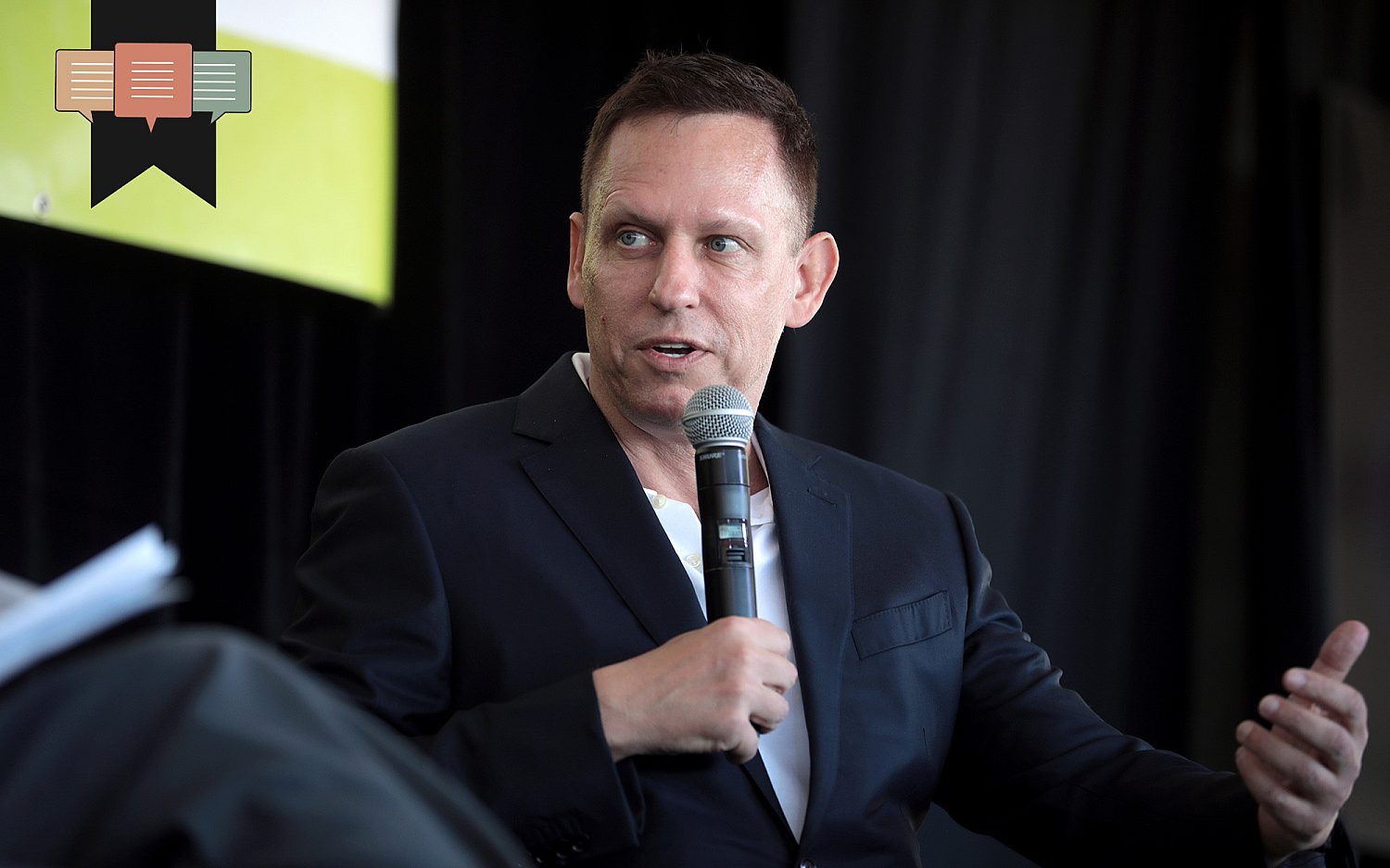
Peter Thiel Wikimedia Commons / Gage Skidmore
Full access isn’t far.
We can’t release more of our sound journalism without a subscription, but we can make it easy for you to come aboard.
Get started for as low as $3.99 per month.
Current WORLD subscribers can log in to access content. Just go to "SIGN IN" at the top right.
LET'S GOAlready a member? Sign in.
A recent piece in WORLD Opinions villainized Peter Thiel, equating his views with Professor Filostrato in C.S. Lewis’s That Hideous Strength. The piece called him a “self-professed transhumanist” and contended: “At a key moment, Thiel hesitated to say whether he wanted the human race to survive. He finally allowed that it should, but maybe in a disembodied, undying form, as envisioned by transhumanists: a ‘radical transformation where your human, natural body gets transformed into an immortal body.’”
That is villainous indeed, but it is also the opposite of what Thiel actually said.
The Ross Douthat interview needs to be read as a whole. Douthat did not begin with the simple question, “Should the human race survive?” He first observed that artificial intelligence can be viewed as a vehicle for transhumanism, “transcendence of our mortal flesh,” creation of a successor species, or a merger of mind and machine. He then asked whether this was something to fear and whether Thiel would prefer the human race to endure.
After a hesitation Thiel said yes but then offered a Christian critique of transhumanism: “And then … the critique orthodox Christianity has of this is these things don’t go far enough. Like the transhumanism is just changing your body, but you also need to transform your soul, and you need to transform your whole self.” When Douthat invoked attempts to manufacture immortality through machines, Thiel answered, “From a Christian point of view, these people are not ambitious enough.” When the discussion turned to digital uploading, he added: “I’d rather have my body. I don’t want just a computer program that simulates me.”
A modicum of benefit of the doubt would show an affirmation of the Christian doctrine of the resurrection. In a Chestertonian reversal, Thiel argued that transhumanism is not trans enough. Transhumanism may extend lifespans or preserve a simulation of someone’s mental patterns. Christianity promises something more radical: the resurrection of the body and the transformation of the whole person, body and soul. Only the Resurrection is true transformation.
I know Thiel believes this because he discussed the resurrection on my podcast. I have known Thiel for more than 15 years and consider him a friend. But the case here rests on public words, not private conversations.
So why the long hesitation before answering Douthat’s question? Because it was a loaded question. In the context of technological discussion about extinction, “Do you want humanity to survive?” often comes attached to a demand that authority be transferred to a sufficiently powerful global body. This is where Thiel directs readers to 1 Thessalonians 5:3. The decisive promise of the Antichrist is “peace and safety.” I do not share Thiel’s prophetic framework; in my view, most of these New Testament texts address first-century politics. But safetyism can become fuel for global tyranny. And That Hideous Strength is not a warning against science and technology in themselves. It is a warning against tyranny.
In Lewis’ book, N.I.C.E. does almost no actual science. Its full name is the National Institute of Co-ordinated Experiments, and the decisive word is not “experiments” but “co-ordinated.” Its defining activity is bureaucratic control, propaganda, and the manufacture of emergencies through which it can acquire additional power.
Lewis also gives writers a warning in Mark Studdock, whose desire for the Inner Ring teaches him to subordinate truth to the impression his patrons need him to create. Studdock is a warning to every writer (including Lewisian ones) tempted to take liberties with the truth in service to faction, or clicks.
In Mere Christianity, Lewis issued another warning: “Suppose one reads a story of filthy atrocities in the paper. Then suppose that something turns up suggesting that the story might not be quite true, or not quite so bad as it was made out. Is one’s first feeling, ‘Thank God, even they aren’t quite so bad as that,’ or is it a feeling of disappointment, and even a determination to cling to the first story for the sheer pleasure of thinking your enemies are as bad as possible? ... You see, one is beginning to wish that black was a little blacker.”
Before using Lewis to make Thiel a villain, Christians should submit their interpretation of Thiel to the Lewis test. Now that they know that Thiel is a professed Christian who contrasts the resurrection to transhumanism, will they say, “Thank God, they are not quite as bad as that”? Or was the initial lurid take of him as fiendish inventor of an even more twisted version of transhumanism too good because it was too bad?
In late August Trotskyites began mobbing outside Thiel’s family home in Argentina. Why? Perhaps because Argentine communists are more adept at recognizing their enemies than some conservative Christians are at recognizing their friends.


These daily articles have become part of my steady diet. —Barbara
Sign up to receive the WORLD Opinions email newsletter each weekday for sound commentary from trusted voices.Read the Latest from WORLD Opinions
Thaddeus Williams | America’s “existential crisis of meaning” is similar to the Babylonian king’s crisis, and the solution is the same, too

A.S. Ibrahim | In pointing to the attitudes of Muslim immigrants, Trump says what Europe’s leaders still won’t

Colin J. Smothers | The liberal religion of Senate candidate Adam Hamilton

Denny Burk | A recent article on Elisabeth Elliot is way over that line

Please wait while we load the latest comments...
Comments
Please register, subscribe, or log in to comment on this article.