
Mosques and idols in America
What should Christians do to counter the false and demonic religions growing across the country?
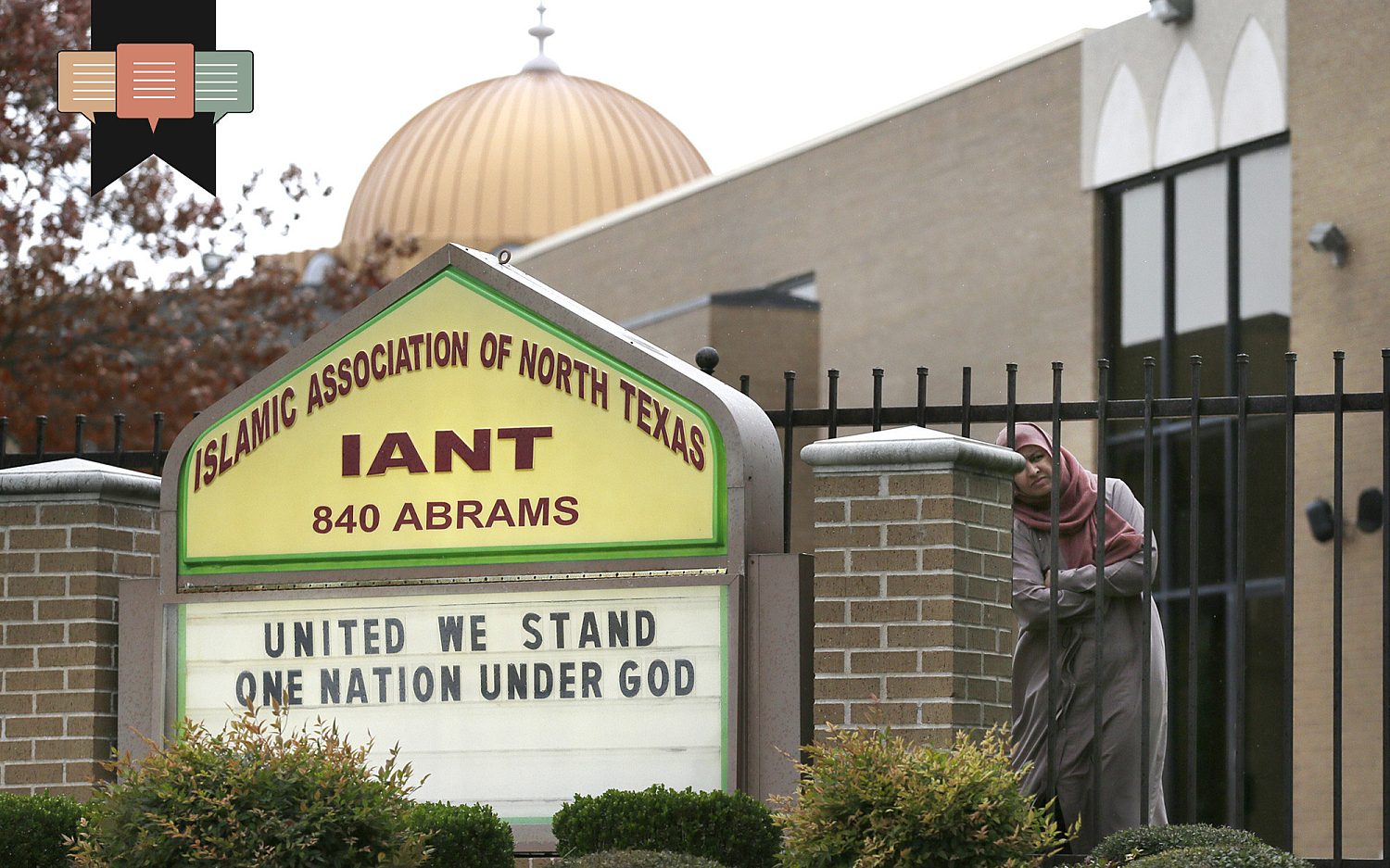
A mosque in Richardson, Texas Associated Press / Photo by LM Otero
Full access isn’t far.
We can’t release more of our sound journalism without a subscription, but we can make it easy for you to come aboard.
Get started for as low as $3.99 per month.
Current WORLD subscribers can log in to access content. Just go to "SIGN IN" at the top right.
LET'S GOAlready a member? Sign in.
In August, the city council of McKinney, Texas, met to approve the site plan for an expanded worship and education space for the McKinney Islamic Association. Hundreds of citizens turned out for the meeting, with a substantial majority speaking against the expansion, citing everything from traffic congestion to concerns about Sharia law and the cultural compatibility of Islam and America. After several hours of sometimes intense speeches, the city council voted unanimously to approve the site plan, noting that the plan complied with existing zoning and regulations.
The controversy over the expansion of the mosque is not isolated. Recent years have seen similar concerns over Islamic calls to prayer in Michigan neighborhoods and the construction of a 90-foot statue of a Hindu monkey-god in the suburbs of Houston. These controversies raise the question: What can concerned Americans do about the growth of public idolatry and false religion?
Legally, there’s not much that can be done. According to current Supreme Court jurisprudence and congressional statute, the McKinney City Council made the right decision. In 2000, Congress passed the Religious Land Use and Institutionalized Persons Act (RLIUPA). The law restricts the government’s ability to burden religious exercise apart from a “compelling interest.” Religious assemblies must be treated the same as secular assemblies; for example, if a city’s zoning code allows for a theater, it must also allow for a worship service. In recent years, a number of Christian churches have successfully appealed to RLIUPA in the face of government opposition to their worship gathering.
However, RLIUPA doesn’t merely protect Christian churches; indeed, the law prohibits any discrimination based on denomination or religion. Thus, the same law that prevents city councils from restricting Christian worship also prevents city councils from restricting the expansion of mosques or the construction of idols. Nevertheless, many Christians still feel discomfort over the growth of Hinduism and Islam in America. And this discomfort provides an opportunity for clarity.
First, the discomfort is warranted. Public idolatry angers God. In the Scriptures, God’s people are regularly judged for tolerating public false religion. Solomon’s kingdom is torn apart because of his toleration of and participation in the worship of false gods. The growth of demon worship in America, whether Islamic, Hindu, or otherwise, is something to be lamented and resisted.
Second, Christians must reject the secular framing of religious questions. Modern secularism wants to talk about a generic category of “religion,” consisting of Christianity, Judaism, Islam, Hinduism, and so forth. Secularists are willing to grant carve-outs and protections such as RLIUPA, provided that we accept the secular framing and reject any kind of religious establishment. But the secular frame hasn’t avoided a religious establishment, for it has simply established public polytheism (overseen by secularists) as the overarching religion of our nation.
In the Gospel of Matthew, Jesus condemned His own generation with these words: “When the unclean spirit has gone out of a person, it passes through waterless places seeking rest, but finds none. Then it says, ‘I will return to my house from which I came.’ And when it comes, it finds the house empty, swept, and put in order. Then it goes and brings with it seven other spirits more evil than itself, and they enter and dwell there, and the last state of that person is worse than the first” (Matthew 12:43-45). Secularism has hollowed out America. It has left us with a house swept clean. And now it is bringing in more evil demons to dwell here.
In other words, Christian retreat in the face of secularism has left a gaping hole that Islam and Hinduism are seeking to fill. Thus, we must repent of our cowardice and accommodation to secularism, as well as the false religion of “multiculturalism” (which is simply polytheism in disguise).
Third, in place of the secular frame, Christians must assume the center. Laws permitting Christian worship gatherings are righteous. Laws restricting public false worship are also righteous. This is because Christianity is true, and those religions are false. We may not have such laws at present, but it is good and right to desire them, and to work toward the day when false worship will find no place in our land.
Finally, given the present legal restrictions, what can we do in the meantime? Put simply, we must cut off the demand for false worship. The growth of mosques and Hindu temples in America is first and foremost an immigration problem. Over the last 30 years, the Muslim population of McKinney has grown from a handful of families to upwards of 1,200 people, largely owing to immigration. It’s impossible to restrict Sharia law while importing thousands of people who want Sharia law. Thus, it’s vital to elect politicians who recognize the threat of mass immigration and commit to restricting both illegal and legal immigration.
Then, with immigration substantially restricted, Christians must redouble our efforts to evangelize our Muslim, Hindu, and secular neighbors. We must boldly and unapologetically preach the gospel that the crucified and risen Lord Jesus is reigning and bringing His kingdom from heaven to earth, calling all people to turn from their idols and serve the living God.


These daily articles have become part of my steady diet. —Barbara
Sign up to receive the WORLD Opinions email newsletter each weekday for sound commentary from trusted voices.Read the Latest from WORLD Opinions
Ray Hacke | A male cross country runner, his female teammates, and the need for truth and justice on Nov. 3

Jonathon Van Maren | The life and work of Dr. Hugh Hodge provide a powerful example to pro-life advocates
Thaddeus Williams | America’s “existential crisis of meaning” is similar to the Babylonian king’s crisis, and the solution is the same, too

A.S. Ibrahim | In pointing to the attitudes of Muslim immigrants, Trump says what Europe’s leaders still won’t

Please wait while we load the latest comments...
Comments