
Moral catastrophe at Cornell
The Cornell Seven case reveals the danger and disaster that now passes for campus culture
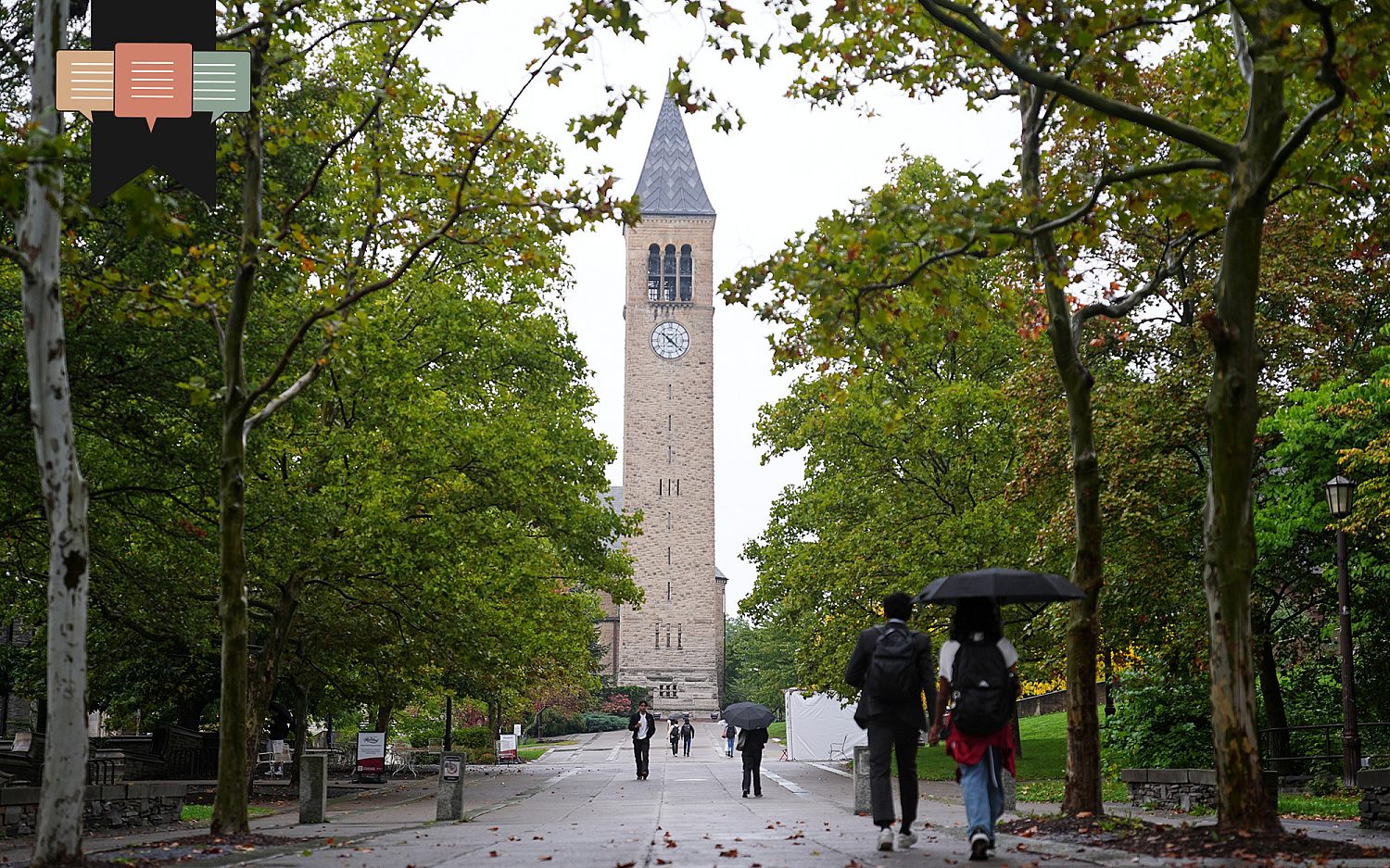
Students walk across the campus of Cornell University in Ithaca, N.Y. Associated Press / Photo by Matt Rourke
The moral rot that pervades much of American higher education has been on full display for many years now. Headline after headline has traced the debauchery and decay of colleges and universities, and there is no sign that any form of moral realism or recovery is about to appear on campus. To the contrary, the moral insanity just seems to spread.
Just take the recent headlines about Cornell University. Part of the Ivy League of elite U.S. institutions, Cornell exploded in controversy in recent days as a young woman has filed a civil suit against a number of parties, claiming that she was the victim of a brutal sexual assault from multiple members of a campus fraternity in the course of a night of heavy drinking, drug use, and sexual activity at the fraternity house back in 2024, when she was 20 years old. The suit she filed prompted public comment that raised urgent questions about what actually happened, what investigation was done, whether there was a deliberate coverup by campus police, and whether the local district attorney gave any adequate consideration to possible prosecution of the young men, or at least some of them.
As the story broke, the young woman was claiming to have been the victim of a gang rape at the fraternity house that night. She admitted that she had been drinking and using drugs, and that at least some of the sexual activity was consensual, but some days after the incident she did accuse at least some of the young men of non-consensual sexual activity. As the story unfolded over the last few days, the moral disaster looms ever larger. Texts shared by young men in the fraternity advertised the availability of the young woman for sexual activity. There seems to be no reason to doubt much of her story. The campus police did report the incident, but the report they passed on to the local district attorney was incomplete, apparently including no accusation of sexual violence or rape. The story has exploded on the Cornell campus and the national press just can’t get enough of it. The story is complex and corrupt and vile and confusing, especially to those who try to operate out of the ethical system that is now established on elite campuses.
That ethical worldview refuses to make any moral judgments about the rampant debauchery of the campus culture until and unless the new moral boundary of consent is breeched. That is basically all that now remains of campus sexual ethics and rules. You can do anything, with anyone, so long as there is legal consent given. That’s it. Most major universities make absolutely no attempt to place any meaningful restrictions beyond consent. Add free-flowing alcohol and drugs to the mix and you turn the local campus into a weekend bacchanalia. In some cases, campus authorities might also argue for the priority of “safe sex” as a matter of health, but when it comes to morality, most campus policies can be reduced to consent and respect, though there is no way a morally sane individual can respect their reduced definition of “respect.”
The Cornell case is also complicated by the passing of time and the legal realities of New York state law. According to the laws of New York, it is difficult to make an accusation or charge of criminal sexual assault if inebriation or diminished capacities came as a result of voluntary use of alcohol or drugs by the victim. The young woman in this case also sent at least some text messages after the event that said she did not consider the activities to have been criminal. Sexual abuse experts have already made the case that it sometimes takes time for a victim of sexual assault to understand what has happened to her. The campus police don’t look good here, and neither does the school’s administration. In the aftermath of that night and later review, the fraternity chapter of Chi Phi, by some accounts the oldest of the major fraternities, was removed from the campus. Two of the male students were expelled and others faced lesser consequences, which evidently included the writing of essays. You can’t make this up—and wouldn’t. This is a picture of a society giving itself over to moral insanity.
Last week, Gov. Kathy Hochul held a press conference in which she castigated those who may have underreported the incident or failed to take responsible action. She singled out the local district attorney as having failed to file charges or to investigate the matter. She appointed Attorney General Letitia James to direct an investigation, and legal experts were quick to argue that something has to be done. But what? Given current law, it may be difficult to prosecute the young men. Media authorities and politicians have been quick to insist that this young woman deserves justice and that campus culture is corrupt.
Let’s be clear. There does need to be a full investigation of the entire episode. If laws were broken and prosecution is possible, arrests should follow. The watching world is right to respond with moral concern and demands for a competent and accountable investigation.
But where is the moral outrage at the entire context that allowed this to happen? Will anyone stand up to say that the culture of rampant alcohol and drug abuse, mixed with unspeakable sexual debauchery, is just flat wrong and decidedly dangerous? What parents would send their son or daughter into such a whirlpool of moral degradation? Do they think this is all just part of the campus experience? There is so much to consider in this case, and all of it is bad.
Thankfully, not all campuses (or fraternities) share the same culture, but just about every major university has at least some fraternity houses that, from student reports, are much like Chi Phi at Cornell. New York authorities need to do their job, but that is not going to fix the problem. A society that abandons moral sanity can’t fix the problem, precisely because it doesn’t admit the underlying problem. The result, let’s be clear, is massive hurt and massive harm. What we see at Cornell University is nothing less than a moral catastrophe.


These daily articles have become part of my steady diet. —Barbara
Sign up to receive the WORLD Opinions email newsletter each weekday for sound commentary from trusted voices.Read the Latest from WORLD Opinions
Thaddeus Williams | America’s “existential crisis of meaning” is similar to the Babylonian king’s crisis, and the solution is the same, too

A.S. Ibrahim | In pointing to the attitudes of Muslim immigrants, Trump says what Europe’s leaders still won’t

Colin J. Smothers | The liberal religion of Senate candidate Adam Hamilton

Denny Burk | A recent article on Elisabeth Elliot is way over that line

Please wait while we load the latest comments...
Comments
Please register, subscribe, or log in to comment on this article.