
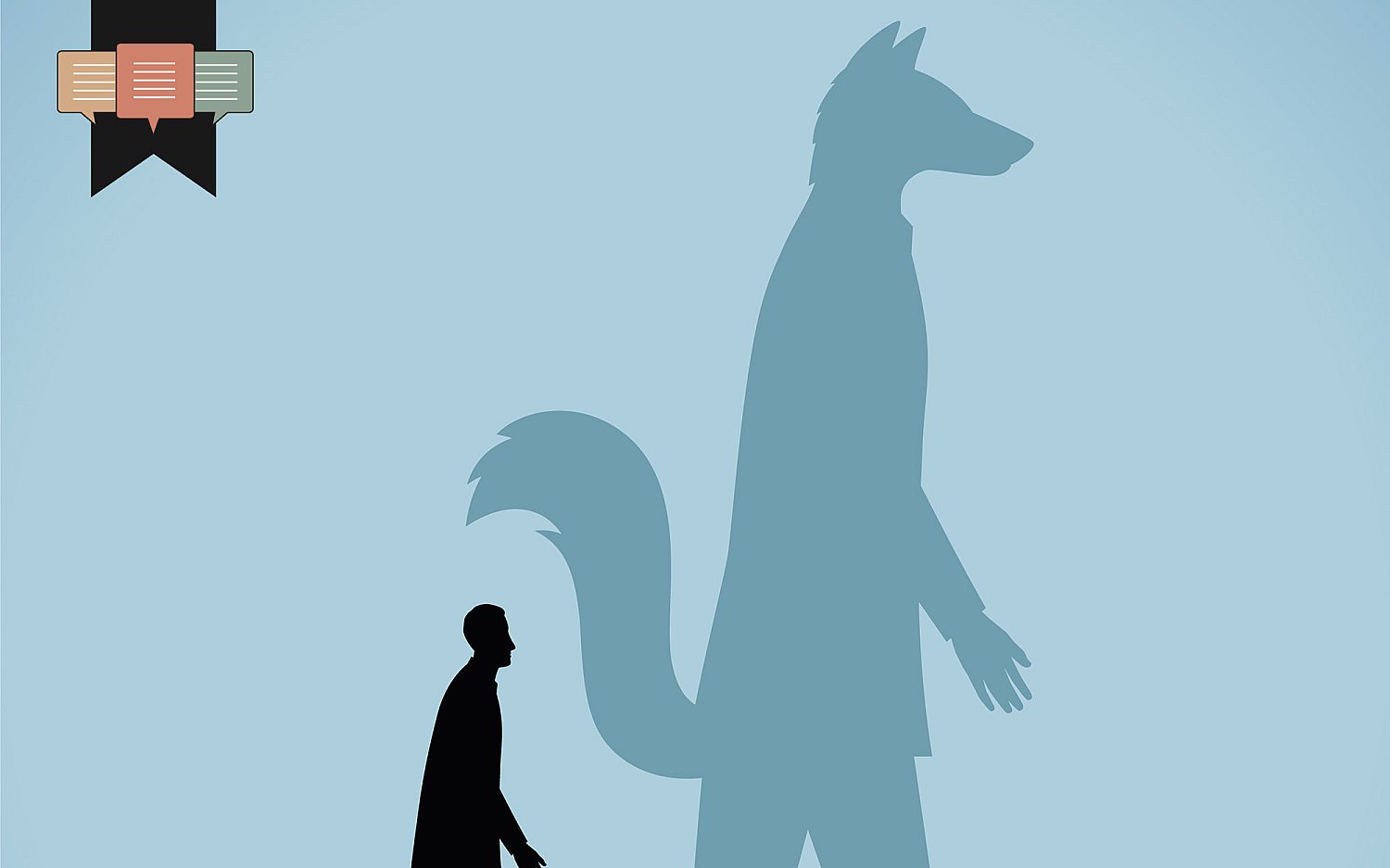
Liberal theology’s mask
We must understand the temptation, and the error, of locating authority in experience
dane_mark / DigitalVision Vectors via Getty Images
Full access isn’t far.
We can’t release more of our sound journalism without a subscription, but we can make it easy for you to come aboard.
Get started for as low as $3.99 per month.
Current WORLD subscribers can log in to access content. Just go to "SIGN IN" at the top right.
LET'S GOAlready a member? Sign in.
“Am I a heretic?” That’s the pressing question addressed by the late professor E. Glenn Hinson on Feb. 26, 1986, when he stepped into the chapel pulpit at The Southern Baptist Theological Seminary. His purpose was to answer the question his critics had been asking for months. He even entitled his message: “Am I a Heretic?”
Forty years later, that sermon remains one of the clearest windows into the liberal imagination.
Hinson, a church history professor, stood accused of denying central doctrines of the faith, including the inerrancy of Scripture. But Hinson believed his personal faith rose above questions of truth and error.
“Defining heresy is far more difficult than my critics want to admit,” he said. His opponents, he claimed, reduced it to one test: whether a man believed the Bible inerrant in whole and in part. Hinson would not say yes. He was “unable to turn my mind off completely.”
Hinson valued experience more than doctrine. “The core of faith is personal and relational, and not propositional,” he said. “Faith begins in awe and not in reason.” When God judges heresy, he argued, the question will not be inerrancy or the virgin birth. “No. No. No. Emphatically no,” Hinson cried. The Lord will ask whether we fed the hungry and cared for the poor. He closed by submitting his case “to the Lord of conscience.”
We conservatives may know our Bibles and doctrines, but we often misread what liberalism is trying to do. That matters because J. Gresham Machen was right in his 1923 work, Christianity and Liberalism. Liberalism is not a variety of Christianity but a different religion. It cannot be accommodated. It must be resisted, and we cannot resist what we cannot recognize.
Our generation faces a peculiar disadvantage, one born of success. Defenders of the faith such as Machen, Carl F.H. Henry, and R. Albert Mohler Jr. fought liberalism after learning it firsthand. That’s why Southern Seminary is now so ardently conservative. On the other hand, many evangelicals today study liberal theology from the outside because faithful institutions held the line. That is a gift, but it leaves us prone to misidentify liberalism, or worse, to welcome it without noticing.
The answer is to stop identifying liberalism chiefly by its conclusions or denials and start identifying it by its method. A liberal seeks a third way between traditional faith and unbelief, shifting authority from Scripture, creed, and tradition toward the self. But the self has worn different clothes in different eras. In the Enlightenment, liberals submitted Scripture to the bar of reason. Under Romanticism, feeling stood over the text. After Existentialism, with its emphasis on despair and self-made meaning, postmodern liberals urge people to live their truth.
These movements contradict one another about where authority lies. Paul Tillich’s existentialism looked little like Albrecht Ritschl’s confidence in reason. What unites them, however, is a mission to rescue Christianity from irrelevance by enlisting the reigning ideas of the age. In short, liberalism does not set out to deny the faith. It sets out to save it. But in attempting to save the faith on modern terms, liberals create a new religion.
That explains why liberals so often shrug at the charge of heresy. Liberalism cares little for doctrinal affirmations and denials, except, ironically, social ones. The theologian who finds the virgin birth negotiable will treat LGBTQ affirmation or critical race theory as beyond question. These causes are not liberalism’s root but its fruit, the visible products of a method that locates authority in experience.
This means pressing a liberal to admit heresy often works into liberalism’s advantage. Hinson did not deny the faith; he redefined it. “I know no great confession with which I disagree,” he said. But because Scripture and the confessions contain a wide array of statements, “I use my brain to decide personally how I will confess faith.” He claimed the Baptist tradition while subordinating it to his own judgment.
That is the liberal temptation in every generation. It comes disguised as humility, attentive to ordinary saints and the oppressed, wary of proud certainty. It does not ask anyone to abandon Christianity. It invites them to live the “true” updated faith, one found in awe rather than in propositions.
If we want to keep liberalism out of our churches and schools, we must understand why someone becomes a liberal, because that decision is made long before heresy appears. Error rarely announces itself as the enemy of faith. But we know even Satan “disguises himself as an angel of light” (2 Corinthians 11:14).


These daily articles have become part of my steady diet. —Barbara
Sign up to receive the WORLD Opinions email newsletter each weekday for sound commentary from trusted voices.Read the Latest from WORLD Opinions
Thaddeus Williams | America’s “existential crisis of meaning” is similar to the Babylonian king’s crisis, and the solution is the same, too

A.S. Ibrahim | In pointing to the attitudes of Muslim immigrants, Trump says what Europe’s leaders still won’t

Colin J. Smothers | The liberal religion of Senate candidate Adam Hamilton

Denny Burk | A recent article on Elisabeth Elliot is way over that line

Please wait while we load the latest comments...
Comments
Please register, subscribe, or log in to comment on this article.