
Islamism is a civilizational project
Hatred of the West doesn’t stem from grievance or colonialism but from mainstream Islamic teaching
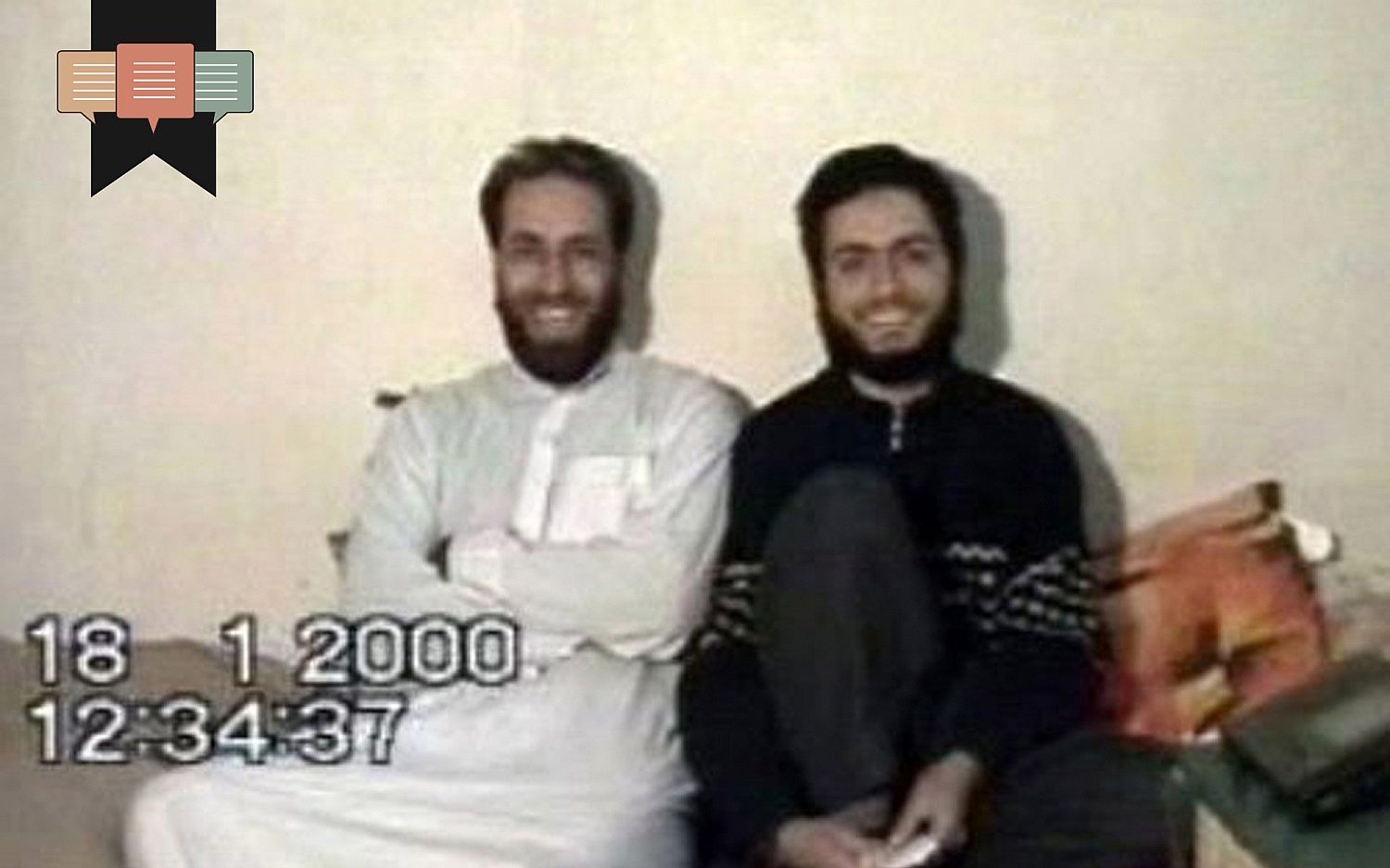
Suicide pilots Ziad al-Jarrah (left) and Mohamed Atta joke about making their will in a video dated Jan. 18, 2000, more than a year before the 9/11 attacks. Associated Press / The Sunday Times
Full access isn’t far.
We can’t release more of our sound journalism without a subscription, but we can make it easy for you to come aboard.
Get started for as low as $3.99 per month.
Current WORLD subscribers can log in to access content. Just go to "SIGN IN" at the top right.
LET'S GOAlready a member? Sign in.
Five years before he flew American Airlines Flight 11 into the North Tower, Muslim terrorist Mohamed Atta sat in a Hamburg apartment and wrote his last will and testimony. It says nothing about poverty, humiliation, colonialism, or American troops on Arab-Muslim soil. It is, instead, remarkably specific about his commitment to Islam and his insistence on following it to the letter, even in death: no women at the grave, no one religiously unclean or pregnant near the body, gloves for whoever washes him so they never touch his genitals, three plain white cloths, his body turned on its right side to face Mecca, laid among righteous Muslims only, his wealth divided precisely as Islamic law requires. A young man, comfortable and educated, carefully arranging the mechanics of his own afterlife.
Ayaan Hirsi Ali is right to put this document at the center of her recent essay marking the 25th anniversary of 9/11. As she argues, the West spent a quarter-century translating Atta into nonreligious categories it could manage—grievance, alienation, colonialism, foreign policy, economics—because after its own long, bloody wars of religion, it no longer had the categories to recognize a man who simply believed what he said he believed: a man driven by religious texts and zeal to please a deity by massacring nonbelievers.
Ayaan clearly knows what she’s revealing, since she is a former Muslim herself. She lived inside this worldview as a teenager in Somalia. Now, after two and a half decades of Western analysts refusing to define the “Muslim” problem behind 9/11 precisely, she tells the West how deep its delusional evasion runs.
All reasonable thinkers should agree with her diagnosis. But I want to press further into what produced this particular terrorism.
Atta’s will isn’t an abnormality. It is the result of sincere Islamic educational catechesis. Classical Islamic jurisprudence on jihad and martyrdom frames dying in battle against unbelievers as a religious duty—a transaction with guaranteed returns: sins forgiven at the first drop of blood, a celestial station secured, 70 virgins waiting to cheer him at his paradise arrival, and the right to intercede for 70 family members on the Day of Judgment. Martyrdom is the only action with guaranteed eternal rewards in Islam, since salvation itself is unguaranteed.
This isn’t radical theology but mainstream classical doctrine, present in ample Muslim sources every trained Islamic scholar studies. It explains why a man with no economic grievance could write a will obsessed with ritual purity rather than politics. He wasn’t settling transactions with the West. He was settling accounts with Allah.
But the deeper doctrine beneath even this is about territory, not just the individual depraved soul.
Early Islamic historical writing describes the seventh- and eighth-century Muslim conquests not as political expansion but as the working out of divine sovereignty over the earth. Fighting and killing non-Muslims is viewed as a religious mandate to please a commanding deity by advancing the abode of Islam to consume the abode of war.
The loss of the Muslim caliphate in 1924 paralyzed Muslim zealots, serving as a theological wound—the interruption of a caliphal project understood as divinely commanded, not chosen. This is why the Muslim Brotherhood began in 1928 with that same divine dream: to reestablish what vanished.
Islamism today is a civilizational project rather than a terrorist tactic. That’s because the core Islamic doctrine underneath it has always described advancing over non-Muslim societies, not coexisting with them, as the normal and expected condition of history moving correctly.
That worldview doesn’t need a hijacked plane to advance. It can advance through births, ballots, and institutions—and this is where Western elites remain almost willfully unseeing.
Look at recent years: Brotherhood-linked networks building parallel educational and legal systems in European cities; sharia councils running alongside British civil courts; da’wa preachers teaching Westerners to view pluralism as corruption rather than a value. A major American city is now led by a foreign-born Muslim mayor who has backed calls to globalize the intifada. A recent Pew survey found that over 40 percent of American Muslims view Hamas favorably. None of this needed a bomb—only the West’s “politically correct” habit of mistaking cultural transformation for diversity and institutional patience for terrorism’s substitute.
This is the pattern Islamist strategists have written down themselves—in documents like the Muslim Brotherhood’s 1991 Explanatory Memorandum, which describes the West as a place to be conquered from within using its own freedoms as instruments. Western governments keep “discovering” honor killings, grooming networks, and campus intimidation campaigns with surprise, as if these were isolated failures of integration rather than the visible outcome of a coherent, textually grounded program that doesn’t distinguish between converting a human and converting a nation.
Atta’s will has been sitting in evidence rooms for a quarter-century, unread for what it actually says. The West has become extraordinarily good at avoiding such wills. It has still not confronted the doctrine that produces Atta and his like. When will our leaders finally be willing to read what Atta actually wrote—and to acknowledge what, exactly, he was taught to believe?


These daily articles have become part of my steady diet. —Barbara
Sign up to receive the WORLD Opinions email newsletter each weekday for sound commentary from trusted voices.Read the Latest from WORLD Opinions
Thaddeus Williams | America’s “existential crisis of meaning” is similar to the Babylonian king’s crisis, and the solution is the same, too

A.S. Ibrahim | In pointing to the attitudes of Muslim immigrants, Trump says what Europe’s leaders still won’t

Colin J. Smothers | The liberal religion of Senate candidate Adam Hamilton

Denny Burk | A recent article on Elisabeth Elliot is way over that line

Please wait while we load the latest comments...
Comments
Please register, subscribe, or log in to comment on this article.