
Dolly Parton’s legacy
The country music legend combined great talent with gratitude, generosity, humility, and good humor
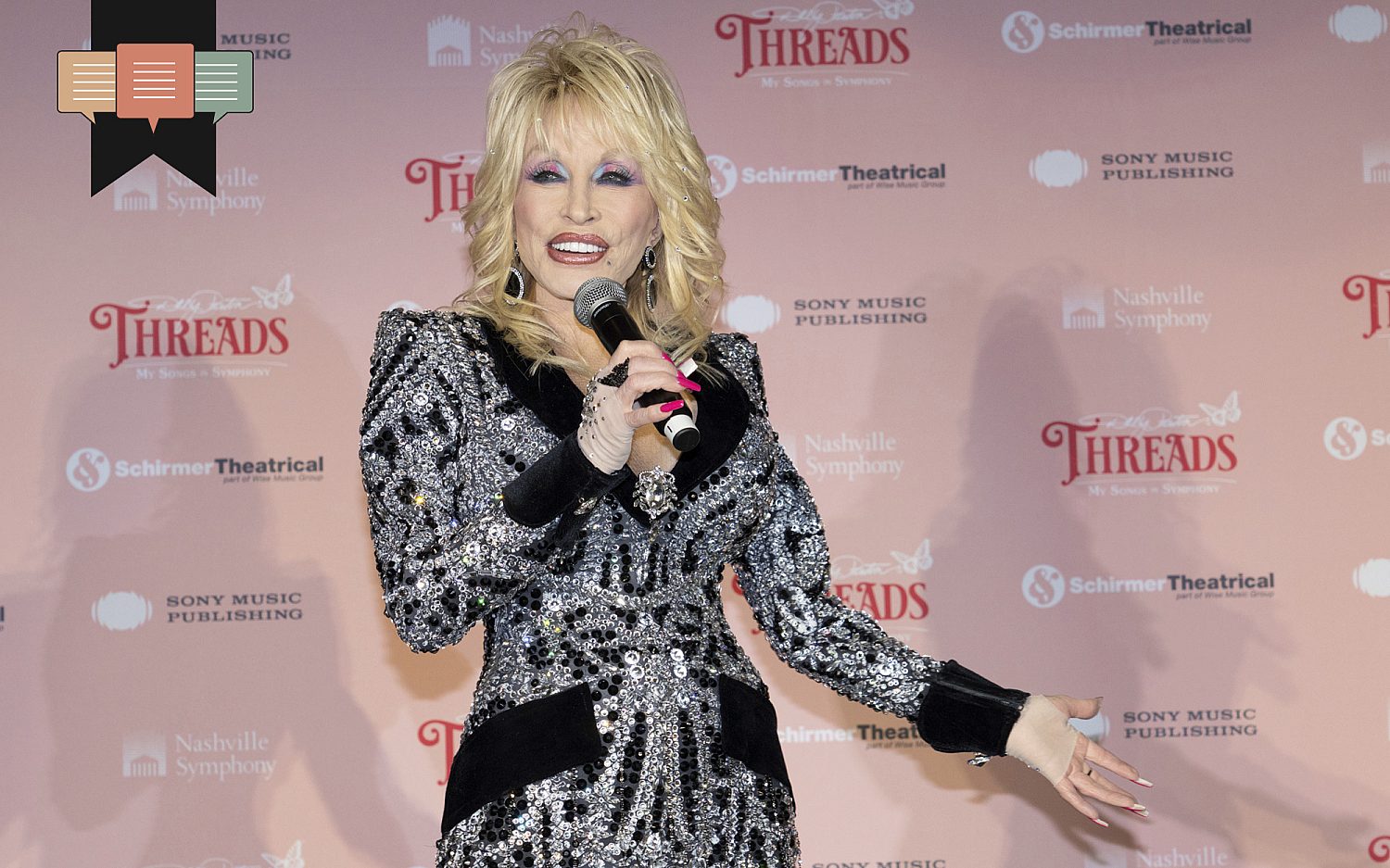
Dolly Parton speaks at a press conference in Nashville, Tenn., on March 20, 2025. Associated Press / Photo by Amy Harris / Invision
Full access isn’t far.
We can’t release more of our sound journalism without a subscription, but we can make it easy for you to come aboard.
Get started for as low as $3.99 per month.
Current WORLD subscribers can log in to access content. Just go to "SIGN IN" at the top right.
LET'S GOAlready a member? Sign in.
Dolly Parton, one of America’s most beloved, and remarkably bipartisan, cultural figures, died Tuesday at 80 years old.
Even through the treacherous, divisive politics of the past decade, Parton remained steadfast in her refusal to join the partisan fray. She had opinions, of course, but she strongly resisted invitations to turn people into enemies over them. Instead, she often deployed self-deprecating humor, kindness, and a nod to her faith to steer conversations away from condemnation.
In an era that increasingly rewards outrage, Parton offered something different.
She made her way into the country music world as a songwriter before joining The Porter Wagoner Show in 1967. At 21, the beautiful, beehived blonde from the mountains of East Tennessee was a striking presence on television.
Then there was her voice, an unmistakably sweet, high-pitched Appalachian twang that could sing everything from gospel standards like “How Great Thou Art” to chart-topping duets like “Please Don’t Stop Loving Me.”
But it wasn’t only Parton’s voice or larger-than-life appearance that people loved. It was her story, her character, and her unique blend of the tragic and the joyful.
Parton grew up one of 12 children in a one-room cabin in the mountains of East Tennessee, without electricity or indoor plumbing. She began singing in church, started performing on local radio and television as a child, and headed to Nashville the day after graduating from high school. Fame eventually came, but she never seemed to lose her gratitude for it, or her appreciation for where she came from.
Julia Roberts once recalled working with Parton on Steel Magnolias during a brutally hot Louisiana summer. The cast complained constantly about the heat. Parton, despite the wigs, costumes, and makeup, did not.
Parton explained why.
“When I was a little girl, I wanted to be famous, and I wanted to be rich, and now I’m both of these things, I’m not going to complain about it,” she said.
It was a small moment that revealed something we need more of in public life these days: gratitude over grievance.
The same instinct characterized the way Parton treated people. She was exceptionally reluctant to publicly condemn others, including those with whom she disagreed politically.
“I’ve got as many Republican friends as I’ve got Democrat friends,” she once said.
When criticized for associating with controversial figures, she similarly declined the invitation to denounce them. “I can’t speak for Kid Rock. I can’t speak for you. I can only speak for me,” she said. She seemed to enjoy the fact that drag queens emulated her style.
Even the jokes directed at her were more likely to become material for another joke than a grievance. “I’m not offended by all the dumb blonde jokes because I know I’m not dumb,” she famously quipped. “And I also know that I’m not blonde.”
None of this made Parton timid. Behind the rhinestones, wigs, and exaggerated country-girl persona was an incredible songwriter and savvy businesswoman.
By the end of her life, it was difficult to go anywhere without encountering something Dolly-themed. She partnered with Krispy Kreme on doughnuts, Kendra Scott on jewelry, Lodge on cast-iron skillets, and numerous other brands. Her image was instantly recognizable and extraordinarily marketable—and she knew it.
Without question, Dolly Parton was one of the most famous songwriters of her time, and she loved to sing the music she composed. She also knew how to turn wealth and fame toward others in need.
Perhaps her greatest contribution outside of music was Dolly Parton’s Imagination Library, a passion project inspired by her father, who never learned to read or write. What began in 1995 as an effort to put free books into the hands of children in her Tennessee hometown grew into an international literacy program mailing millions of books each month to children.
She was always quick to help the people nearest her. After the 2016 Great Smoky Mountains wildfires devastated her home region, Parton created the My People Fund for families that had lost their homes. More than $12 million was ultimately distributed.
The success of Dollywood tells a similar story. When Parton put her name behind an existing East Tennessee amusement park in 1986, attendance skyrocketed, according to old records. It eventually became one of the country’s most celebrated theme parks and a major employer in the region—very close to where Parton had grown up in deep poverty.
She became extraordinarily wealthy without seeming embarrassed by wealth. That may be one reason Dolly Parton remained so beloved in a culture constantly scowling at one another from the sidelines.
She was unabashedly successful without being self-serious and glamorous without pretending the glamour was that important. She was unlike anyone else.
Parton identified with Christianity, but she described herself as more spiritual than religious. It was certainly true that she knew many stories from the Bible and her grandfather had been a mountain preacher. She grounded her message in both tragedy and joys.
But there is something poignant today about hearing Parton sing “There Was Jesus,” her Grammy-winning collaboration with Zach Williams. Christians can hope that the Jesus she sang about—the One she said had been present “through the waiting, searching, hurting, and healing”—was indeed the Jesus in whom she placed her trust.
If so, that unmistakable Tennessee voice has something even better to sing about now.


These daily articles have become part of my steady diet. —Barbara
Sign up to receive the WORLD Opinions email newsletter each weekday for sound commentary from trusted voices.Read the Latest from WORLD Opinions
Jonathon Van Maren | The life and work of Dr. Hugh Hodge provide a powerful example to pro-life advocates
Thaddeus Williams | America’s “existential crisis of meaning” is similar to the Babylonian king’s crisis, and the solution is the same, too

A.S. Ibrahim | In pointing to the attitudes of Muslim immigrants, Trump says what Europe’s leaders still won’t

Colin J. Smothers | The liberal religion of Senate candidate Adam Hamilton

Please wait while we load the latest comments...
Comments
Please register, subscribe, or log in to comment on this article.