
Church-state separation rightly understood
“A free church in a free state” has, historically, not implied that secularism is neutral
Full access isn’t far.
We can’t release more of our sound journalism without a subscription, but we can make it easy for you to come aboard.
Get started for as low as $3.99 per month.
Current WORLD subscribers can log in to access content. Just go to "SIGN IN" at the top right.
LET'S GOAlready a member? Sign in.
Last spring, President Trump issued an executive order that created a Religious Liberty Commission. The order acknowledged that religious liberty is a hallmark of American society that is enshrined in the First Amendment to the U.S. Constitution. To be sure, religious liberty is essential to authentic human flourishing. Unfortunately, in recent years progressives have attacked America’s first freedom, often by championing laws and policies that coerce the consciences of religious people—especially social conservatives.
The order stipulates that, “The Commission shall produce a comprehensive report on the foundations of religious liberty in America, the impact of religious liberty on American society, current threats to domestic religious liberty, strategies to preserve and enhance religious liberty protections for future generations, and programs to increase awareness of and celebrate America’s peaceful religious pluralism.” The Commission’s report will be published in June, in time for the 250th anniversary of the Declaration of Independence on July 4.
Texas Lt. Gov. Dan Patrick chairs the 15-member Religious Liberty Commission, which includes a dozen public figures, scholars, lawyers, and clergy, in addition to three ex officio members who are officials in the second Trump Administration. Commission members represent Protestant, Catholic, and Jewish traditions. The Commission has held seven public hearings since its establishment, most recently on April 13 at the Museum of the Bible in Washington, D.C. The hearing included panels on the history of religious freedom and the relationship between church and state.
Immediately following the hearing, Chairman Patrick found himself at the center of controversy for his pointed remarks about church and state. “It is time to set the record straight: There is no such thing as ‘separation of church and state’ in the Constitution. For too long, the anti-God left has used this phrase to suppress people of religion in our country. During all 7 Commission hearings, witness after witness testified that the so-called ‘separation of church and state’ was used to take their God-given religious liberty rights away.” According to Patrick, church-state separation is “the biggest lie that’s been told in America since our founding,” and it represents a clear and present danger to religious freedom.
Patrick is hardly the first modern conservative to argue that the separation of church and state is an invalid interpretation of the Constitution. But like others who make this argument, he is only half right. Thomas Jefferson famously referred to a “wall of separation” between church and state in an 1802 letter supporting religious freedom for Connecticut Baptists. However, since the mid-20th century Jefferson’s analogy has often been used by progressives to advance secularism. The latter usage is Patrick’s real concern. Unfortunately, in rejecting the very concept of church-state separation, Patrick is wrongly assuming that progressive weaponization of Jefferson’s analogy means the concept itself is unconstitutional and should be rejected.
Conceptually, some separation of church and state has deep roots in the Christian tradition. For the sake of space, I’ll focus on Protestant voices. Many of the Reformers, including Luther and Calvin, drew upon the natural law tradition to argue that God rules His creation through two kingdoms: the spiritual kingdom and the temporal kingdom. Early Baptists, who were heirs of two kingdom theology, went further and made a case against established state churches. The Kuyperian tradition later appealed to sphere sovereignty to argue that a principled pluralism informed by Christian principles was preferable to state churches. Today, many Christians in the West, across ecclesial traditions, draw on these Christian streams to argue for a formal separation of church and state.
The Southern Baptist Convention’s Baptist Faith & Message (2000) offers one example of a robustly Christian understanding of church-state separation: “A free church in a free state is the Christian ideal, and this implies the right of free and unhindered access to God on the part of all men, and the right to form and propagate opinions in the sphere of religion without interference by the civil power.” In other words, the separation of church and state, when rightly understood, helps safeguard religious liberty. This is consistent with the First Amendment itself: “Congress shall make no law respecting an establishment of religion, or prohibiting the free exercise thereof.”
Patrick is simply wrong to suggest that the entire concept of separation of church and state is an unconstitutional lie that was concocted to silence people of faith. But he is certainly right to be concerned with how church-state separation is malformed when, like so many of our cultural values, it is divorced from its roots in Judeo-Christian reasoning. The real threat to religious liberty in America isn’t the separation of church and state, but the widespread assumption by post-Christian cultural elites that secularism is neutral. Christians shouldn’t respond to this threat by abandoning the First Amendment, but by vigorously opposing secularist redefinitions of church-state separation and the curtailing of religious freedom by progressive activists.


These daily articles have become part of my steady diet. —Barbara
Sign up to receive the WORLD Opinions email newsletter each weekday for sound commentary from trusted voices.Read the Latest from WORLD Opinions
Ericka Andersen | Writer turns linguistic and ideological cartwheels to make the case that a woman can be “a little bit pregnant”

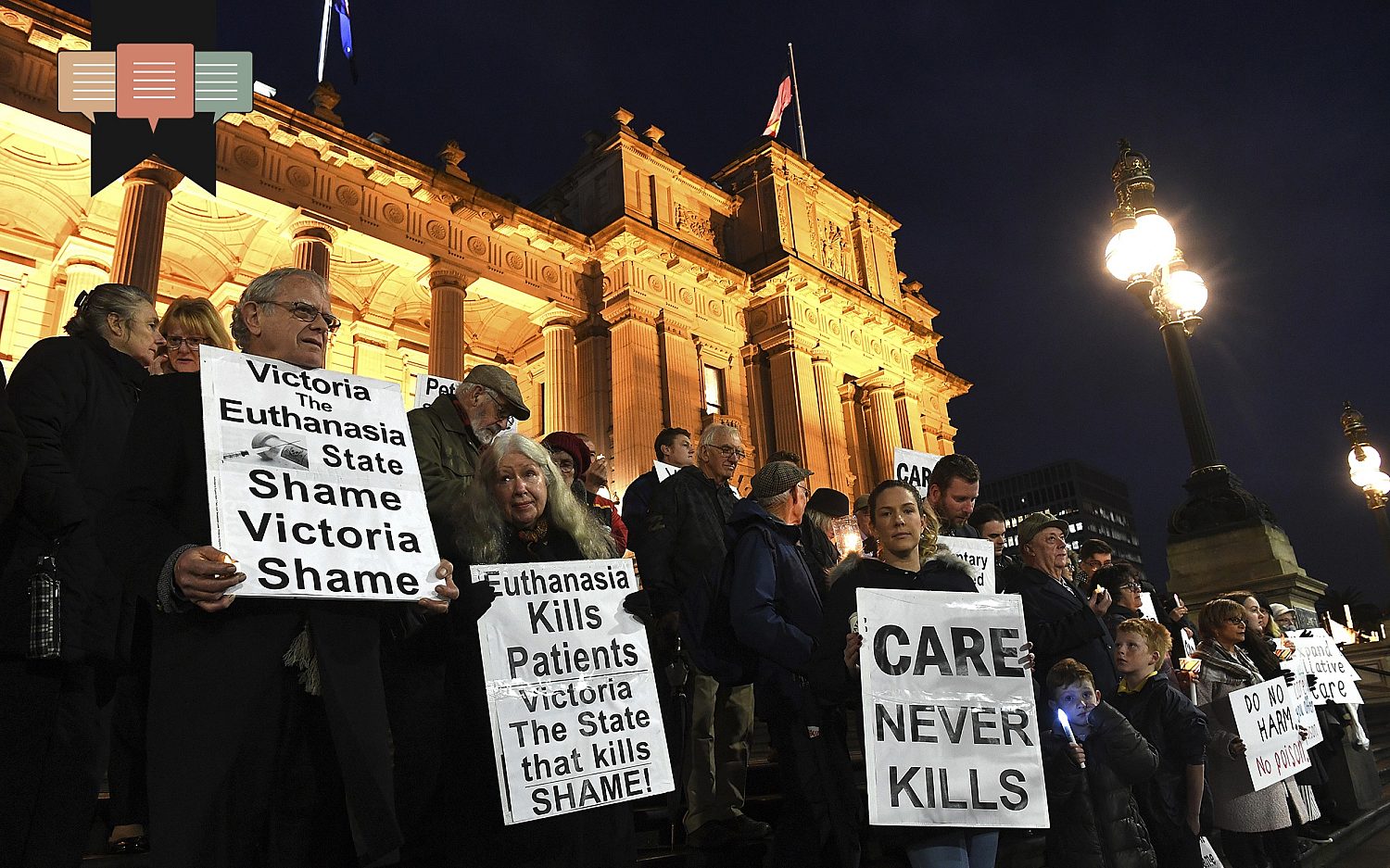
David Closson | Safeguards fall away as assisted suicide expands in Australia and Canada
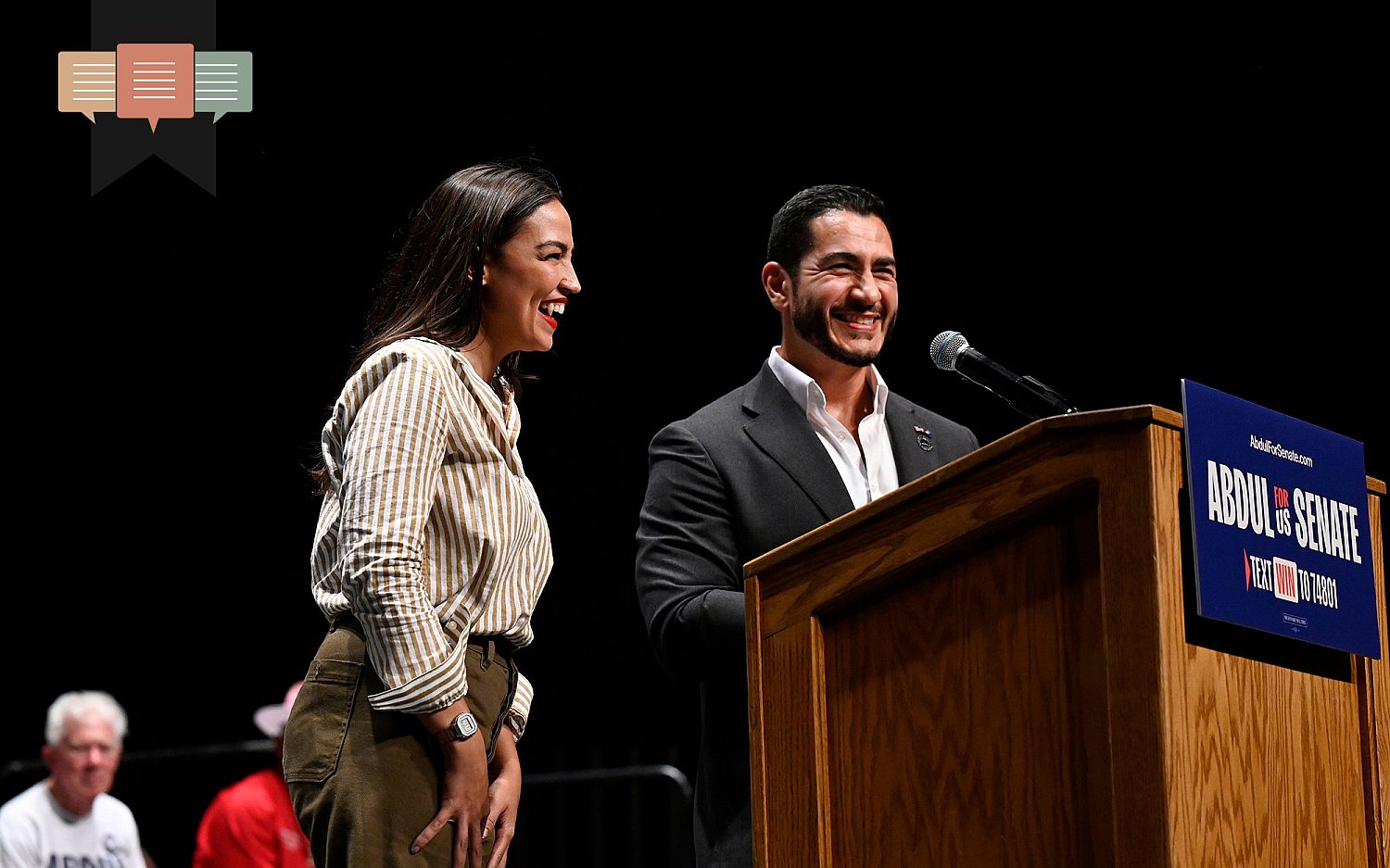
Eric Patterson | Marx-inspired candidates say some radical things about faith, but they don’t say much about protecting fundamental liberties
Ray Hacke | A male cross country runner, his female teammates, and the need for truth and justice on Nov. 3

Please wait while we load the latest comments...
Comments
Please register, subscribe, or log in to comment on this article.