
Black Saturday, bright hope
A somber reminder that Christ accomplished something that death cannot undo
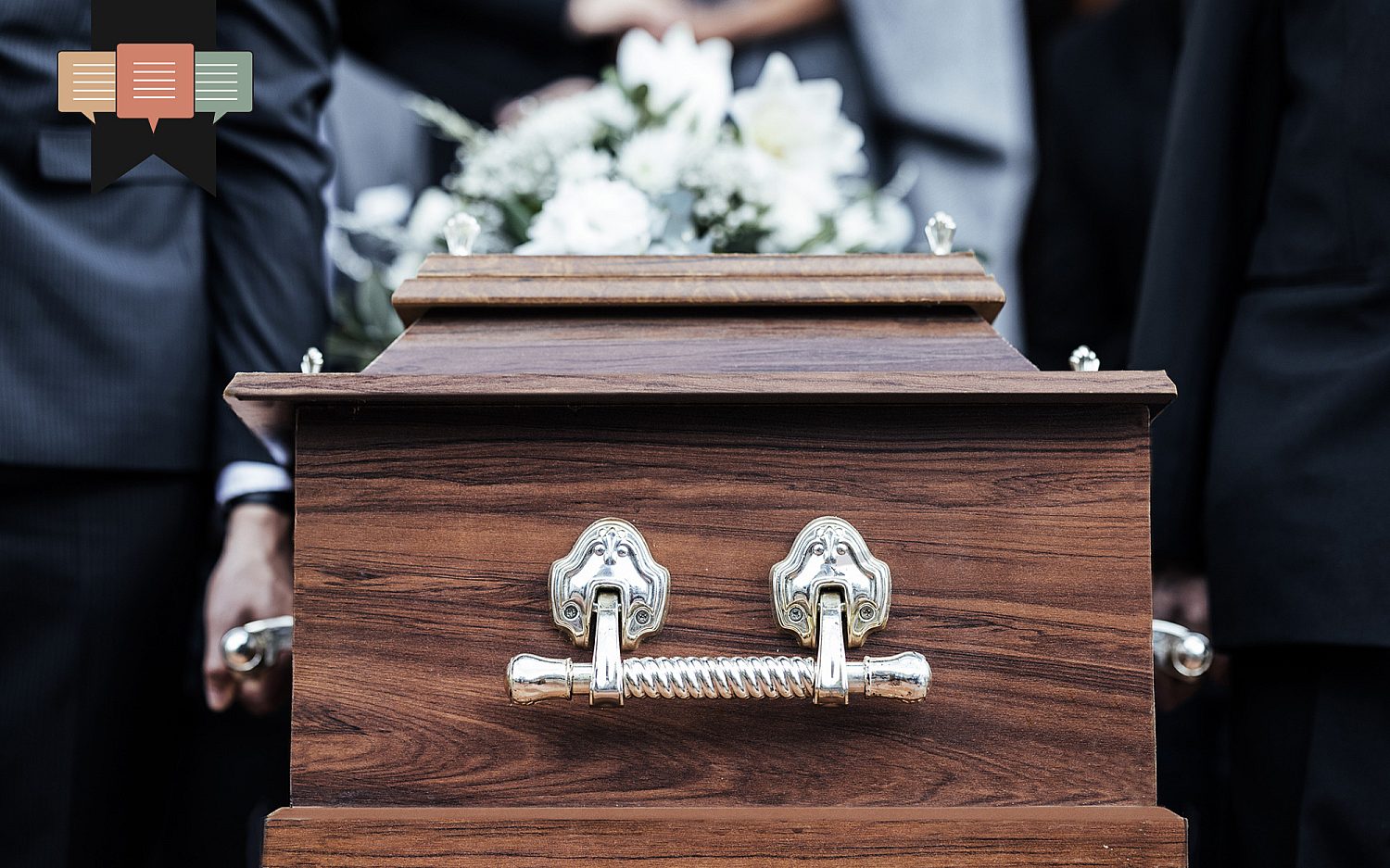
PeopleImages / iStock / Getty Images Plus via Getty Images
Full access isn’t far.
We can’t release more of our sound journalism without a subscription, but we can make it easy for you to come aboard.
Get started for as low as $3.99 per month.
Current WORLD subscribers can log in to access content. Just go to "SIGN IN" at the top right.
LET'S GOAlready a member? Sign in.
Even blocks away, we knew where the memorial was. The crowds showed the way. My daughter, son-in-law, and I simply followed the streams of black-clad mourners making their way toward a packed San Diego church.
We had come to grieve two women, a mother and daughter, lost through one terrible accident—and to stand beside the four people closest to them: Dan, Alexis’ husband and Sophia’s father; Sophia’s young husband, Benjamin; and her two younger siblings Nyla and Jobe.
On July 20, Dan and Alexis Braga were traveling through Nevada with their 23-year-old daughter, Sophia, when another vehicle struck them head-on. Sophia died instantly. The news knocked the wind out of everyone who knew her, including my daughter. The two young women had stood in each other’s weddings just weeks apart on either side of the 2025 New Year.
Dan and Alexis were airlifted to a nearby hospital. For three weeks, friends, congregants, and even casual acquaintances held their collective breath as Alexis fought for life. A praying, fasting community appealed to heaven from both ends of I-5, from Seattle to San Diego.
But Alexis never opened her eyes again on this side of heaven. Just short of her 25th wedding anniversary, she was received by her Lord and reunited with her firstborn daughter.
Eight hundred people gathered to remember them. The presiding pastor framed the next two hours around hope—not vague optimism or denial, but hope in what holds us together in times of unimaginable suffering: the comfort of Christ, the life of Christ, and the home of Christ.
Art, music, a moving sign-language poem, and testimonies about Sophia and Alexis’s love for their Lord and His children filled the first part of the memorial.
Then Sophia’s husband, Benjamin, took the stage.
He publicly tried to make sense of a chapter of his life that seemed to have slammed the entire book shut. He described his young bride as an ocean, too vast to be contained by his life or his words.
Standing at the podium, Benjamin himself conjured the satellite image of a hurricane: devastation and turmoil below, but a slow, submitted steadiness above. Like Job, he poured out his pain and questions. Then he concluded, “If the God who is beyond us lovingly allows us to see, hold, and participate in such mysteries, then who am I to rage against Him?”
Then Dan spoke. His motorized wheelchair could not access the stage, so he wheeled first to the portrait of his glowing daughter on her wedding day. He kissed his fingers and reached up to touch her face. Then he navigated to the portrait of his bride, kissed his fingers again, and touched hers.
Finally, he positioned himself in the center aisle. Ten toes peeked out from twin leg braces—toes doctors had initially feared the surfer-pastor might not keep.
What would you say in his position?
When most of us imagine the worst thing that could happen, we envision the sudden death of a child or the tragic loss of a spouse. Few of us can even speculate what it would be like to lose both at once, while our own broken body bears the evidence of the collision.
No one would have faulted Dan if he had wept and wailed. No one would have blamed him if seeds of bitterness had been scattered among his words.
Instead, flanked by portraits of the wife and daughter he would bury two hours later, Dan set to work shepherding the collective grief of the people hanging on his every word.
He made his case: God is love.
Not in the squishy, sentimental way the phrase is often used. Dan had earned the right, through both life and doctrine, to invoke God's love nearly 50 times in 15 minutes.
“Because God is love, he invites us to question his love: its nature, its unfolding, the confusing and terrible ways it does and does not make sense,” Dan said. “His love can hold our rage, our doubt, our cynicism, our pain. Love holds us together as we come apart.”
The grief filling the sanctuary, he explained, was not proof that love had failed. It was proof that love had reigned.
“The tears in this room, the pain in this room—these are marks of love. To love is to be vulnerable to loss. To love is to be open to the wound of it.”
Then Dan carried us to the epicenter of love: “For God so loved the world that he gave his one and only Son.”
“God lost, so that we might gain what will never be taken: life abundant and forever,” he said. “God was wounded to heal our hearts. My girls are fully healed now.”
I do not know whether I could have done what Dan did. In his allotted moments, he did not demand that others carry him through his grief. He used what strength remained to guide family, congregants, and strangers through theirs.
“We who remain in the wounding of this world must walk, limp, crawl, and wheelchair forward, by faith, not by sight,” he said, “until our purpose is fulfilled under the Master’s hand.”
Christian hope did not make that Saturday less black. It did not return a mother, a wife, a daughter, a sister, or a bride. It did something death itself cannot undo: It assured this shattered family that because Christ left His grave, Sophia and Alexis will not remain in theirs.


These daily articles have become part of my steady diet. —Barbara
Sign up to receive the WORLD Opinions email newsletter each weekday for sound commentary from trusted voices.Read the Latest from WORLD Opinions
Thaddeus Williams | America’s “existential crisis of meaning” is similar to the Babylonian king’s crisis, and the solution is the same, too

A.S. Ibrahim | In pointing to the attitudes of Muslim immigrants, Trump says what Europe’s leaders still won’t

Colin J. Smothers | The liberal religion of Senate candidate Adam Hamilton

Denny Burk | A recent article on Elisabeth Elliot is way over that line

Please wait while we load the latest comments...
Comments
Please register, subscribe, or log in to comment on this article.