
Abortion on the ballot
The outcome of initiatives in four states is a life and death matter for many unborn children
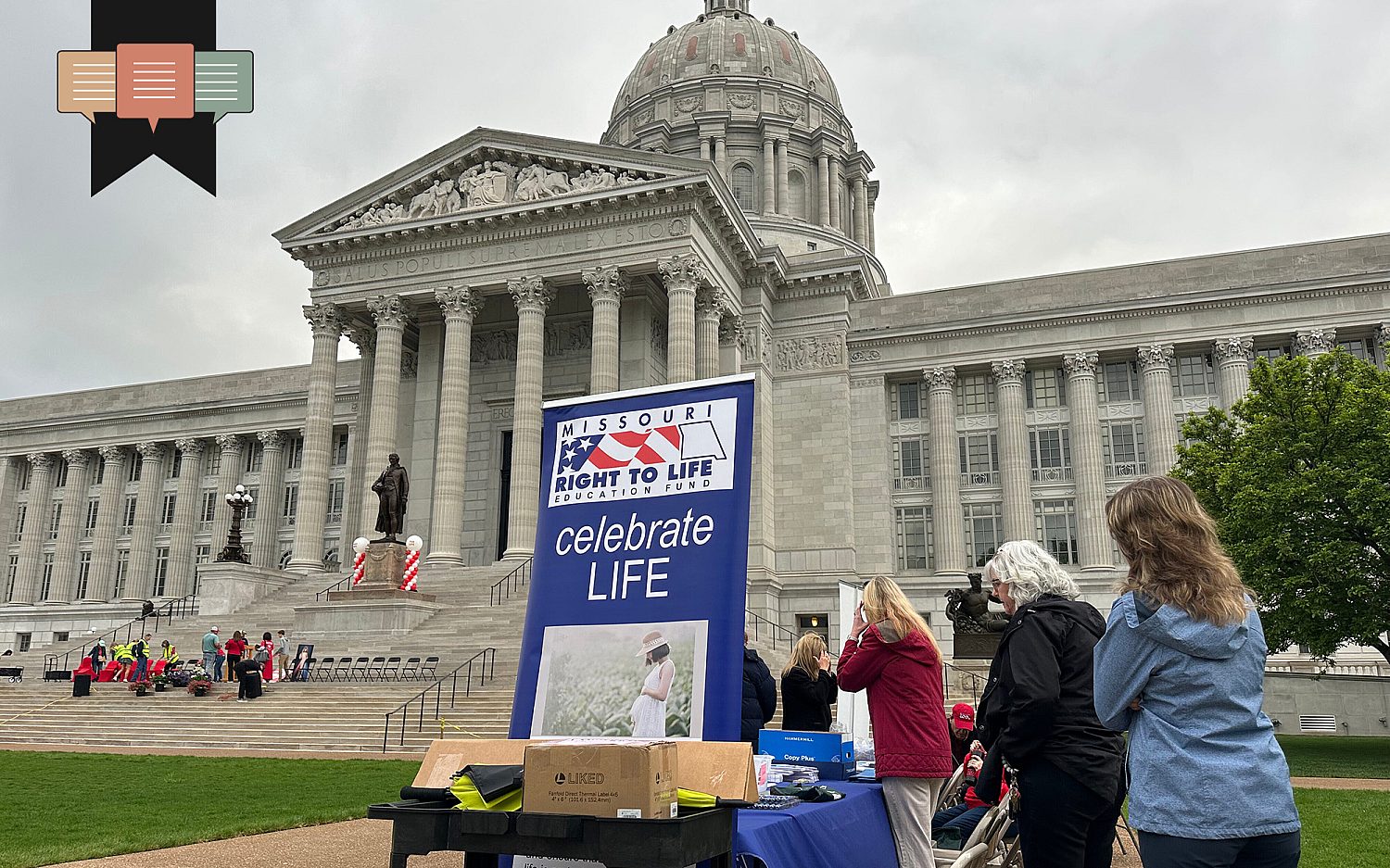
Pro-life advocates prepare for a rally at the Missouri Capitol in Jefferson City, Mo., on May 1, 2025. Associated Press / Photo by David A. Lieb
Full access isn’t far.
We can’t release more of our sound journalism without a subscription, but we can make it easy for you to come aboard.
Get started for as low as $3.99 per month.
Current WORLD subscribers can log in to access content. Just go to "SIGN IN" at the top right.
LET'S GOAlready a member? Sign in.
With the arrival of fall, election forecasters are sharpening their predictions about the races that will determine control of Congress in November’s midterm elections. Most attention is focused on the contests that could decide the balance of power in the U.S. House and Senate, but several consequential questions will appear farther down the ballot. In four states—Idaho, Missouri, Nevada, and Virginia—voters will decide abortion-related measures that could reshape post-Roe legal landscapes.
Unfortunately, since the overturning of Roe v. Wade, abortion advocates have used statewide referendums effectively to advance their cause. Since 2022, voters in over a dozen states have approved pro-abortion ballot initiatives. Even conservative states such as Ohio, Missouri, and Montana have seen pro-abortion measures pass. This fall, yet another round of abortion-related ballot measures will go before voters. Although there are similarities among the measures, there are important differences as well.
In Idaho, Proposition 1 would establish a right to abortion until the point of fetal viability, generally understood to occur around 20 to 24 weeks of pregnancy. Current state law prohibits abortion except when “necessary” to save the life of the mother or in cases of rape or incest. In other words, if Proposition 1 passes, it would dramatically expand abortion in Idaho, allowing abortions into the sixth month of pregnancy.
But a careful reading reveals that Proposition 1 goes even further by subtly redefining “fetal viability.” The measure would define viability as the point at which an unborn child has a “significant likelihood of sustained survival outside of the uterus without extraordinary medical measures.” As the pro-life coalition StopPro 1 has noted, this definition could mean “that preemie babies needing the aid of oxygen, nutrition, or other extraordinary measures to survive would no longer be considered viable.” Additionally, Proposition 1 eliminates the requirement that abortions be performed only by physicians and overrides the state’s parental consent law.
In Missouri, voters will have an opportunity to repeal key provisions of Amendment 3, the pro-abortion constitutional amendment approved in 2024. Since its passage, Amendment 3 has established a “fundamental right to reproductive freedom.” The new Amendment 3 would amend those provisions and prohibit abortion except in cases of medical emergency, fetal anomaly, rape, or incest. In cases of rape or incest, abortion would remain permissible through 12 weeks of pregnancy. The amendment would also prohibit abortions sought because of a fetal disability diagnosis and require parental consent for minors seeking an abortion.
If approved, Missouri would become the first state in the post-Dobbs era to reverse or significantly revise a pro-abortion, voter-approved constitutional amendment. That possibility is significant because Missouri’s 2024 abortion amendment passed by a narrow margin.
In Nevada, amending the state constitution requires a simple majority in two consecutive general elections. In 2024, voters gave the first required approval to Question 6, which would establish a “fundamental right to abortion” until fetal viability. But the amendment defines viability broadly and leaves the determination to the “professional judgment of a health practitioner.” The measure would also protect abortion after viability when “necessary to protect the life or health of the pregnant individual.” Notably, the amendment does not define “health,” leaving room for mental health considerations to justify abortions later in pregnancy. If voters approve Question 6 a second time this November, these expansive abortion provisions will be enshrined in the state’s constitution.
Finally, in Virginia, voters will decide Question 1, which would add a “right to reproductive freedom” to the state constitution. The amendment would protect “the freedom to make personal decisions” related to abortion and prevent the state from restricting abortion before the third trimester. Although the measure ostensibly allows abortion to be restricted during the third trimester, it includes a broadly worded health exception that would allow an abortionist to perform late-term abortions based on his determination of a woman’s physical or even mental health.
Importantly, Question 1 would also provide significant protections for abortionists, potentially making it difficult for women harmed during an abortion procedure to seek legal recourse. Finally, as Family Foundation notes, the amendment raises serious concerns about parental rights, oversight of the abortion industry, and health and safety standards.
The outcome of the midterm elections will dramatically shape President Trump’s final two years in office. While the media will understandably focus on which party controls Congress, the abortion measures will have profound consequences for millions of unborn children.
To counter the inevitable avalanche of out-of-state spending, pro-life groups must raise the necessary resources and clearly communicate what is at stake. The sobering reality is that, even in a post-Roe America, millions of unborn children remain without adequate legal protection. This November, however, voters in four states have an opportunity to stand for the most vulnerable. There is still much work to be done, but victories this fall would represent meaningful progress toward a society in which every human life is welcomed and protected.


These daily articles have become part of my steady diet. —Barbara
Sign up to receive the WORLD Opinions email newsletter each weekday for sound commentary from trusted voices.Read the Latest from WORLD Opinions
Thaddeus Williams | America’s “existential crisis of meaning” is similar to the Babylonian king’s crisis, and the solution is the same, too

A.S. Ibrahim | In pointing to the attitudes of Muslim immigrants, Trump says what Europe’s leaders still won’t

Colin J. Smothers | The liberal religion of Senate candidate Adam Hamilton

Denny Burk | A recent article on Elisabeth Elliot is way over that line

Please wait while we load the latest comments...
Comments
Please register, subscribe, or log in to comment on this article.