
A waning fad?
The CDC says homosexual and bisexual identities are losing their appeal among youth
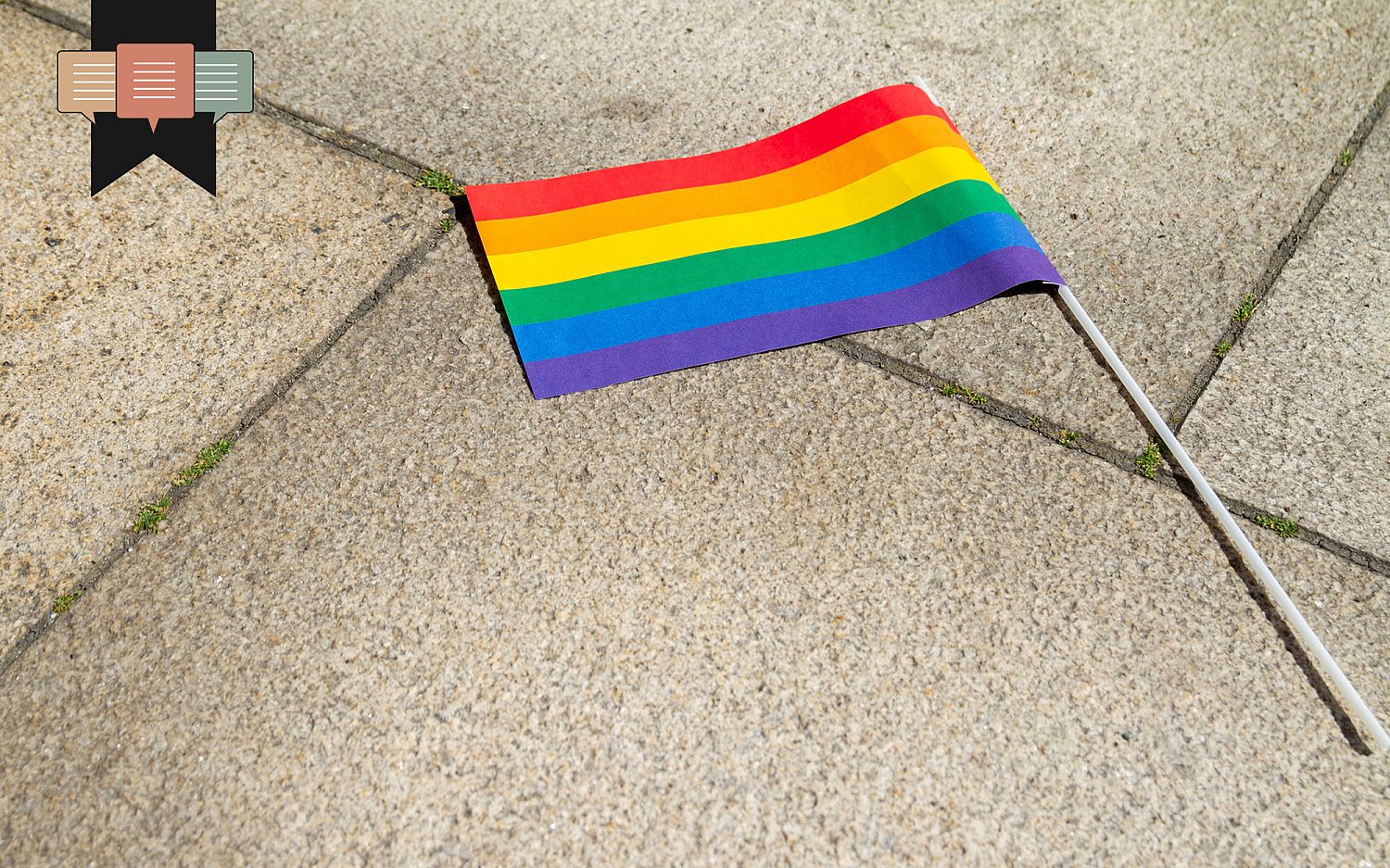
A Pride flag lays on the ground. Longfin Media / iStock / Getty Images Plus via Getty Images
Full access isn’t far.
We can’t release more of our sound journalism without a subscription, but we can make it easy for you to come aboard.
Get started for as low as $3.99 per month.
Current WORLD subscribers can log in to access content. Just go to "SIGN IN" at the top right.
LET'S GOAlready a member? Sign in.
It was certainly an interesting development.
Just as a matter of math, LGBTQ identity has never been high. The strange development came in the last decade, when the numbers of people identifying as LGBTQ started mushrooming due to social contagion. Gallup reported in early 2025 that the identity rose from 3.5% of the overall U.S. population in 2012 to a staggering 9.3% in 2024. This sudden explosion caused comedian Bill Maher mockingly to observe, “If we follow this trajectory, we will all be gay in 2054.” He was wise to note, “If something about the human race is changing at a previously unprecedented rate, we have to at least discuss it.”
Of course, Maher was referring to the fact that this dramatic increase is obviously artificially inflated. Human nature doesn’t just start creating sexually/gender divergent people. In fact, it doesn’t create them at all. “LGBTQ” is not a real thing—it is a political construct.
In 2022, Canadian social scientist Eric Kaufmann started noticing something strange in the emerging data on the topic. Young people were reporting an identity that did not correspond with their actual behavior. He explained, “When we look at homosexual behavior, we find that it has grown much less rapidly than LGBT identification.” Specifically, Kaufmann pointed to “a high-point estimate of an 11-point increase in LGBT identity between 2008 and 2021 among Americans under 30.” He added,
Of that, around 4 points can be explained by an increase in same-sex behavior. The majority of the increase in LGBT identity can be traced to how those who only engage in heterosexual behavior describe themselves.
Things are not adding up. Professor Kaufmann then documented how, “Very liberal ideology is associated with identifying as LGBT among those with heterosexual behavior, especially women.”
San Diego State University social psychologist Jean Twenge started tracking a similar phenomenon in gender identity (here and here). She added to her research conclusions recently, and her findings are certainly worth digging into. She explains, “Younger teens are now much less likely to say they are lesbian, gay, or bisexual” by remarkable margins.
Twenge draws her new conclusions from the CDC’s 2025 Youth Risk Survey and explains the declines in LGB identification among youth “are striking.” Declines are happening most starkly among younger teens, and especially among girls. It “really does look like a free fall” she explains, especially for 9th grade students.
U.S. high school students “identifying as lesbian, gay, or bisexual” dropped from 27% in 2023 to 22% in 2025 among girls. For boys, the decline was more modest from 9% to 7%. Specifically, the rate among 9th grade girls “dropped from 30% in 2021 to 17% in 2025, nearly cutting the numbers in half.” Declines among 12th grade girls have been much smaller, “from 26% in 2021 to 28% in 2023 and 25% in 2025.”
The biggest change has been among those who identified at bisexual, which is easily the largest “LGBT” category. Twenge explains, “While 26% of 9th grade girls identified as bisexual in 2021, only 13%—half as many—did in 2025.”
That is a truly stunning development, indicating something is at work in the water of social culture. Data strongly supports the social contagion of gender identity shifts, but the CDC data that Twenge presents suggests that social contagion affects sexual identity, too. While the data we have just noted speaks to self-identification, which can be far more subjective and contradictory than most of us appreciate, Twenge also notes changes in actual behavior.
The CDC Youth Risk Behavior data tracks this. First, it is important to note that Twenge explains “most high school students are not sexually active.” She is correct. Teen sex has been declining over the past decades.
Professor Twenge also observes that this trend of overall LGBTQ decline is not reflected in the data for young adults, 18 to 24. She explains, “It appears non-heterosexual identification is not declining (at least not anymore).” But nor is it increasing. Instead, “it has stabilized and is no longer racing upward as it did between 2014 and 2022, when identifying as LGB nearly tripled among U.S. 18- to 24-year-olds.” She adds, “Among 25- to 34-year-olds, identifying as LGB also stabilized after more than doubling from 2014 to 2023.”
Twenge admits this is a curious development, “a generational or cohort effect, with different trends over the years for different age groups.” She asks, “What happened during this time that impacted 9th grade girls the most, especially their [decline in] LGB identification and behavior?”
It is not the first time social scientists have been stumped by human behavior. Professor Twenge humbly and refreshingly admits, “I have to confess: I have no idea” why this is happening.
Human behavior in changing social and ideological dynamics is truly interesting. Culture drives so much of this. It certainly is good news that culturally speaking, the wind appears to be going out of the sails of this latest stage of the same-sex and gender revolution. That fact is now showing itself in the lives of our young people, and careful scientists are taking notice.


These daily articles have become part of my steady diet. —Barbara
Sign up to receive the WORLD Opinions email newsletter each weekday for sound commentary from trusted voices.Read the Latest from WORLD Opinions
Thaddeus Williams | America’s “existential crisis of meaning” is similar to the Babylonian king’s crisis, and the solution is the same, too

A.S. Ibrahim | In pointing to the attitudes of Muslim immigrants, Trump says what Europe’s leaders still won’t

Colin J. Smothers | The liberal religion of Senate candidate Adam Hamilton

Denny Burk | A recent article on Elisabeth Elliot is way over that line

Please wait while we load the latest comments...
Comments
Please register, subscribe, or log in to comment on this article.