
A specific theology, not a random grievance
We still owe the dead an honest account of why the Muslim terrorists attacked us on 9/11
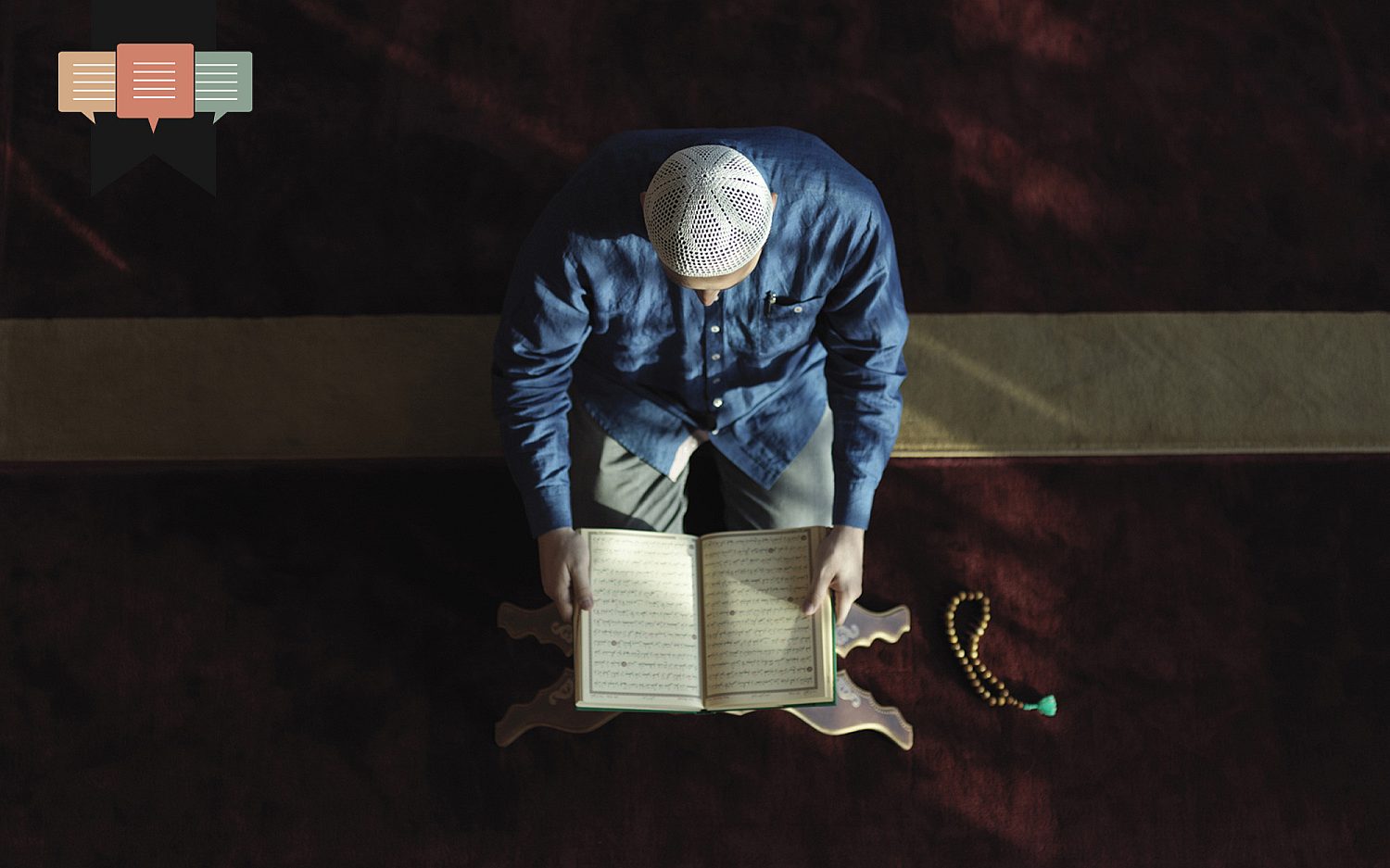
A Muslim man reads the Quran. 1223560089 / iStock / Getty Images Plus via Getty Images
Full access isn’t far.
We can’t release more of our sound journalism without a subscription, but we can make it easy for you to come aboard.
Get started for as low as $3.99 per month.
Current WORLD subscribers can log in to access content. Just go to "SIGN IN" at the top right.
LET'S GOAlready a member? Sign in.
On the night before he killed nearly 3,000 people, Muslim terrorist Mohamed Atta wrote a letter to himself—a religious devotional message declaring the core of his mission against the infidels. Atta reminded himself to recite Quranic verses before killing non-Muslims, to remember that “paradise” awaited for him, and to greet death as a bridegroom greets a wedding night. Aboard the planes, other Muslim hijackers carried similar instructions, including calls to remember Allah constantly, to trust that he would grant victory, and to face the coming hours as an act of worship rather than an act of war.
We should sit with that word: worship. Not psychosis. Not poverty. Not humiliation curdled into rage, though Western commentary has reached for all three explanations in the 25 years since. Mohamed Atta was not a lunatic who happened to be Muslim. He was a devotee performing what he sincerely believed was the highest religious duty available to him, on the authority of texts he had read and a tradition he trusted more than he trusted his own life. If we are going to teach our children what happened on Sept. 11, 2001—and we must, or we will be condemned to relearn it—we owe them that distinction. This terrorism was liturgical before it was political.
The hijackers did not invent their justification. They inherited it, largely intact, from a textual foundation 14 centuries old. For these terrorists, Islam’s scripture includes many supportive verses, including the Sword Verse and the Jizya Verse. The former instructs believers to fight polytheists wherever they are found, besieging and ambushing them, until they yield, while the latter narrows the target to Jews and Christians specifically, commanding Muslims to fight them until they pay the jizya tax while humiliated and subjugated. Based on these verses, Islamic jurists have historically applied the commands not as a metaphor but as a religious mandate and a legal and social command. In a Quranic chapter titled, “Muhammad,” Allah instructs Muslims to march to battle to strike the necks of unbelievers—and stating plainly that it is Allah himself, not merely the soldier, who brings about the enemy’s death at Muslim hands.
Muhammad’s own recorded sayings sharpen the point rather than soften it. Among his most cited hadith traditions in jihadist literature—quoted by al-Qaeda, by the Taliban, by ISIS’s propagandists—is his command to fight people until they testify there is no god but Allah and that Muhammad is his messenger. This is not an obscure hadith excavated by radicals. It sits in the most authoritative collections in Islam, taught in seminaries, cited in commentaries, memorized by children.
None of this required 21st century distortion. It required 21st century application.
For over a millennium, Muslim jurists did not bury these verses—they built on them and developed an entire legal architecture around the relationship between the “abode of Islam” and the “abode of war.” They instated how the world beyond Muslim rule should be viewed, how treaties with unbelievers could be broken, what obligations fell on the Muslim when Islamic land was perceived to be under threat, and how far a ruler’s failure to enforce Islamic law could go before he himself became a legitimate target of jihad. Twentieth-century Islamist theorists picked up that same argument and turned it outward, declaring the modern world—including the Muslim world’s own governments—to be living in a state of pagan ignorance requiring forceful correction, and casting global jihad as the individual religious duty of every Muslim.
Osama bin Laden’s 1996 and 1998 declarations of war against America did not depart from this lineage. They adopted and cited it. His manifesto was fulfilling a legal mandate within a tradition that had been elaborating these very arguments for hundreds of years before he was born.
But why America?
In bin Laden’s own reasoning, America earned its target status on two theological counts: American troops stationed near Mecca and Medina after the Gulf War, and American backing of Israel. For him, America is the reigning power of what jihadists call the “Crusader-Zionist alliance,” a 20th century reframing for the ancient “abode of war,” the religious and civilizational rival to the “abode of Islam.” It is no accident the hijackers struck a financial center, a military headquarters, and reportedly attempted to strike a political target, as Flight 93 is believed to have been aiming for the U.S. Capitol. They were not aiming at buildings. They were aiming at the heartland of what they understood, quite literally, as Christendom’s successor. And they were attacking these in Allah’s path and for his cause.
When Muslims read these sources literally—not metaphorically, not devotionally softened—the result has a name: Muslim terrorism, as exemplified in al-Qaeda, the Taliban, and ISIS. These groups aren’t a fringe misreading or misrepresentation of men detached from their own scripture, but a faithful, textually coherent reading, carried by 14 centuries of jurisprudence behind it. That is precisely why it keeps recurring in different countries, during different decades, under different flags.
Pretending otherwise—reaching for grievance and alienation as the master explanation while leaving the texts themselves unexamined—does not protect us. It disarms us. Every year we fail to teach our children what these sources actually say is a year we make the next Atta’s letter more, not less, likely.
Christ told Peter to put away his sword. Muhammad led men into battle with a sword in hand, and left behind a tradition that still calls that both submission and worship.
Twenty-five years on, we owe the dead of September 11 more than mourning. We owe them the truth about Islam and its driving force—ancient texts deemed holy by the zealots!


These daily articles have become part of my steady diet. —Barbara
Sign up to receive the WORLD Opinions email newsletter each weekday for sound commentary from trusted voices.Read the Latest from WORLD Opinions
Thaddeus Williams | America’s “existential crisis of meaning” is similar to the Babylonian king’s crisis, and the solution is the same, too

A.S. Ibrahim | In pointing to the attitudes of Muslim immigrants, Trump says what Europe’s leaders still won’t

Colin J. Smothers | The liberal religion of Senate candidate Adam Hamilton

Denny Burk | A recent article on Elisabeth Elliot is way over that line

Please wait while we load the latest comments...
Comments
Please register, subscribe, or log in to comment on this article.